As an Amazon Associate, we earn from qualifying purchases. Some links on this site are affiliate links at no extra cost to you. Our recommendations are based on thorough research and editorial judgment.

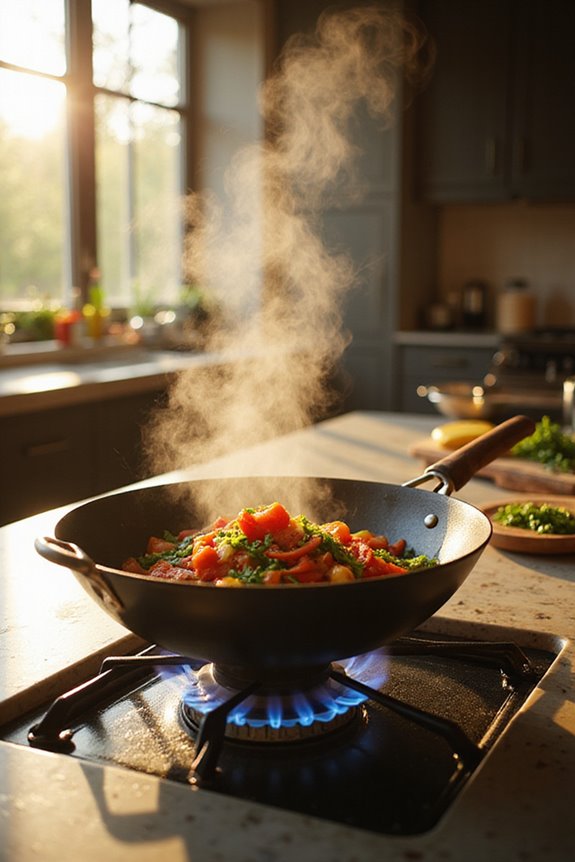
What Is Stir Frying?

Stir frying is a quick and vibrant cooking technique, perfect for tossing small pieces of food in a hot wok. It keeps flavors, colors, and nutrients intact, giving us delicious meals in no time. We start with proteins, then add vegetables and seasonings, all while using minimal oil for healthier eating. It’s all about high heat and constant stirring to prevent burning. Plus, it’s super versatile! Stick around, and you’ll discover more tips and tasty recipes!
Key Takeaways
- Stir frying is a rapid cooking method that involves tossing small, cut pieces of food in a hot wok to maintain vibrant colors and textures.
- This technique originated during the Han dynasty in China and evolved over centuries, reflecting cultural significance across Asia.
- It primarily uses high heat and continuous stirring, which prevents burning and ensures even cooking for all ingredients.
- Essential ingredients include proteins, fresh vegetables, and high-heat oils, combined with flavorful seasonings like garlic and ginger.
- The cooking order typically starts with proteins, followed by aromatics and harder vegetables, finishing with softer vegetables coated in sauce.
Definition of Stir Frying
You may be interested


When we think about stir frying, it’s like a culinary dance that brings out the best in our ingredients. This rapid cooking technique involves tossing small, evenly cut pieces of food in a hot wok, where the magic happens within minutes. With our ingredients in constant motion, they stay perfectly cooked without burning, keeping their vibrant colors and crisp textures. The beauty of stir frying benefits us, too; it requires minimal oil, preserving nutrients and making meals healthier. We often start with proteins, then toss in our favorite veggies and seasonings. Silicone kitchen utensils are often recommended for this cooking method as they are heat-resistant and safe for non-stick cookware. So, embrace this playful method! It’s not just cooking—it’s a vibrant way to share meals bursting with flavor and health. Let’s get stirring!
History and Origins
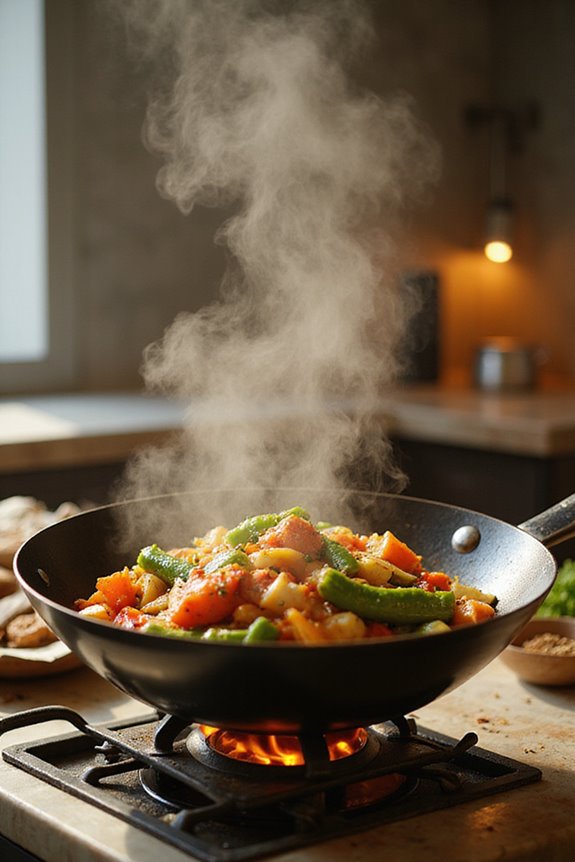
Stir frying has a rich history that’s as vibrant as the dishes it creates. Originating during the Han dynasty for grain drying, it evolved into a beloved cooking method by the Song dynasty. The wok transformed during the Ming era, allowing quick cooking that matched the fast-paced urban life of the time. Isn’t it fascinating how stir frying reflects its cultural significance, adapting to regional variations across Asia? The term “stir-fry” even made its way into English in 1945, thanks to Buwei Yang Chao, which connected us to this delightful technique. We’ve seen how this method conserves resources while producing flavorful meals. Additionally, the versatility of stir frying can be enhanced with the use of multifunctional cooking appliances, which allow for various cooking methods, making it easier to whip up delicious stir-fried dishes. So, as we explore its history, let’s celebrate how stir frying continues to bring diverse people together over a shared love of food!
Essential Ingredients for Stir Frying
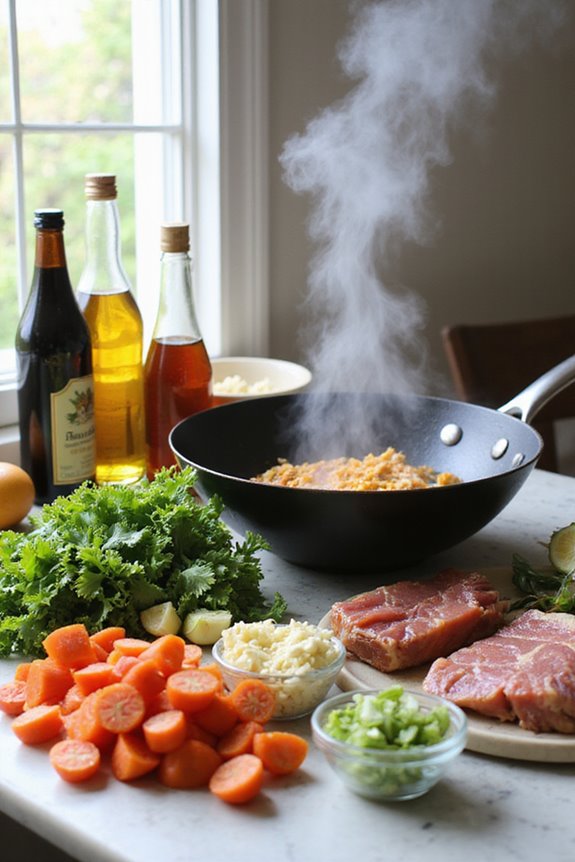
After exploring the fascinating journey of stir frying through history, it’s time to talk about what makes this cooking method so deliciously versatile. When we think of our stir fries, we imagine vibrant vegetable varieties like broccoli, bell peppers, and earthy mushrooms. Protein choices, from tender chicken to savory tofu, bring depth to our dishes. Let’s not forget the artful use of cooking oils—reach for peanut oil for that perfect sizzle! Our seasoning techniques—think garlic and ginger—layer in flavor profiles that get our taste buds dancing. Balancing ingredient ratios keeps everything harmonious; typically 1:1 is a safe bet. For garnish, why not sprinkle some green onions? Add sauce thickness with cornstarch, and we’re ready to stir up deliciousness! Additionally, using a rice cooker can simplify the cooking process for your base grains, ensuring perfectly cooked rice as a foundation for your stir fry.
Recommended Products


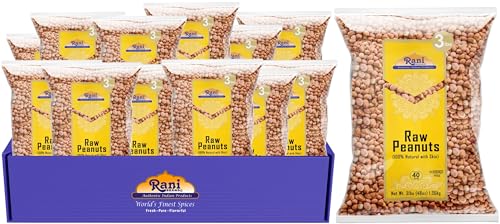
Fresh! Product of USA, All Natural Spanish #1 Grade. Unsalted, Uncooked Raw Red-skin Peanuts.
Preparation Techniques
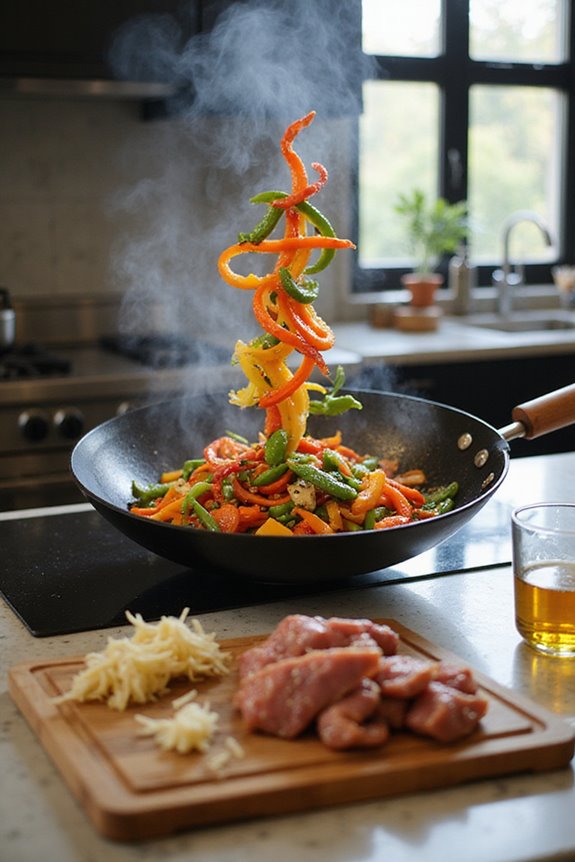
While it might seem intimidating at first, getting the prep work right sets us up for a successful stir fry every time. We’ll want to focus on ingredient preparation, cutting our veggies and proteins into uniform, bite-sized pieces. Trust me, this guarantees even cooking and keeps things fun! Let’s not forget our chopping techniques—aromatics like garlic and ginger should be ready for quick sautéing. Prepping sauces ahead of time is a lifesaver, allowing for quick flavor boosts. If we’re using meats, a brief marinade can elevate flavor and tenderness. And if we blanch denser veggies, like bok choy, we help them cook faster. With everything prepped, we’re ready to create a delicious stir fry together! Additionally, using rust-resistant materials for your cooking tools can enhance longevity and performance during meal prep.
Recommended Products

Make food never thought possible in a grill with the Weber Crafted Outdoor Kitchen Collection. Sear, roast, bake, steam, and even stir-fry by simply replacing the grate with a variety of custom-fit grillware (grates and frame included; grillware sold separately).

Make food never thought possible in a grill with the Weber Crafted Outdoor Kitchen Collection. Sear, roast, bake, steam, and even stir-fry by simply replacing the grate with a variety of custom-fit grillware (grates and frame included; grillware sold separately).

Make food never thought possible in a grill with the Weber Crafted Outdoor Kitchen Collection. Sear, roast, bake, steam, and even stir-fry by simply replacing the grate with a variety of custom-fit grillware (grates and frame included; grillware sold separately).
The Cooking Sequence
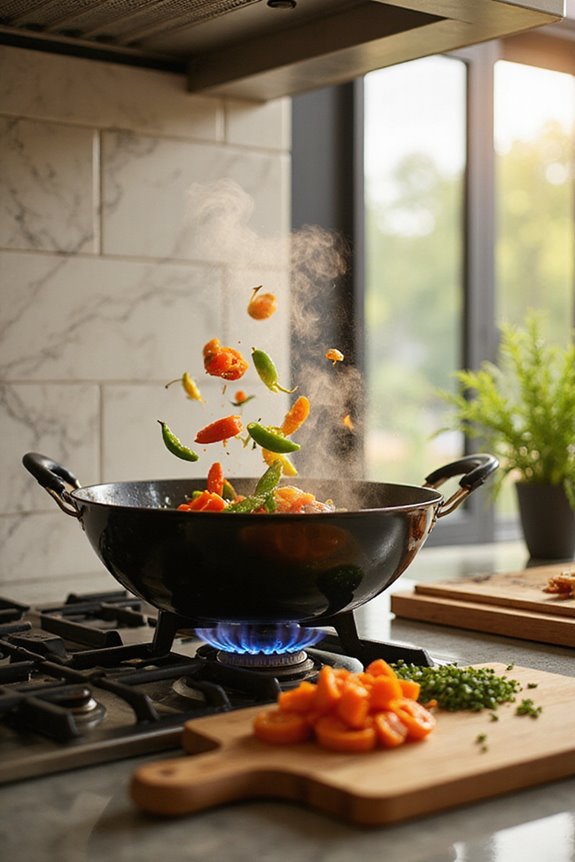
Getting our cooking sequence right is essential for a perfect stir fry, and trust me, no one wants a soggy mess on their plate! First, we’ll sear the protein over high heat to lock in flavor. Once it’s cooked, we set it aside to keep it from overcooking while we work on the veggies. Starting with those hardier aromatics like garlic and ginger and then adding our harder vegetables helps set our cooking order. Remember, stagger the addition of softer vegetables later to keep that crunch. Finally, we’ll bring everything together, coating in sauce and cooking just enough to meld those flavors. Trust me, this ingredient timing makes all the difference in vibrant, delicious stir fry! Additionally, utilizing stackable designs can help maintain organization and efficiency in the kitchen while preparing your ingredients.
Equipment Needed
To whip up a delicious stir fry, it’s essential to have the right equipment at your fingertips. A good carbon steel wok with a flat bottom is our top pick; it heats quickly and is easy to handle. For those of us who love tossing, a traditional round-bottom wok can work wonders—just remember to grab a wok ring for flat stoves. Don’t forget cooking tools like a steel spatula (Chuan) and a loyal ladle (Hoak) for scooping sauces. A sharp knife is a must for chopping up all those vibrant veggies. And if we want to speed up prep, a mandoline slicer is our new best friend. Let’s gather these wok materials and commence on a stir-frying adventure together!
Recommended Products

Chinese wok, made in China. Our woks have been through 12 processes, 36,000 times of hand-hammering. It shines like a mirror. You can see all the hammer prints but hardly feel them. Mirror surface allows ingredients to slide smoothly inside the wok.

Hand-hammered iron for even, intense heat every time; Flat-bottom design fits all stovetops, including induction; Sturdy iron handle for safe, confident cooking; Crafted for durability and authentic wok flavor.

Manufactured in Belgium
Heat Management Strategies
When we immerse ourselves in stir frying, mastering heat management is key to creating that perfect dish we all crave. We should aim for temperatures around 350°F to 370°F for best results. Preheating our wok for a couple of minutes guarantees it’s ready to sear without burning. Keep an eye on visual cues—when the oil shimmers, it’s time to add those ingredients! To maintain that ideal ingredient temperature, avoid overcrowding; it’s a stir fry, not a vegetable convention! We can also make heat adjustments during cooking, especially with delicate items that need less time. Trust us, a little shifting in heat makes all the difference between soggy and sizzling. Let’s get cooking!
Sauce Components and Flavor Balancing
A great stir fry isn’t just about tossing ingredients in a hot wok; it’s all about that knockout sauce that ties everything together. Let’s explore sauce structure: we must balance salty soy sauce with sweeteners like honey or brown sugar, and a splash of vinegar for acidity. This keeps our flavors bright and fresh! Adding fresh garlic and ginger boosts the aromatics, while a pinch of red pepper flakes can kick up the heat. Remember, cornstarch is our friend for thickening, giving that perfect cling to our dish. If things get too salty, opt for low-sodium soy sauce. So, let’s mix, taste, and adjust until we find that delightful flavor balance together. Happy stir frying!
Recommended Products

MOUTH WATERING FLAVOR - Our meatless burgers offer a tasty alternative to beef burgers. With only 140 calories and less fat than a beef burger, these flavorful patties are sure to be a hit.

Fresh! Product of USA, All Natural Spanish #1 Grade. Unsalted, Uncooked Raw Red-skin Peanuts,

A versatile piece featuring a large surface area for searing, with straight sides to hold in liquid and prevent splattering and lid to lock in moisture
Health Benefits of Stir Frying
Stir frying isn’t just a sizzling way to whip up a meal; it also brings along a host of health benefits that make our dishes not just tasty but nutritious, too. When we stir-fry, we often enjoy impressive nutrient retention, keeping up to 95% of healthy compounds in veggies like broccoli. It’s all about those short cooking times and moderate temperatures! Plus, stir frying enhances fat-soluble vitamins and antioxidants, like beta carotene in carrots, improving their absorption. Sure, we might lose some vitamin C, but the overall boost in antioxidant enhancement outweighs that. So, let’s embrace stir frying—it’s a delightful way to whip up meals packed with flavor and health perks. Who said eating healthily can’t be fun?
Common Stir Fry Dishes
While diving into the world of stir fries, you’ll quickly discover an amazing variety of dishes that are not just delicious but also showcase the versatility of this cooking method. One of our favorites has to be chicken yakisoba, where wheat noodles meet tender chicken in a delightful dance of flavors. For those among us seeking vegetarian options, you can’t go wrong with sweet & sour cashew stir fry—flexible and tasty. Noodle varieties abound, from classic Singapore noodles to hearty ramen stir fry that warms the soul. And let’s not forget the iconic sauces—soy-based blends or something with a spicy kick! Whether it’s a beef stir fry or a vibrant vegetable medley, there’s a stir fry dish for everyone to enjoy.
Tips for Perfect Stir Frying
When it comes to perfect stir frying, having the right techniques can make all the difference. Let’s start by selecting high-quality, fresh ingredients cut into uniform pieces. This not only helps with cooking evenly but also enhances those perfect textures everyone craves. Preheating our wok until it’s “scary hot” guarantees that gorgeous sear and flavor enhancement everyone loves. Remember, oils like grapeseed or avocado work best at high heat—olive oil? Not so much! Cooking meats separately first helps us control doneness, and when we stir continuously, we avoid that dreaded burning. Stick to these simple tips, and before we realize it, we’ll be whipping up stir-fries that are not just good but wow-worthy! Happy stir frying!
Recommended Products
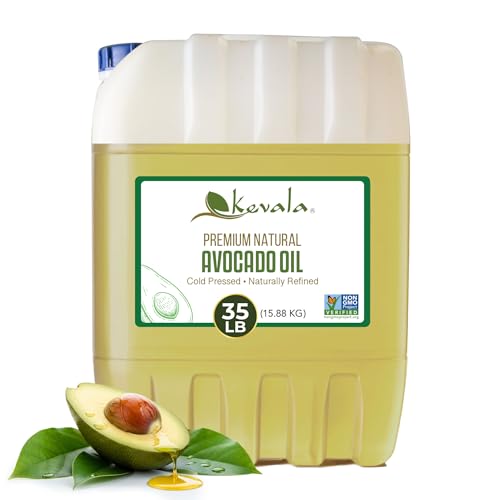
NATURAL AND COLD PRESSED - Cold pressed from select avocados without hexane or solvents. Minimally processed to help retain natural properties. Ideal clean cooking oil option for frequent use.

100% Pure Avocado Oil, Expeller Pressed, All Natural & Hexane-Free

EXTRA VIRGIN AVOCADO OIL, FIRST COLD PRESSED & UNREFINED: Six bottles of single-origin Mexican avocado oil, gently cold pressed in small batches from perfectly ripe avocados with the skin and seed removed. A true unrefined extra virgin avocado oil, bottled just as it's pressed with nothing added.
Frequently Asked Questions
Can I Stir Fry Without a Wok?
Absolutely, we can stir fry without a wok! Using alternative pans like a nonstick skillet or cast iron, we’ll create delicious meals. Let’s embrace our kitchen creativity and enjoy the process together!
What Types of Oils Are Best for Stir Frying?
When choosing oils for stir-frying, we prefer high smoke point options like peanut, canola, or safflower. Their oil properties help maintain flavor and nutrition while avoiding harmful breakdown, ensuring our dishes turn out beautifully.
How Long Does It Take to Stir Fry Vegetables?
We often find that most vegetables take just 2 to 10 minutes to stir fry. To achieve that perfect crisp-tender texture, timing’s key—let’s explore the best choices to elevate our cooking experience together!
Can I Meal Prep Stir Fry in Advance?
Yes, we can absolutely meal prep stir fry in advance! By using meal prep containers for proper stir fry storage, we can enjoy delicious, balanced meals throughout the week—saving time and enjoying every bite together.
What Are Common Stir Fry Cooking Mistakes to Avoid?
We should avoid overcooking vegetables and using improper heat. Let’s guarantee our wok is hot enough and add ingredients in stages, so we enjoy that perfect crunch and vibrant colors in every bite.