As an Amazon Associate, we earn from qualifying purchases. Some links on this site are affiliate links at no extra cost to you. Our recommendations are based on thorough research and editorial judgment.


How To Make Pesto?

Making pesto is a breeze! We start with fresh basil, garlic, toasted pine nuts, Parmesan cheese, and extra-virgin olive oil. Use a food processor for quick blending or a mortar and pestle for that authentic touch—both have their merits. Just blend those ingredients until smooth, and you’ve got a vibrant sauce! Remember to store it in an airtight container with a drizzle of olive oil on top to keep it fresh. Stick around for creative serving ideas!
Key Takeaways
- Combine 2 to 5 cups of fresh Genovese basil, 1/4 to 1/2 cup of toasted pine nuts, and chopped garlic in a blender or food processor.
- Gradually add 1/2 cup of finely grated Parmesan or Pecorino Romano cheese and blend until mixed smoothly.
- Slowly drizzle in 1/2 cup of extra-virgin olive oil while blending to achieve a silky texture.
- Adjust flavor by varying garlic, cheese, or nut quantities according to preference for a thicker or lighter pesto.
- Store in an airtight container, topping with olive oil to maintain freshness; refrigerate for up to five days or freeze for longer.
Ingredients for Traditional Pesto
You may be interested



When it comes to making traditional pesto, there are five key ingredients you’ll want to keep in mind. First off, let’s talk about basil varieties; Genovese basil is our favorite for that classic, fragrant taste. Next, we’ll want 1 to 3 cloves of fresh garlic types, which we should chop before blending to evenly distribute the flavor. For a nutty twist, we can use toasted pine nuts or even nut alternatives like sunflower seeds or walnuts—whatever fits your taste or budget. Cheese options typically include finely grated Parmesan or Pecorino Romano for that rich, savory flair. Finally, don’t skimp on extra-virgin olive oil; it’s essential for a silky texture. Just remember to season gently for a perfect finish! Additionally, using high-quality cheesecloths can help achieve the perfect texture by ensuring smooth blending and straining of ingredients.
Recommended Products
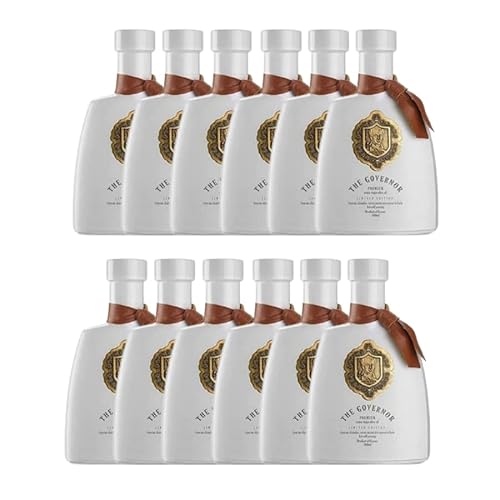
Top Shelf Olive Oil: Unmatched in quality, taste, and aroma - made from the finest Lianolia olives, carefully cultivated in the island of Corfu in Greece
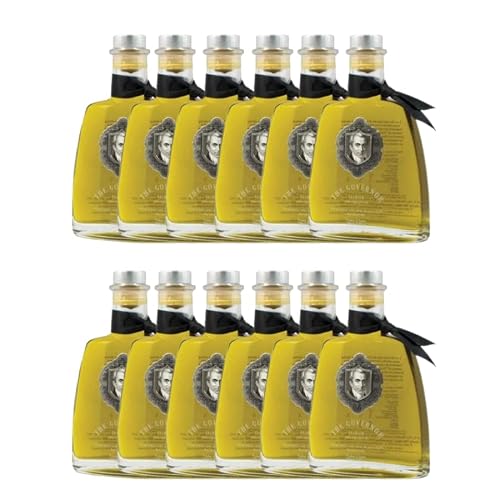
One of the Best in the World: The flavor and aroma of The Governor Premium Olive Oil is second to none; It uses Lianolia olives grown in Corfu island, a region in Greece famous for its world-class olive groves

✔ THE SUPREME SOURCE 2026 edt.: 100% Pure & Natural, Extra Virgin Olive Oil, from handpicked unripe olives (first agoureleon). From carefully selected ancient olive trees, in groves of Olympia Variety at the highest altitude of the mountains near Ancient Olympia, in Greece. The place where according to Greek Mythology, Hercules planted the first olive tree & the birthplace of the Olympic Games at which the winners were awarded with a priceless treasure: a branch of olive called “Cotinus”.
Equipment and Preparation Tools
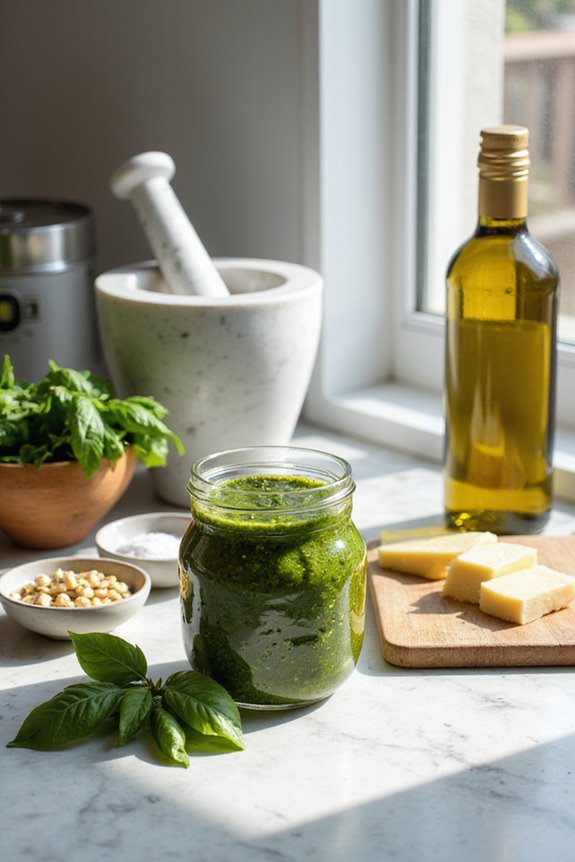
To create a mouthwatering pesto, having the right equipment and preparation tools is essential. We can choose a mortar and pestle for that traditional feel, as it gives us control over the texture and releases basil’s oils beautifully. If we’re making larger batches, a food processor is our go-to, just remember it can lead to uneven blending. Sharp chef’s knives are vital for hand-chopping basil without bruising it, and keeping our blades sharpened is part of good equipment maintenance. Let’s not forget about spoons and spatulas to mix and scoop the pesto! Whether we hand-chop or blend, using the right tools makes it easier, and it definitely keeps the flavor profile fresh—plus, it’s kind of therapeutic, isn’t it? Additionally, incorporating high-quality materials in your cooking tools can enhance the overall cooking experience.
Methods of Preparation
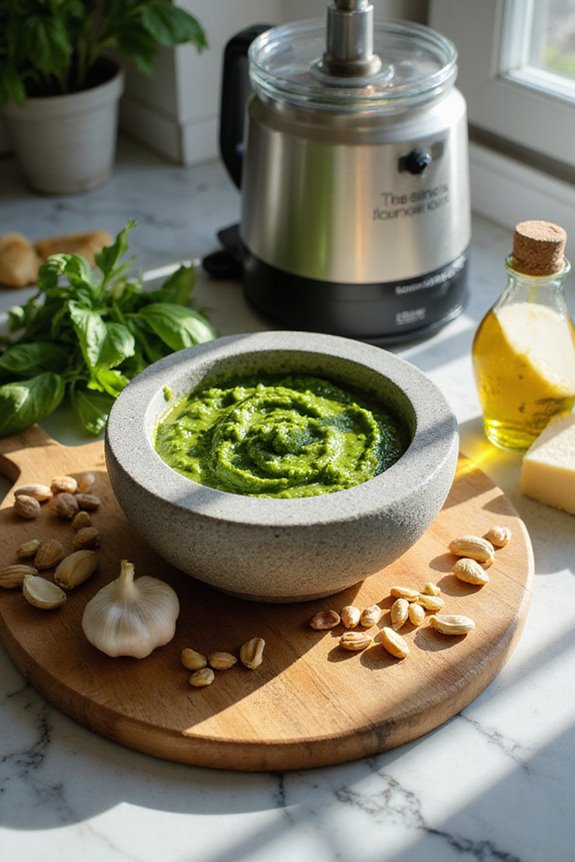
Whether we fancy a rustic, hand-chopped style or prefer the convenience of modern appliances, there are several fun methods to prepare pesto that cater to our unique tastes and kitchen setups. We can start with the hand-chopping method, which preserves the essence of each ingredient but takes a bit longer. For those of us in a hurry, the food processor makes quick work of things—perfect for busy weeknights! In fact, selecting a food processor with high motor power can enhance the efficiency of blending ingredients for a smoother pesto.
Then there’s the mortar and pestle, a classic technique that offers delicious flavor balancing as we crush each element by hand. And if we’re feeling adventurous, why not try the immersion blender for a minimal clean-up? Each of these cooking techniques brings its own charm to our pesto journey. Let’s jump in!
Ratios and Variations
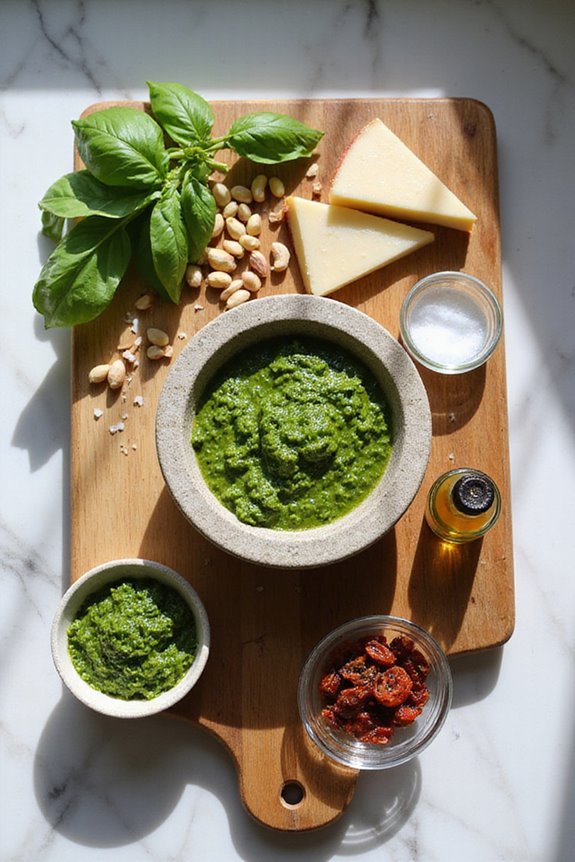
While we might think pesto is just about blending some ingredients together, the magic really happens in the ratios and variations we choose. For a classic touch, we usually stick with 2 to 5 cups of basil, and 1/4 to 1/2 cup of nuts—whether we’re feeling fancy with pine nuts or going for a budget-friendly walnut. Now, here’s where the fun starts! We can make flavor adjustments by playing with garlic or cheese, but if we want a thicker spread, let’s crank up the nuts and cheese. Oh, and don’t forget about nut substitutions! Almonds or even pistachios can give our pesto a unique twist. Additionally, incorporating vegetable spiralizers can lead to creative presentations and enhance our dishes. Experimenting is part of the joy; let’s plunge into it and create our signature pesto!
Storage and Serving Tips
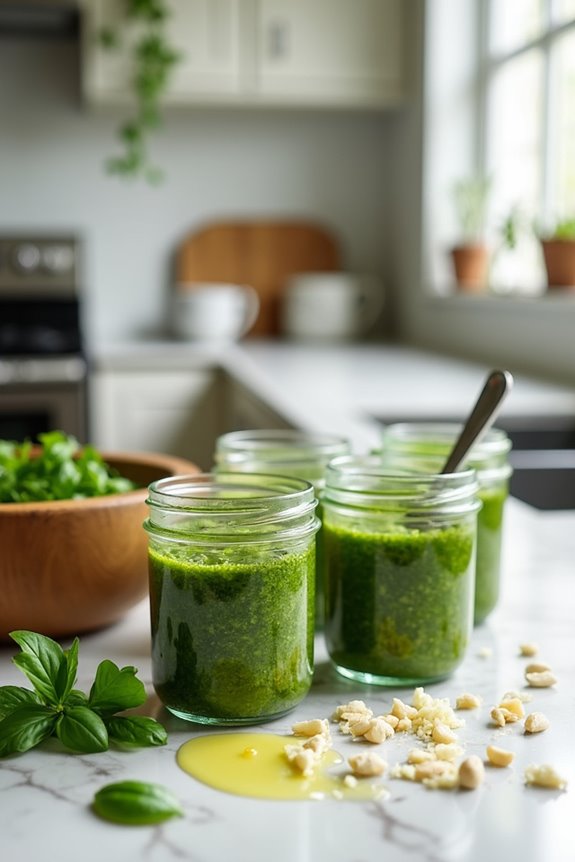
Creating and experimenting with our perfect pesto is just the beginning—now we need to think about how to store and serve it to keep that delicious flavor intact. For refrigeration, let’s pop our pesto in an airtight container, filling it almost to the top. A drizzle of olive oil on the surface can work wonders, too! It should last up to five days. If we want to be more adventurous, there are freezing options—like using ice cube trays for handy portions. Just remember to leave some headspace for expansion! When it’s time to serve, whether it’s on pasta or as a spread, we’ll be basking in the glory of our vibrant, homemade pesto. Additionally, using airtight containers will help maintain freshness and prevent spoilage. Enjoy!
Quality and Ingredient Selection
When it comes to making our pesto, the quality of our ingredients can really make or break the dish. For that fresh, aromatic punch, we want bright green Genovese basil. Trust me, wilting leaves won’t help our cause! Then, let’s choose high-quality extra-virgin olive oil; it adds richness and smoothness. We should be mindful of our nut selection, sticking with pine nuts for that true flavor. Don’t forget to lightly toast them to enhance their aroma! Garlic’s impact is essential too; fresh cloves bring that alluring pungency but let’s not go overboard—balance is key. With these choices in mind, we’re on our way to crafting a pesto that’ll make our taste buds dance!
Recommended Products
Premium Olive Oil: Unripe green olives are hand-harvested from our small family farm early in the season and pressed within hours ensuring a balanced and remarkably tasty finish

✔ THE ORIGIN OF EXCELLENCE 2026 edt.:100% Pure & Natural, Extra Virgin Olive Oil, from green unripe olives (agoureleon). From selected groves of Olympia Variety at the highlands of Arcadia, in Peloponnese, Greece. Olive groves sunny oriented, subsoil with natural drainage and olive trees hundreds of years old, at high altitude of the mountains near Ancient Olympia. The place where according to Greek Mythology, Hercules planted the first olive tree, as divine gift for health, wealth & wellness.

Hypereleon Taste: Legendary Taste Perfection Our 100% Pure & Natural Extra Virgin Olive Oil originates from early harvested, unripe olives grown in the most legendary olive groves of Antiquity. These groves boast the finest Arcadian olive trees and varieties, transferred and planted in a wide, almost mythical region of the Peloponnese, Greece — from Ancient Olympia and Lycosoura to Ancient Corinth and Troezen. Here, early harvested olive oil has held divine value for over 10,000 years.
Creative Uses for Pesto
Pesto isn’t just for pasta anymore! We can reveal its deliciousness in so many creative ways. Instead of mayo in our pasta salad, let’s try a vibrant pesto variation for a fresher twist—perfect for picnics! It also makes an irresistible sandwich spread, especially when paired with roasted veggies or turkey.
And don’t forget about pizza; a dollop of pesto can replace tomato sauce, giving our favorite pies a thrilling herbaceous kick. We can even whip up pesto dips to complement charcuterie boards, adding a zesty contrast to rich cheeses.
With a touch of creativity, pesto can elevate breakfast, snacks, and everything in between. So, let’s get pesto crazy together!
Recommended Products

ABORIGINAL SUPERFOOD - great prebiotic source to feed healthy probiotics and boost gut microbiome


Gourmet Italian Gift Basket: ROI Ligurian EVOO, red pesto, vegan basil pesto, and artichoke paste; hand-selected Italian food gift basket for holidays or birthday gifts for women and men
Frequently Asked Questions
Can I Make Pesto Without Nuts?
Absolutely, we can create a vibrant nut-free pesto, substituting nuts with fresh basil and cheese. For those with nut allergies, this keeps the flavors dancing while ensuring safety and deliciousness in every bite.
How Long Does Homemade Pesto Last in the Fridge?
Homemade pesto lasts about 3 to 5 days in the fridge if we store it properly. For the best pesto preservation, let’s use an airtight container and consider topping it with olive oil for extra freshness.
Is Pesto Gluten-Free?
Absolutely, traditional pesto’s gluten-free! With fresh pesto ingredients like basil and garlic, we can enjoy it safely. For variety, we can use gluten substitutes like nutritional yeast to keep our meals delicious and inclusive.
Can I Use Dried Basil Instead of Fresh?
Yes, we can use dried basil instead of fresh, but let’s remember the flavor differences: dried basil substitutes may offer a muted taste. Fresh basil brightens dishes, while dried can lend a slightly bitter undertone.
What Dishes Pair Best With Pesto?
Did you know 70% of Americans enjoy pesto? We love it in pasta dishes, grilled chicken, vegetable salads, pizza toppings, bruschetta spreads, stuffed peppers, sandwich spreads, and even risotto dishes. Let’s get creative together!