As an Amazon Associate, we earn from qualifying purchases. Some links on this site are affiliate links at no extra cost to you. Our recommendations are based on thorough research and editorial judgment.


How To Use A Thermometer?

Using a thermometer is pretty straightforward, and we can get it right together! For oral thermometers, remember to wait 15-30 minutes after eating or drinking. With rectal thermometers, gently insert it about an inch and wait for the beep. If you’re using an ear thermometer, make sure you pull back the ear and aim towards the eardrum. Each type has its quirks, but they all give us essential temperature readings. Stick around, and we’ll explore more tips and tricks!
Key Takeaways
- Select the appropriate thermometer type (digital, infrared, or traditional) based on your needs and circumstances.
- For oral use, place the thermometer under the tongue and keep mouth closed for about 20 seconds.
- For rectal use, gently insert a lubricated digital thermometer about an inch, holding it steady until it signals.
- Use an ear thermometer with a disposable cover, inserting the probe towards the eardrum and waiting for the beep.
- Always clean the thermometer thoroughly after each use to prevent cross-contamination and ensure hygiene.
Types of Thermometers
You may be interested



When it comes to measuring body temperature, there are several types of thermometers we can choose from, and each one has its own strengths. Digital thermometers, for instance, feature electronic sensors that deliver accurate readings in seconds. They’re user-friendly and often displayed in both Celsius and Fahrenheit—no math required! Then we have infrared thermometers, perfect for quick checks, especially with restless kids. Just point and click, and voilà! Finally, let’s not forget the traditional mercury and gallium thermometers. Though they offer precision, they can take longer and require extra care. Understanding these thermometer types helps us pick the best one for our needs. Additionally, calibration ensures accurate readings which is essential for consistent results. So, which thermometer will fit your temperature-taking adventures?
How to Use Oral Thermometers
Ready to get started with taking an oral temperature? First, let’s make sure the mouth’s temp isn’t affected by anything we’ve eaten or drunk in the last 15-30 minutes. We want to avoid any distractions, like gum or heavy breathing, that could ruin our reading. When we’re ready, let’s place the thermometer under the tongue, ideally in the warm pocket near our molars. Keep the mouth closed and hold it steady for around 20 seconds — patience is key here! Once it beeps, record that number immediately. We might want to confirm with a second reading if the first seems off. Remember, cleanliness is essential, so be sure to use dishwasher-safe options to keep your thermometer in good condition. And don’t forget to clean up and wash those hands afterward! We’re all about staying safe and sound.
How to Use Rectal Thermometers
Taking a rectal temperature might sound a little intimidating, but it’s actually a straightforward process that can provide very accurate results, especially for little ones. First, let’s make sure we use a digital thermometer specifically for rectal thermometer usage, as it’s designed for safety. Before inserting, clean it well and apply a bit of lubricant for easier insertion. When positioning your child, cuddling them close can help ease any anxiety. As you gently insert the thermometer about an inch and hold it steady, remember to keep an eye on the signal for reading. Once done, clean the thermometer thoroughly and store it apart from oral ones. We’re prioritizing temperature measurement safety here, so let’s approach this with care and love! Additionally, maintaining a natural non-stick finish on your cooking tools ensures safer food preparation by minimizing the risk of sticking and burning.
How to Use Ear Thermometers
Using an ear thermometer can feel like a breeze compared to rectal thermometers, especially for toddlers who might fuss at the thought of a more invasive measurement. We love their advantages—quick readings and minimal fuss—making them a parent-friendly choice! Just remember to clean the probe, use a disposable cover, and verify the batteries are fresh.
When measuring, gently pull the ear back, insert the probe towards the eardrum, and wait for the beep. But let’s not forget ear thermometer limitations; they’re not suitable for infants under six months or if there’s ear inflammation. For the most accurate results, take a few measurements, waiting a minute in between. Additionally, it’s important to consider calibration frequency to ensure accurate readings. With some practice, we can confidently enjoy this easy way to check temperatures!
How to Use Forehead Thermometers
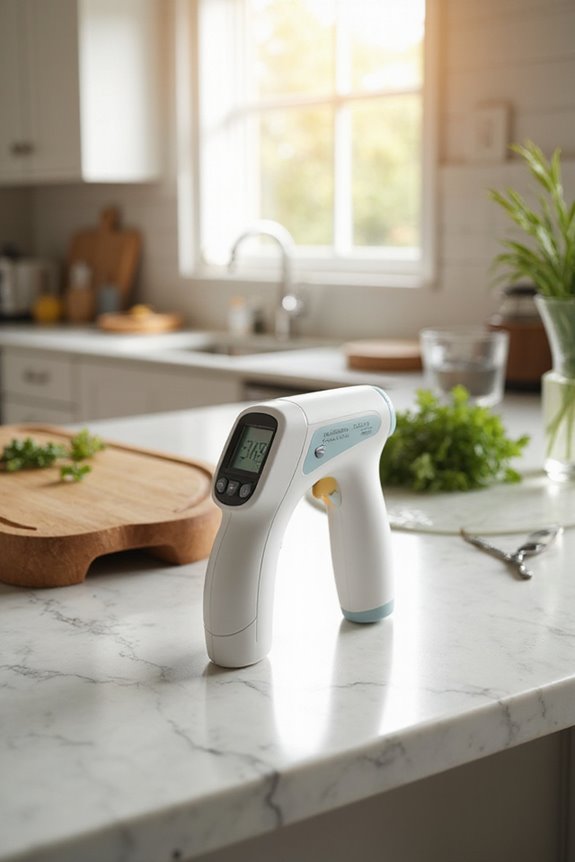
When it comes to checking temperatures quickly and comfortably, forehead thermometers are a game changer! To get the best forehead thermometer usage, let’s prepare by ensuring it’s at room temperature for about 30 minutes. We should clear the forehead of any hair or products to boost forehead temperature accuracy. Position the thermometer about 1 to 2 inches from the center of the forehead, making sure it’s straight up for a precise reading. When we press the start button, let’s hold it until we hear that beep. If the reading shows a happy face, we’re in the clear! Just remember to avoid measuring on sweating skin or near fans to keep things consistent. Additionally, using a thermometer is critical for ensuring safe cooking as it helps accurately gauge food temperatures. You’ve got this—let’s get it right!
How to Use Digital Thermometers
Digital thermometers are fantastic tools for measuring body temperature accurately and easily, and we’ve all come to appreciate how quick and comfortable they can be. To get started, let’s make sure our thermometer’s clean and the batteries are fresh. Once we turn it on, the digital display will indicate it’s ready with a flash or beep. If we’re measuring orally, use a protective sheath, and wait 15 minutes after drinks for accuracy. Whether we choose oral, rectal, or axillary, remember to hold it steady. When we hear that beep, the reading is ready! Don’t forget to clean it well after use and store it safely—good device maintenance is key to our thermometer’s longevity and performance!
Principles of Thermometer Operation
Thermometers may seem simple, but the magic behind how they work is pretty fascinating! At the heart of their operation lies thermal expansion. As temperatures rise, the liquid—like mercury or colored alcohol—expands in a narrow tube, letting us see that rise. Isn’t that neat? We can easily calibrate these devices using two fixed points: the melting ice at 0°C and boiling water at 100°C. This calibration guarantees each mark on the scale is precise, helping us measure temperatures accurately. We’ve also got thermocouples and resistance thermometers, which rely on changes in electrical properties to give readings. Whatever the method, they all reflect important thermodynamic principles. So, next time you check the temperature, appreciate the science behind that little device!
Safety Tips for Using Thermometers
Using a thermometer can be a game-changer in the kitchen, helping us cook our meals to perfection and guarantee food safety. To keep our cooking safe, let’s focus on proper thermometer maintenance. Always insert the thermometer into the thickest part of the food, avoiding bones and fat, for the most accurate reading. After using it, we should wash it with warm, soapy water to prevent cross-contamination. If it’s been a little messy, a quick disinfect with alcohol swabs does wonders. Remember, the danger zone for food is between 40°F and 140°F, so keep an eye on that! And, we should store our thermometers safely away from curious little hands—no one needs a surprise meltdown in the kitchen. Happy cooking!
Accuracy Tips for Temperature Readings
When it comes to getting accurate temperature readings, some simple tips can truly make a difference. First, let’s measure reference devices and test thermometers simultaneously to minimize measurement inaccuracies, especially with unstable temperatures. We’ve learned that this helps reduce errors due to quick fluctuations. Remember, calibration standards are essential! Using a blackbody calibrator gets us closer to perfect emissivity and temperature stability. Don’t forget, sensor selection plays a big role—RTDs are usually our most reliable choice. Finally, keeping our environment consistent, such as avoiding drafts, helps boost reading precision. With these tips, we can trust our thermometers more and guarantee we get the results we need—after all, a good reading today means a safer tomorrow!
Industrial Thermometer Applications
In the bustling world of industrial processes, having the right tools is essential, and temperature measurement plays a key role. We often rely on bimetallic applications, especially in refineries, where they monitor temperatures in distillation columns and storage tanks. Isn’t it amazing how they help keep our systems running smoothly?
Then there’s infrared efficiency, allowing us to measure temperatures non-contact for electrical equipment and machinery. This not only prevents overheating but also saves us the hassle of system shutdowns. We can quickly check tire vulcanization or HVAC systems, all while ensuring precise temperature regulation. So, whether you’re dealing with industrial heaters or complex manufacturing, knowing which thermometer suits your needs can make all the difference! Let’s embrace these tools together!
Environmental Impact of Thermometers
Thermometers play an essential role in our daily lives, but their environmental impact can’t be ignored. Many of us might not realize that mercury thermometers contribute about 17 tons of mercury waste annually. That mercury can contaminate massive amounts of water, posing serious health risks. But there’s hope! We can choose environmental alternatives like digital, alcohol, or infrared thermometers, which are safer and just as reliable. By opting for these, we’re helping reduce our ecological footprint. Plus, participating in programs like the Boston Mercury Thermometer Exchange helps us dispose of old thermometers responsibly. Together, let’s take small but significant steps to guarantee a healthier planet—because every little choice counts. So, how about we make that switch today?
Considerations for Choosing the Right Thermometer
Choosing the right thermometer can feel overwhelming, especially with so many options out there! We’re all about making smart choices based on our needs and preferences. Digital thermometers are a top pick for their speed and accuracy—plus, they’re often easier to read. If hygiene’s a priority, consider infrared models for quick, non-contact readings. However, let’s not forget about the flexibility of ear thermometers, especially for kids, though they do have some limitations. Remember, the best thermometer selection comes down to what you need and how comfortable you are using it. Just keep battery life and cleaning in mind, and you’ll be set. Happy thermometer hunting—your future self will thank you!
Frequently Asked Questions
Can I Use a Thermometer to Measure Food Temperature?
Absolutely, we can use a thermometer to measure food temperature! It’s vital for food safety and mastering our cooking techniques. Together, let’s guarantee our meals are perfectly cooked and safe to enjoy!
How Often Should I Calibrate My Thermometer?
We’d recommend calibrating our thermometers regularly, depending on their types. Think of it this way: just as our hearts need checks, so do our thermometers to maintain accuracy and guarantee everything we measure remains trustworthy.
Are There Thermometers Suitable for Animals?
Yes, there are various animal thermometer types like digital, aural, and rectal options. We can explore different temperature measurement techniques together to guarantee our furry friends stay healthy and comfortable during assessments.
What Should I Do if My Thermometer Breaks?
If our thermometer breaks, let’s quickly ventilate the area, keeping little ones away. We should replace it with safer options, ensuring we’re educated on thermometer safety tips to avoid future mishaps and protect our loved ones.
How Can I Clean My Thermometer Properly?
To clean our thermometer properly, we should use warm water and mild soap, rinse thoroughly, and sanitize with alcohol. Consistent cleaning methods guarantee ideal thermometer maintenance and accuracy for our future health needs together.