As an Amazon Associate, we earn from qualifying purchases. Some links on this site are affiliate links at no extra cost to you. Our recommendations are based on thorough research and editorial judgment.

What Is Braising?

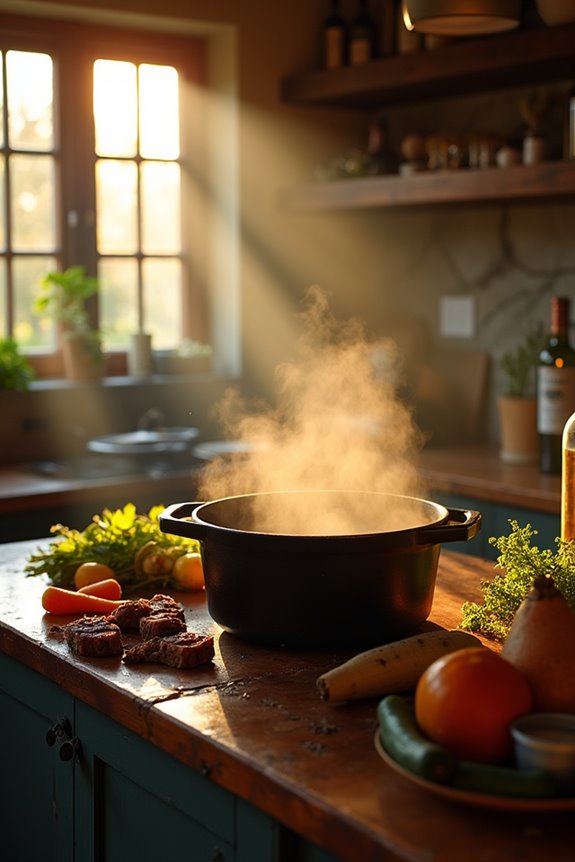
Braising’s a fantastic cooking method that blends wet and dry heat to turn tough cuts of meat and hearty veggies into tender, mouthwatering dishes. We sear our ingredients first, which seals in those savory flavors. Then we gently simmer everything together, creating warmth and inviting aromas in our homes. It’s an easy, one-pot wonder that helps us make budget-friendly meals taste amazing. Stick around, and we’ll share some great tips and recipes for braising!
Key Takeaways
- Braising is a cooking method that combines both wet and dry heat to enhance flavors in meals.
- It involves searing food at high temperatures followed by a gentle simmer in moisture, making meat tender.
- The method is ideal for tougher cuts of meat, allowing for budget-friendly, delicious dishes.
- Aromatic liquids used in braising create rich flavors and inviting aromas in the kitchen.
- Common ingredients for braising include meats like short ribs and vegetables like carrots and potatoes.
Definition and Overview of Braising
You may be interested

When we think about cooking methods that transform our meals from ordinary to extraordinary, braising often comes to mind. This delightful combination of wet and dry heat truly shines. First, we sear our ingredients at high temperatures, sealing in those savory flavors. Then, we let them simmer gently in a covered pot, which keeps everything moist and tender. Unlike stewing, we use less liquid and larger pieces, giving our dishes an inviting presence. Throughout cooking history, braising has remained a go-to technique for transforming tougher cuts of meat and even vegetables into delicious meals. It’s akin to the precision of uniform slices that enhances the presentation of meals, making every dish a feast for the eyes. So, grab that stock, and let’s savor the magic of braising—a culinary term that’ll make you sound like a pro at your next dinner party!
Key Techniques in Braising
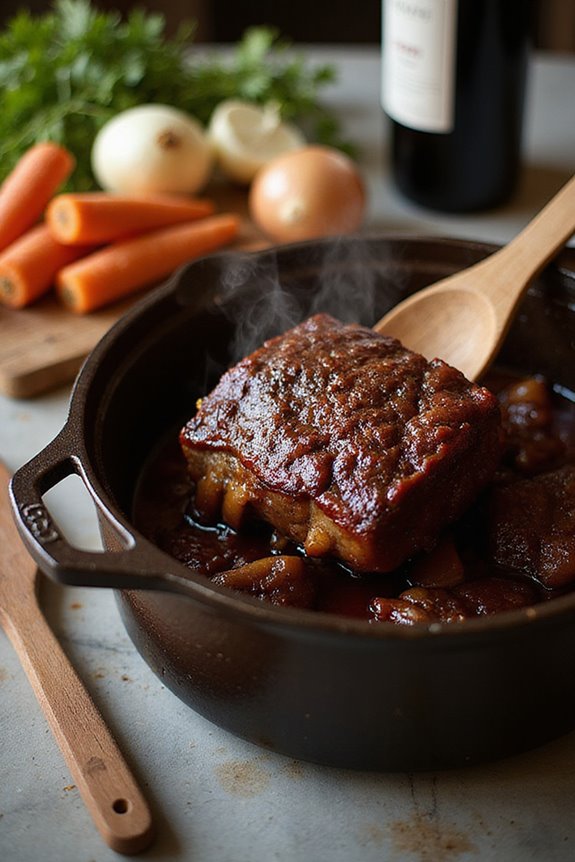
While we plunge into the exciting world of braising, we can’t overlook the key techniques that make this culinary method truly shine. First up, browning techniques are essential; we pan-sear our ingredients at high heat to develop that irresistible crust. Trust us, that Maillard reaction adds layers of flavor! After removing the meat, we sauté our aromatics in the tasty rendered fat, creating a base we’ll cherish later. Now, let’s talk about liquid selection—ideally, we cover two-thirds of our food. Stock, wine, or even coconut milk can jazz up our dish. Remember, the right liquid influences our sauce’s flavor and consistency, so choose wisely! Additionally, using the right baking sheets can enhance the overall cooking experience by ensuring even heat distribution. With patience and practice, we’ll master these techniques together. Happy braising!
Recommended Products

Enameled cast iron delivers superior heat distribution and retention; Ready to use, requires no seasoning

SELF-BASTING: Embracing the taste of excellence delivered by Staub Cocottes’ famous self-basting spikes. The new braiser with a unique Chistera Drop-Structure on the inside of the domed lid ensures moisture consolidates and is evenly redistributed over the food

Made in France
Purpose and Benefits of Braising
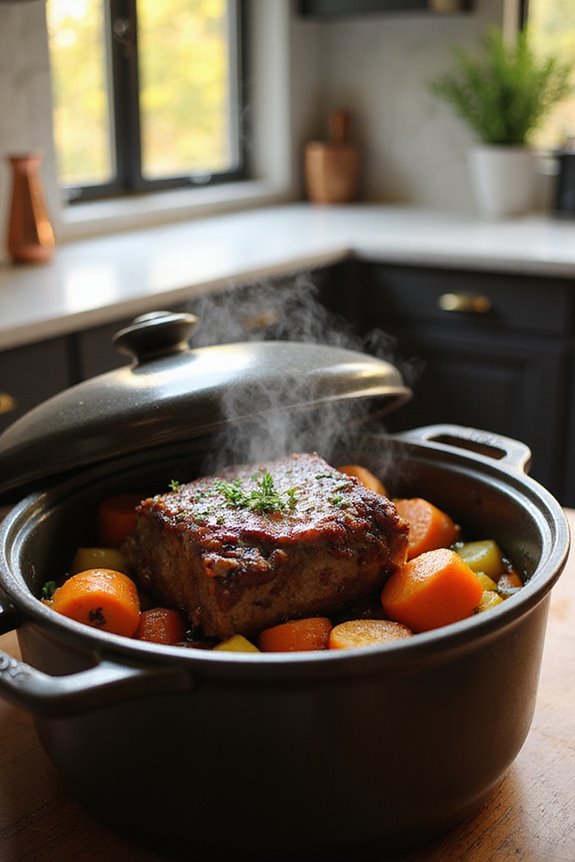
Braising isn’t just a cooking technique; it’s a culinary secret that transforms humble ingredients into something truly special. When we braise, we’re not just cooking; we’re creating tender meat that melts in our mouths, thanks to the slow breakdown of collagen into luscious gelatin. This method lets us turn tougher, cheaper cuts into succulent dishes, giving us great flavor infusion while being budget-friendly. Imagine this: aromatic liquids carrying herbs and spices fill our homes with warmth. Plus, it’s a one-pot wonder, making cleanup a breeze! So, let’s plunge in and harness the beauty of braising—experiment with flavors, and enjoy meals that feel both cozy and gourmet. Trust us, your taste buds will thank you! Additionally, using a pressure cooker can significantly speed up the braising process while retaining the rich flavors and tenderness of the dish.
Comparison to Similar Methods
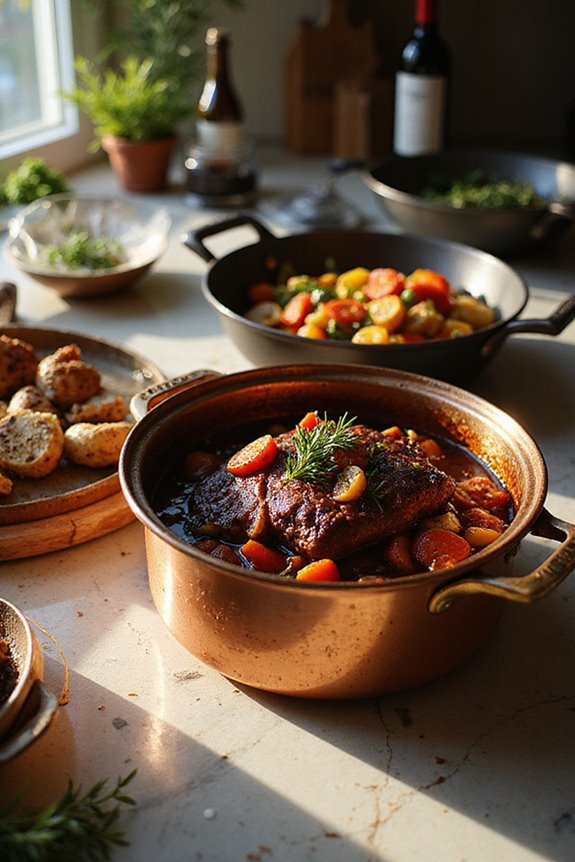
Cooking techniques can often seem overwhelming due to the myriad of options available, but once we comprehend the differences between them, everything becomes much clearer. Take braising, for instance; it combines both dry and moist heat, bringing out deeper flavors. In contrast, stewing uses smaller cuts fully submerged in liquid—think hearty soup! While roasting gives a crispy exterior, braising creates tender, infused bites. It’s fascinating to note that different cultures have their own braising history and methods, leading to delicious regional variations. Additionally, the choice of material options can enhance the cooking process, especially when using durable cookware. Whether we’re opting for wet or dry braising, knowing these distinctions helps us choose the right technique for our meals. So, let’s embrace the art of cooking together; it’s all about experimentation and pleasure!
Recommended Products

Enameled cast iron delivers superior heat distribution and retention; Ready to use, requires no seasoning

7-1/4-quart round-shaped French oven made of enameled cast iron

Colorful, long-lasting exterior enamel resists chipping and cracking; interior enamel is engineered to resist staining and dulling
Common Foods and Applications
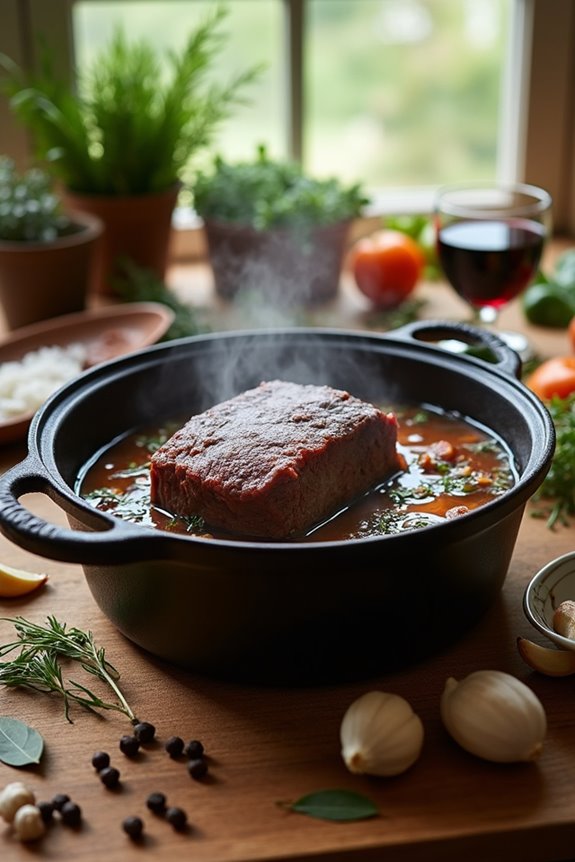
When we think about braising, a world of culinary possibilities opens up, especially when it comes to the types of foods we can use. Braising meats like short ribs, pork shoulder, and lamb shanks creates meltingly tender dishes that comfort us, while chicken thighs and duck legs bring rich flavor to the table. For our veggie lovers, braising vegetables like carrots, potatoes, and cauliflower can transform their textures, too! You’ll be amazed at how firm veggies soften up in just the right liquid combo, whether it’s broth or coconut milk. Additionally, having the right cooking pots can enhance your braising experience, ensuring even heat distribution and optimal flavors. So, let’s not shy away from experimenting—these braised delights are sure to become cherished favorites and even enhance our leftovers. Let’s get braising together!
Recommended Products
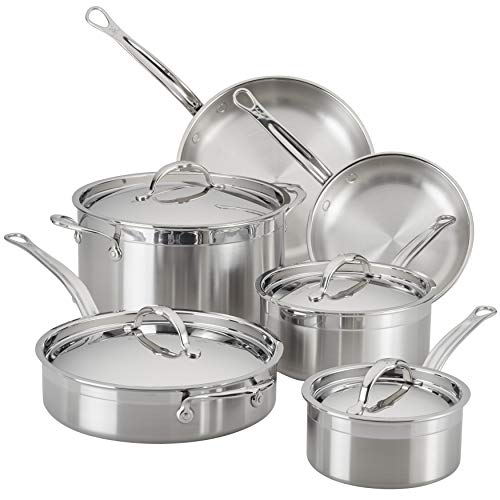
PROCORE ALUMINUM: ProBond Forged Professional Clad Stainless Steel pots and pans are handcrafted in Italy and feature a tri-ply body with a responsive pure aluminum core for optimum performance, maximum durability, and fast, even heat distribution

Wide loop handles provide a safe and comfortable grip

Made in France
Practical Considerations and Tips
To achieve mouthwatering results when braising, it’s important to think about the tools and techniques we use. We recommend investing in heavy, thick-bottomed pots or Dutch ovens—they really help with heat management, ensuring even cooking. Make sure your cookware has a tight-fitting lid to keep moisture locked in. Remember, we don’t want to rush the process; start with high heat for that delicious sear, then lower it for a gentle simmer.
Using flavorful liquids like stock or wine enhances taste, while keeping about two-thirds of your food covered maintains the perfect balance. Don’t forget to let your dish rest after cooking—it’s like giving it a chance to catch its breath. Happy braising, friends!
Recommended Products

Made in France , Heavy weight tight-fitting lid retains moisture spikes on the lid create a rain-forest effect evenly returning juices back onto food

9-quart round-shaped French oven made of enameled cast iron

Enameled cast iron delivers superior heat distribution and retention; Ready to use, requires no seasoning
Frequently Asked Questions
Can I Braise in a Slow Cooker Instead of a Stovetop?
Yes, we can braise in a slow cooker! While it lacks high heat for searing, we can still enhance flavor infusion with a quick stovetop sear first. Let’s explore slow cooker tips for tender results together.
What Types of Liquids Work Best for Braising?
When it comes to fantastic braising, we’ve found that flavorful wine choices and rich broth types work wonders. They create tender, tasty dishes that bring warmth and comfort, turning every meal into a cherished experience.
How Long Should I Braise Different Types of Meat?
When we’re cooking, we adore that tender meat, don’t we? For blissful tenderness, braise larger cuts 2.5 to 4 hours, while delicate poultry needs just 30 minutes to an hour. Timing’s everything, to perfection!
Can Vegetables Be Braised Alone Without Meat?
Absolutely, we can braise vegetables alone using various vegetable varieties and braising techniques. By browning them and adding flavorful liquids, we reveal amazing tastes, transforming simple veggies into delightful dishes that warm our hearts.
Is Braising Suitable for Cooking in an Instant Pot?
Absolutely, braising’s perfect for Instant Pot cooking techniques! We love how it speeds up the process while retaining flavors and nutrients. With careful timing and sautéing first, we’re sure to achieve delicious results together.