As an Amazon Associate, we earn from qualifying purchases. Some links on this site are affiliate links at no extra cost to you. Our recommendations are based on thorough research and editorial judgment.


How To Marinate Chicken?

To marinate chicken, we start by mixing together key ingredients like an acidic element—think lemon juice or vinegar—with oils and spices for flavor. Next, we soak the chicken in a large bag or container for a few hours, depending on the size of the pieces. Don’t forget to keep it cool in the fridge! When it’s ready, we can cook it any way we like—grill, bake, or pan-sear. Stick around to explore flavor variations and tips!
Key Takeaways
- Choose a marinade with acid, oil, salt, sweetener, and aromatic herbs to enhance flavor and tenderness.
- Use resealable bags or containers, ensuring the chicken is fully submerged in the marinade.
- Marinate chicken in the refrigerator for 30 minutes to 24 hours, depending on size and type.
- Massage the marinade into the chicken for optimal flavor absorption and tenderness.
- Discard used marinade to prevent cross-contamination and always cook chicken to safe temperatures.
Choosing the Right Marinade Ingredients
You may be interested



When it comes to marinating chicken, we can sometimes get overwhelmed by the options out there. Let’s simplify it! First, we think about ingredient pairings. We need acid—like lemon juice or vinegar—to tenderize and oils, such as olive oil, to keep things moist. Salt isn’t just for flavor; it locks in juiciness too. Don’t forget a sweetener like honey or sugar to balance things out!
Now, let’s talk flavor profiles. Picture aromatic herbs like oregano and thyme mingling with a dash of spice from cumin or chili powder. You can add soy sauce for umami or even a splash of beer for fun! The key is balancing all these elements for a delicious marinade. Trust me, your chicken will thank you! Additionally, using parchment paper during cooking can enhance cleanup and prevent sticking, just as it does in cookie baking.
Recommended Products

SLOW ROASTED FLAVOR: McCormick Culinary Rotisserie Chicken Seasoning brings a slow-roasted rotisserie flavor to your restaurant that customers will keep coming back for

Decadent Italian Flavor: Premium balsamic vinegar of Modena with notes of plum jam, red fruit, honey, and vanilla; thick texture; gourmet food; mature balance and depth

100% Pure Avocado Oil, Expeller Pressed, All Natural & Hexane-Free
Essential Marinating Equipment
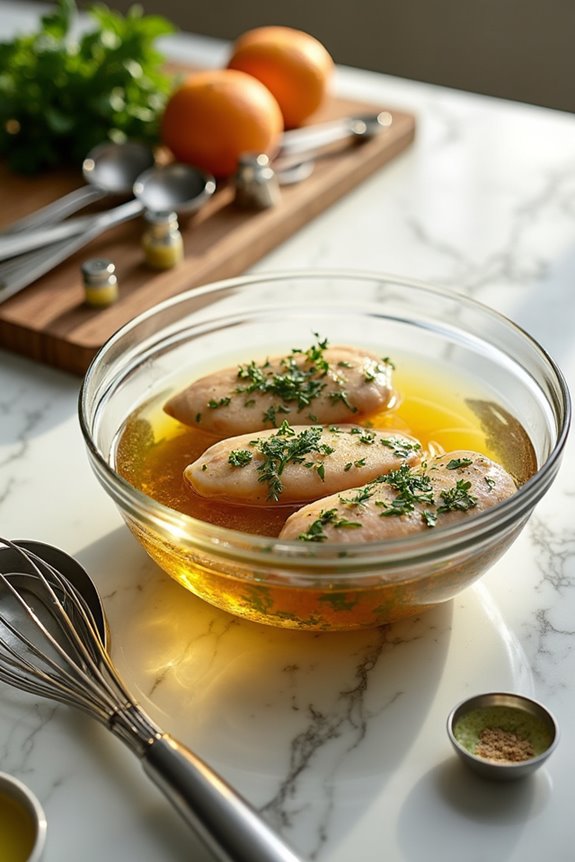
Marinating chicken isn’t just about the ingredients; it’s also about having the right tools to make your culinary adventure easy and enjoyable. First, let’s talk marinating containers. Large lidded storage containers made of plastic or glass are perfect for keeping our chicken secure. Resealable plastic bags? They’re great for getting that marinade all over in a snap! We’ll also need some kitchen utensils. A trusty kitchen knife can help us trim that chicken, while a whisk blends our marinade ingredients seamlessly. Don’t forget brushes for even application! And for safety, labels are a must to date our creations. With these essential tools, we’ll not only marinate like pros but enjoy the process too! Additionally, using heat-resistant materials for cooking tools can improve safety in the kitchen. Let’s get started!
Recommended Products

SEALS LIQUIDS WITHOUT PULLING THEM OUT — Unlike suction sealers that draw liquid straight into the machine, the USV32 uses true chamber vacuum technology to equalize pressure inside and outside the bag simultaneously. Soups, sauces, brines, and marinades stay right where they belong — inside a clean, airtight seal every single time. Perfect for hunters, butchers, meal preppers, and home chefs who work with wet or saucy foods.

Keep Food Fresh Longer: FoodSaver keeps food fresh in the freezer up to 5x longer, and fresher longer in the fridge and pantry, compared to ordinary storage methods—and helps prevent freezer burn

TRADITIONAL JAMAICAN SEASONING: Walkerswood Traditional Jerk Seasoning is really versatile and adds a Jamaican kick to chicken, lamb, pork, fish and vegetable dishes.
Effective Marinating Techniques
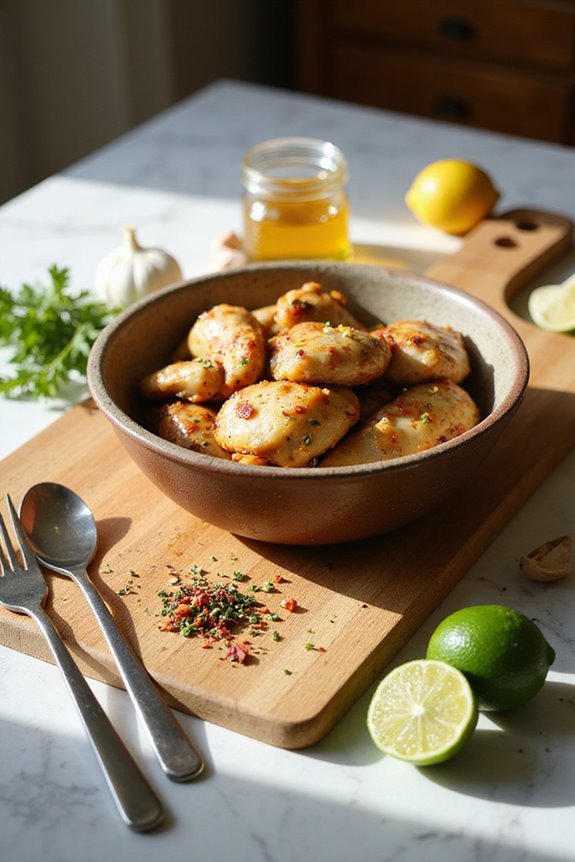
To make the most of our chicken marinating journey, we need to understand how to effectively get that flavorful goodness into the meat. First, let’s plunge into some marinade penetration techniques. Scoring the chicken skin or poking holes allows the marinade to soak in better. Plus, fully submerging our chicken in a resealable bag helps guarantee every inch gets coated. And remember, we want to follow marinating temperature guidelines—always refrigerate, never leave it out at room temperature. This keeps our chicken safe from unwanted bacteria. Finally, don’t forget to gently massage the marinade into the meat; it’s almost like giving our chicken a spa day! Trust me, it’s worth the extra effort for that juicy, flavorful result! Additionally, using broiler pans can enhance the cooking process by ensuring even heat distribution, leading to perfectly cooked chicken.
Recommended Products

【 ALL-IN-ONE DISHWASHER SAFE & VERSATILE FOOD STORAGE BAG 】Our "Stand-Up" dishwasher safe silicone food storage bags allowed transferring foods easily! These are the prefect sizes for your freezer food storage needs. Great for food preps, bulk foods storage, marinade, meats. The bag is microwavable, freezer safe, sous vide friendly within suggested temperature. ***Note: For Sous Vide or boiling with the Tritan/clipper over temperatures of 158°F (70°C) will need to stay within 8 minutes.

CONTAINS: 4 Stasher Reusable Silicone Bags in the color Clear. Includes 2 Cup (16 Fl Oz) and 4 Cup (32 Fl Oz) Bowls, 1 Sandwich (28 Fl Oz), and 1 Snack (12 Fl Oz) Bags.
The only bags on the market both BPA and BPS FREE! LABELS MAY VARY!
Recommended Marinating Times
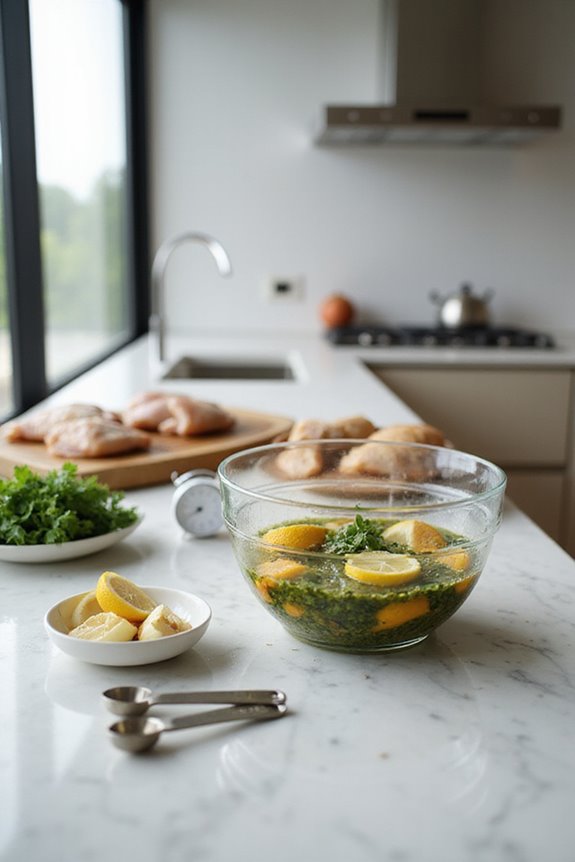
For those of us enthusiastic to elevate our chicken dishes, understanding how long to marinate is key to achieving that perfect flavor and texture. Typically, we find that marinating our chicken for 1-4 hours strikes a delightful balance, especially for most cuts. If we’re in a hurry, don’t fret—using a vacuum sealing system can get us tasty results in just 10-20 minutes! When working with acidic marinade types, like citrus or vinegar, we should limit our time to 30 minutes to 2 hours. And remember, while whole chicken pieces love a good soak for 6-12 hours, those bite-sized morsels need less time to absorb all that deliciousness. Additionally, using various tea types can complement your marinated chicken dishes for an enhanced flavor profile. Let’s keep it tasty and safe—happy marinating, friends!
Recommended Products

EASY-TO-USE CONTROL PANEL AND PRESSURE INDICATOR: Perfect vacuum and seal with minimal effort using one-touch controls on this vacuum sealer machine. The intuitive control panel and pressure indicator ensure consistent results. For a quick seal, simply press the stop button to seal the bag and automatically open the chamber.

DIMENSIONS: 19.40 inches L x 21.90 inches W x 19 inches H and weighs 63.20 pounds

EASY-TO-USE CONTROL PANEL AND PRESSURE INDICATOR: Perfect vacuum and seal with minimal effort using one-touch controls on this vacuum sealer machine. The intuitive control panel and pressure indicator ensure consistent results. For a quick seal, simply press the stop button to seal the bag and automatically open the chamber.
Best Cooking Methods for Marinated Chicken
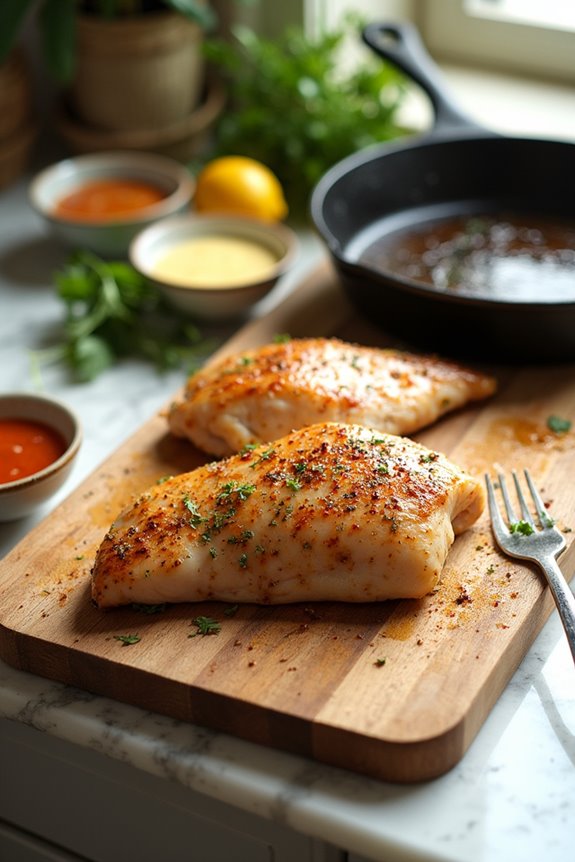
When it comes to cooking marinated chicken, we have a delightful range of methods ready to transform our flavorful creations into mouthwatering meals. For those of us who love grilling techniques, we can enjoy searing over medium-high heat while basting for added flavor. Baking tips suggest keeping the oven around 350°F for even results. Pan searing methods shine when we want golden-brown crusts in just minutes. Air frying offers crispiness without extra oil, a perfect win-win! If you’re in for the long haul, slow cooking or sous vide guarantees moisture retention, enhancing texture beautifully. Additionally, using sharp, serrated blades can help ensure even cuts for marinated chicken, promoting better absorption of flavors. No matter the method, resting our chicken post-cooking is key to locking in those juicy flavors. Let’s savor every bite!
Recommended Products

ELECTRIC GRIDDLE: This hardworking griddle features a 1500 watt heating system, cool touch handles & a base with a built in ledge with backstop for easy pancake flipping. The removable probe with easy-to-use dial allows for precise temperature control

With three burners delivering a total of 28,100 BTU of cooking power, this RV gas range heats quickly and distributes heat evenly, so you can boil water, cook breakfast, and prepare multiple dishes at the same time without slowing down your trip — ideal for busy mornings at the campground or family dinners after a full day outdoors

𝟐𝟖𝐐𝐓 𝐎𝐕𝐄𝐍 𝐅𝐎𝐑 𝐑𝐄𝐀𝐋 𝐌𝐄𝐀𝐋𝐒: Forget tiny ovens that can’t fit dinner. This 28QT toaster oven features a 3-layer rack design—cook up to 36 wings, a 12" pizza, and veggies all at once. No batch cooking, no crowding.
Flavor Variations for Marinades
Exploring flavor variations for marinades can transform our chicken dishes from ordinary to extraordinary, adding that zing we all crave. Whether we’re going for a sweet and tangy honey mustard blend or a fiery, spicy and smoky chipotle sauce, the options are practically limitless! A zesty citrus marinade brightens up our meals, while a savory herb and garlic mix reminds us of cozy family dinners. We’ve seen success using soy sauce for umami richness, too. Remember, a balance of ingredients is key—acids with sweeteners and bold spices with fresh herbs create a perfect harmony. So, let’s release our creativity and make our chicken not just a meal, but a memorable experience that keeps everyone coming back for seconds!
Storage Tips and Food Safety
Storing and handling marinated chicken properly is essential for keeping our meals safe and delicious. First, let’s remember to always marinate in the refrigerator—never at room temperature! It’s key to avoid that “Danger Zone” where bacteria thrive. We should use food-grade plastic bags or glass containers for marinade storage, steering clear of reactive metals like aluminum.
Let’s keep our marinated chicken on the bottom shelf to prevent spills and cross-contamination. A quick tip: discard any plastic bags to avoid bacteria transfer. If we’re planning to use leftover marinade, remember to boil it first. So, let’s make food safety our best friend! Happy cooking, and let’s keep those meals tasty and safe for everyone at the table!
Enhancing Flavor With Basting
Basting’s like giving your chicken a flavorful spa treatment while it cooks, right? By using clever basting techniques, we’re not just keeping our chicken juicy; we’re building those delicious flavor layers that make every bite memorable. When we baste every 5 to 6 minutes, we’re redistributing the marinade and keeping the seasonings consistent throughout. Remember to reserve some marinade beforehand to prevent contamination—no one wants a food safety hiccup! And don’t forget, warming up that marinade can really boost those flavors without cooling down our lovely chicken. So let’s keep basting, but don’t get carried away; too much can lead to uneven cooking. Trust us, that gorgeous, rich flavor will be worth the effort!
Tips for Serving and Enjoying Marinated Chicken
After we’ve put in the effort of marinating and cooking our chicken, it’s time to think about how we present and enjoy it. Using thoughtful presentation techniques can turn our dish into a feast for the eyes! Serving the chicken sliced or whole not only looks appealing but helps with portion control, too. Let’s pair it with vibrant sides like roasted veggies or fresh salads—the colors brighten up the plate! Remember to rest the chicken for about five minutes; this keeps it juicy. For an extra touch, we can garnish with fresh herbs or lemon wedges. And don’t forget those delicious side dish suggestions, like flavorful rice or crispy potatoes, to elevate our meal. Cheers to enjoying our delicious creation!
Frequently Asked Questions
Can I Marinate Chicken With Acidic Ingredients Overnight?
Yes, we can marinate chicken with acidic ingredients overnight, but we should be cautious. The acidic marinade effects often lead to undesirable texture changes, so it’s best to monitor marination safety and adjust accordingly.
What Meats Can I Use With the Same Marinade?
We can definitely use the same marinade for beef options like steak and also seafood alternatives such as salmon. It enhances flavor beautifully, making our meals richer and more enjoyable together. Let’s savor those delicious combinations!
Is It Necessary to Wash Chicken Before Marinating?
No, chicken shouldn’t be washed. Doing so can compromise kitchen hygiene by spreading bacteria. It’s safer to pat it dry with paper towels and focus on proper cooking to guarantee safety. Let’s keep our kitchen clean!
How Can I Tell if My Chicken Is Properly Marinated?
We can tell our chicken’s properly marinated by checking for even color saturation levels and a tender texture. After sufficient time duration, it should feel moist yet firm, imparting flavors beautifully without any off odors.
Can I Marinate Frozen Chicken?
Absolutely, we can marinate frozen chicken! In fact, it absorbs flavors more effectively during thawing. Just remember to prioritize chicken safety by using proper marinating techniques and avoiding room temperature to keep things safe and flavorful.