As an Amazon Associate, we earn from qualifying purchases. Some links on this site are affiliate links at no extra cost to you. Our recommendations are based on thorough research and editorial judgment.

How To Remove Burnt Food From Pans?

Removing burnt food from pans can feel overwhelming, but we’ve got just the tips you need! Start by making a paste with baking soda and water, or combine equal parts vinegar and water to tackle those stubborn spots. For tougher messes, let the mixture soak, then scrub gently with a non-scratching sponge. Don’t forget to maintain a well-ventilated kitchen! With these tricks, your pans will shine again in no time, and we’ll share more insights on keeping pans in shape.
Key Takeaways
- Create a paste with a 3:1 ratio of baking soda and water, applying it to burnt areas before scrubbing after a few hours.
- Use a mixture of equal parts white vinegar and water, boiling it for five minutes to break down stubborn residues.
- Soak pans in warm water beforehand to loosen burnt food for easier scrubbing.
- For stainless steel, use gentle sponges or aluminum foil to scrub without scratching the surface.
- For cast iron, avoid soap; use coarse kosher salt and a soft cloth to clean and maintain.
Understanding the Causes of Burnt Food
You may be interested



When we think about burnt food, it’s easy to assume it’s just a matter of cooking too long or at too high a temperature. However, there’s more to it. When we set cooking temperatures above 120°C, especially for starchy foods like potatoes, those nasty burning mechanisms kick in, creating acrylamide. And let’s not forget that overcooking or leaving food unattended can quickly lead to charred meals. Different pans also play a role; dark or glass ones hold heat more than shiny pans, increasing the risk of burning. So, let’s keep an eye on our timers and adjust our temperatures accordingly. Remember, a golden color is our target, not brown! Additionally, using cast iron skillets can provide superior heat distribution, helping to reduce the chances of burnt food. We’re in this together; let’s aim for better cooked meals!
Essential Cleaning Ingredients
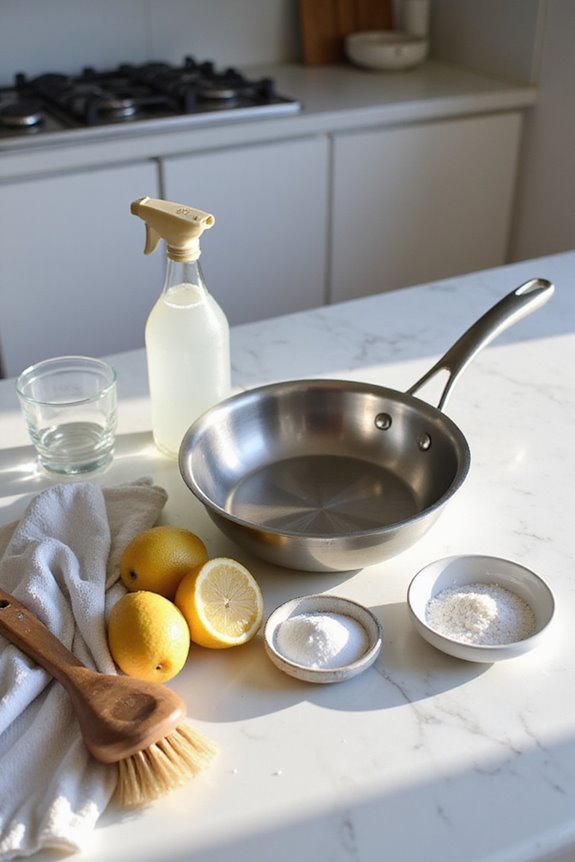
After our chat about the reasons food gets burnt, it’s time to tackle the messy aftermath. We swear by a couple of essential cleaning ingredients that make this job easier. First up is cream of tartar; it’s mildly acidic and scrubs away tough burnt food without scratching our beloved pans. Mix it with a tad of white vinegar for a thick paste, and we’re ready to tackle those stubborn spots! Then there’s lemon juice, which helps break down burnt food effortlessly. We can even scrub a halved lemon directly onto the surface for a zesty touch. These natural alternatives not only cleanse but also keep our kitchens fresh. Additionally, using non-toxic enamel-coated materials can help maintain the quality of your cookware. So, let’s get to scrubbing with these trusty helpers!
Recommended Products

Earthborn Elements Cream of Tartar; Also known as Potassium Bitartrate

Sodium Lauryl Sulfoacetate - DIY BATH BOMBS, BATH FIZZES, POWDERED BUBBLE BATHS, BATH SALTS FOR SUPER FOAMS, AND SCRUBS. - SURFACTANT USED TO CLEAN, DE-GREASE, AND CREATE LATHER. - GENTLE ON SKIN-USED TO REPLACE HARSHER SODIUM LAURETH AND SODIUM LAURYL SULFATE. - SODIUM LAUREL SULFOACETATE IS DERIVED FROM COCONUT AND PALM OILS.
[Retro Electric Tea Kettle with Fast Quiet Boil]: Rasonic's timeless white and champagne gold retro design elevates your kitchen. 1500W power ensures rapid, whisper-quiet boiling—ideal for tea, coffee, or hot water without noise, perfect for home or office.
Baking Soda Paste Method
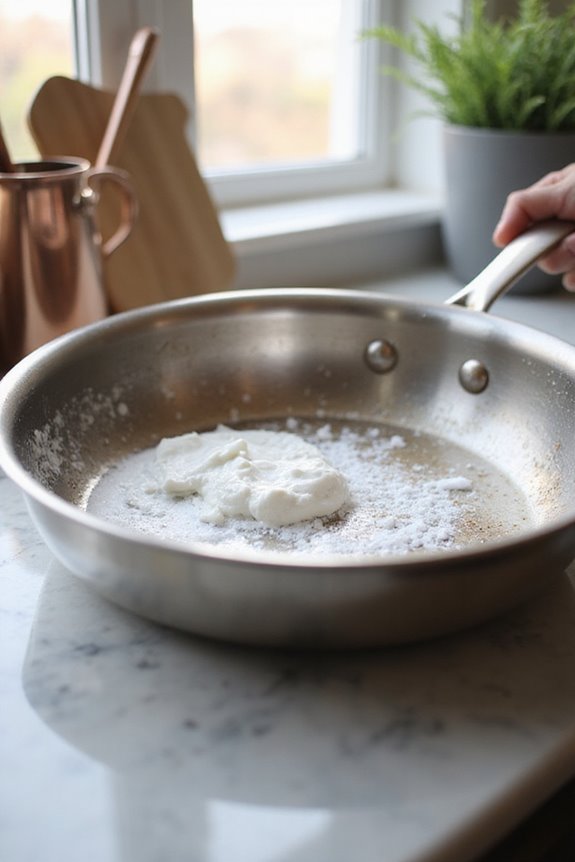
The baking soda paste method is a game changer when it comes to rescuing our battered pans from burnt disaster. We mix up a paste using a 3:1 baking soda ratio, adjusting as needed to cover those stubborn scorched areas. For bigger messes, about one cup of baking soda to one-third cup of water works wonders. Once we’ve got our thick paste ready, we slather it all over the burnt spots and let it sit for a few hours or even overnight. For quicker results, we can thin the paste and bring it to a gentle boil before scrubbing. Our trusty nylon brush or even our hands can help lift that burnt residue, making this method not just effective but surprisingly satisfying! Using this method not only restores our pans but also protects the nonstick surfaces that make baking so enjoyable.
Recommended Products


Triple-reinforced surface that is now 4x stronger
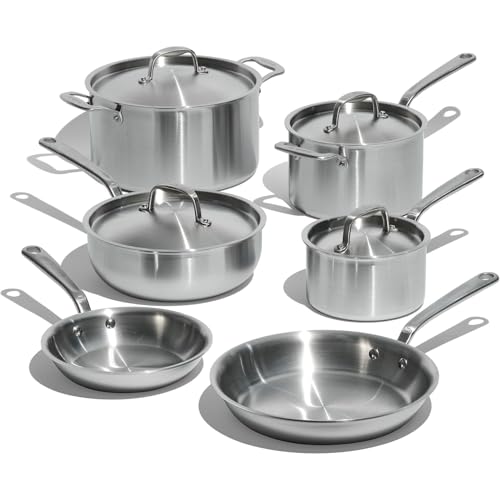
Includes: 10" Stainless Clad Frying Pan | 8" Stainless Clad Frying Pan | 8 QT Stainless Clad Stock Pot with Lid | 4 QT Stainless Clad Saucepan with Lid | 2 QT Stainless Clad Saucepan with Lid | 3 QT Stainless Clad Saucier Pan with Lid
Vinegar Reaction for Tough Stains
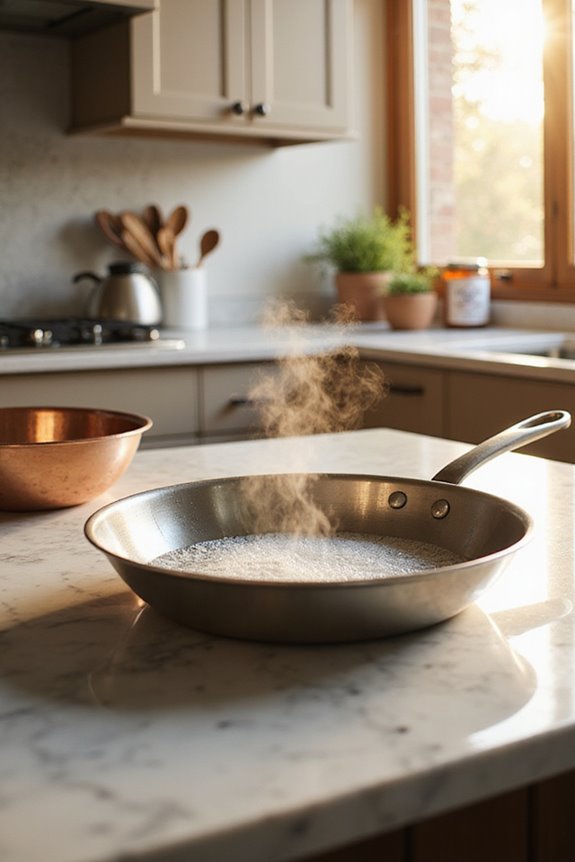
Now that we’ve tackled the baking soda paste method, let’s explore how vinegar can work wonders on those stubborn burnt stains. We can start by mixing equal parts of white vinegar and water, pouring it into the pan to cover those tough marks. Bringing this mixture to a boil for about five minutes releases some serious vinegar benefits, as the acidity effects help break down those burnt residues. Once we let it cool a bit, we can confidently scrub the pan with a non-metal scouring pad to lift off the loosened bits. For an extra boost, pouring vinegar over baking soda creates a fun fizz that tackles tougher stains. With this combo, we’ve got an effective and natural cleaning solution! Additionally, the ease of cleaning with vinegar makes it a preferred choice for maintaining kitchen tools.
Recommended Products

Mojave holds an old-world look, featureing geometric patterns, neutral tones, and wool texture adding warmth and elegance to entryways, bedrooms, and living spaces.

SINK DIMENSIONS: 32" L X 21" W X 9.5" D and designed to fit 36" minimum cabinet base

[Sink with High Temperature Fired Ceramic] - This sink features a AAA grade ceramic surface that's been fired at an intense 2336℉. The result is a smooth, stain-resistant finish that's also scratch-resistant, making it a breeze to clean and maintain.
The Deglazing Technique
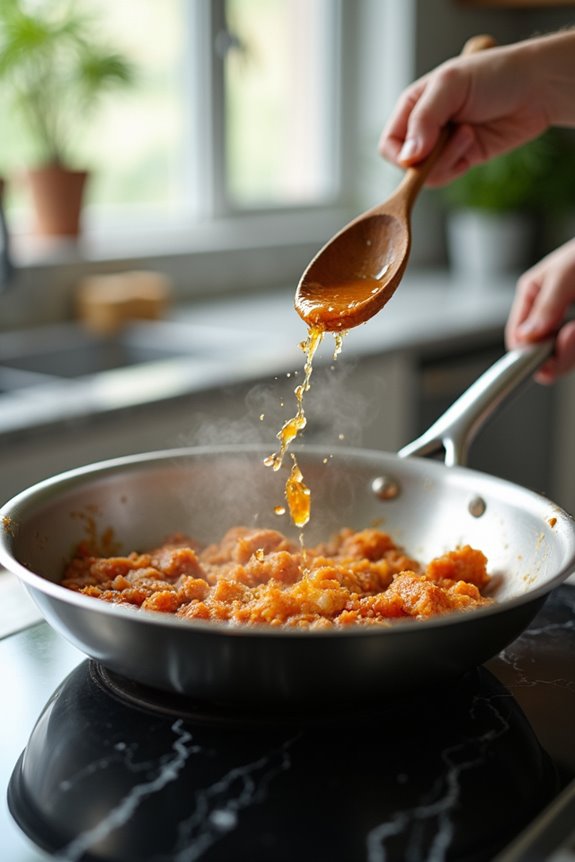
When we think about cleaning up after cooking, we often dread the stuck-on bits that cling to our pans. But here’s where the magic of deglazing comes in! By adding liquid to our hot pan, we can dissolve those stubborn bits, known as fond, and turn them into something remarkable. The deglazing benefits include not just a flavorful base for sauces, but also a much easier clean-up! We can choose from wine, stock, or even some vinegar, each adding unique flavors. Remember to keep our pan hot and use a wooden spoon to scrape up those tasty bits. It’s a simple technique that elevates our dishes while making washing up a breeze—now that’s something to cheer about! Additionally, using high-quality non-toxic materials in your cookware can enhance the deglazing process and ensure safe cooking practices.
Scouring Tools for Effective Cleaning
To tackle the challenge of burnt food stuck on our pans, we’ve got a handy arsenal of scouring tools at our disposal. For non-stick surfaces, soft nylon scrubbers are our best pals, while steel wool works wonders on stainless steel—just be careful not to scratch! If we want a surprising alternative, an aluminum foil ball can effectively battle burnt food too. Let’s not forget plastic scrapers; they’re gentle and help loosen residue. When it comes to scouring pads, we’ve got choices based on abrasion levels. Remember, finding the right balance is key—too much abrasion can harm our cookware. So, let’s scrub smartly and rescue those pans without breaking a sweat! Happy cleaning!
Recommended Products

➤ DURABLE MATERIAL - Large Pad Size: 5" x 3.5" x .625", Lola's cleaning sponge is made of nylon netting w/ a foam sponge interior. It won't scratch most surfaces. You can use this sponge scrubber everywhere around your home, use with your favorite liquid dish detergent. The netting makes it easier to lift off smudges, caked on messes, stains, etc

➤ DURABLE - This Lola ring remover bath & bowl scrub comes with crescent-shaped scrubbing pad. This toilet cleaner brush has an angled head that easily cleans under the rim. Also, its elongated handle reaches deep.

MR. SCRUB sponge’s quality resembles that of market-leading brands.
Alternative Cleaning Ingredients
Once we’ve got the right scouring tools in hand, it’s time to explore some impressive alternative cleaning ingredients that’ll really take our pan-cleaning game up a notch. One of our favorites is baking soda, a natural cleaner that works wonders on burnt food. Mix it with vinegar for a fizzy, lifting action—perfect for loosening stubborn stains. Lemon slices in boiling water can also work magic, breaking down burnt residue while leaving a fresh scent. For an eco-friendly twist, try mineral-based powders like Branch Basics Oxygen Boost; it’s biodegradable and effective without harsh chemicals. Let’s embrace these natural cleaners that not only clean, but also keep our planet happy! Who knew scrub time could be this rewarding?
Specialized Cleaning Tools
Cleaning our pans can feel like a chore, but with the right specialized cleaning tools, it becomes much easier and even a bit enjoyable. Think of specialized brushes that can help reach those tricky corners where burnt food loves to hide. Steam cleaners work wonders, letting high-temperature steam soften stubborn residue for easy removal. You might find chain-mail scrubbers perfect for cast iron, and for nonstick surfaces, silicone scrubbing brushes are your best friend. Don’t forget about electric scrubbers; they practically do the hard work for us! With the right tools, we can tackle those burnt bits without damaging our precious cookware. So, let’s arm ourselves with these handy gadgets and reclaim our pans!
Recommended Products
The farmhouse sink needs a minimum 33" (838 mm) apron sink base cabinet

Consistently delicious pizza with G2 Gas Technology - Patent-pending tapered flame gas burner system delivers 420% better heat distribution, all but eliminating hot and cold spots for better, easier cooking than ever.
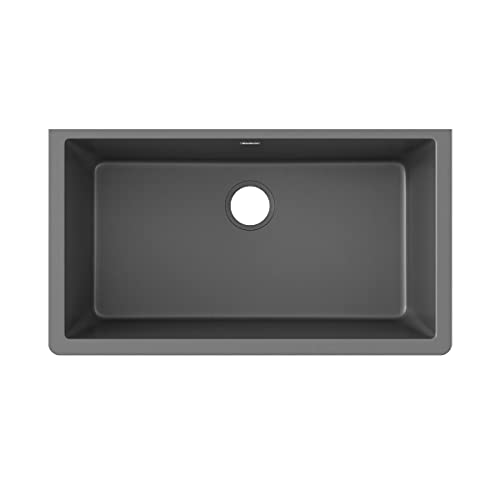
Sink Dimensions: 33" X 18-7/16" X 9-7/16" Min. Cabinet Size: 36"
Preventative Measures to Reduce Burning
When we’re whipping up a delicious meal, the last thing we want is to end up with burnt food! To keep our culinary creations in their prime, we should start with smart heat settings. Low and medium heat help us maintain control, allowing us to slowly coax flavors without charring them. Also, let’s pay attention to ingredient preparation—uniformly cut veggies and proteins cook more evenly, reducing our burning woes. Don’t forget to add enough oil or butter; it creates a nice barrier between food and the pan. And, avoid overcrowding the pan, which can trap heat and lead to disaster. With these tips, we can enjoy our meals without the burnt remnants weighing on our minds!
Safety Precautions When Cleaning Pans
Even if we’re enthusiastic to tackle those burnt remnants left on our pans, safety should always be our top priority. Before we start scrubbing, let’s grab our safety gear—gloves to shield our hands and maybe some goggles if we’re going for those tougher stains. Remember to keep our kitchen well-ventilated, especially when using any chemical cleaners or heated pans, to avoid inhaling any harmful fumes. We want to use non-scratching sponges and avoid sharp tools that could damage our pans. It’s tempting to scrub hard, but let’s take it easy to protect both the pan and ourselves. And please, wait for those pans to cool down—no one wants a steam burn! Let’s clean smart and safe!
Special Considerations for Different Pan Materials
No one wants to spend their time battling stubborn burnt food stuck to their favorite pans, right? Each pan material comes with its quirks. For stainless steel, we can scrub with a gentle sponge or even a bit of aluminum foil for those tough spots. With aluminum pans, we’ve got to be a bit kinder—skip the harsh abrasives and try baking soda with vinegar instead. Now, nonstick surfaces? Always opt for soft sponges; we don’t want to ruin that precious coating. For our cherished cast iron, forget the soap—course kosher salt is our best friend here! And as for copper care, a little ketchup works wonders on those burnt spots. Remember, a gentle touch is key!
Frequently Asked Questions
Can I Use Dish Soap for Cleaning Burnt Pans?
Yes, dish soap’s effectiveness in cleaning burnt pans is enhanced when paired with soaking. Did you know it works best alongside baking soda or vinegar? We’ve found these cleaning alternatives make the process feel more rewarding together!
How Do I Know When My Pan Is Clean?
To know our pan’s clean, we can inspect visually and by touch, use dish soap, or test with water. Different pan materials require specific cleaning methods, ensuring we maintain their quality and longevity together.
Will Cleaning Burnt Food Damage the Pan?
Cleaning burnt food can feel like steering through a stormy sea; if we choose the right methods for our pan materials, we can reach calm waters without damaging our precious cookware. Let’s steer carefully together!
What Tools Should I Avoid for Non-Stick Pans?
We should avoid using steel wool, metal pads, and harsh powders on our non-stick pans. Instead, let’s reach for soft sponges and suitable scrubbers to keep our trusty cooking utensils in perfect condition!
How Can I Prevent Burnt Food in the Future?
To prevent burnt food, we should embrace meal prep and practice thoughtful cooking techniques. By managing heat and choosing our equipment wisely, we can create delicious meals together without the worry of unwanted char.