As an Amazon Associate, we earn from qualifying purchases. Some links on this site are affiliate links at no extra cost to you. Our recommendations are based on thorough research and editorial judgment.

How To Choose Cookware Materials?

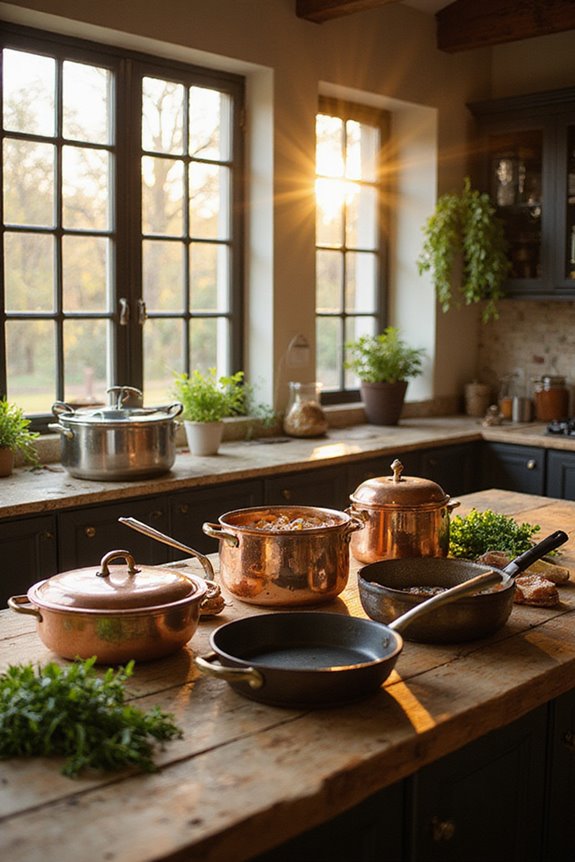
Choosing the right cookware can change our cooking game! Let’s think about what we need: lightweight aluminum heats fast, while stainless steel is tough and versatile. Carbon steel offers quick heating with a natural nonstick surface, and cast iron keeps the heat coming for those hearty meals. Don’t forget about copper for perfect temperature control! Each material has its perks, so consider how we cook and what we enjoy. There’s more to explore about these options, so let’s keep chatting!
Key Takeaways
- Consider the type of cooking you’ll be doing; materials like stainless steel are excellent for acidic foods while nonstick is ideal for delicate dishes.
- Evaluate heat conduction; materials like copper and aluminum heat quickly and evenly, while cast iron retains heat effectively for slow cooking.
- Think about maintenance; carbon steel requires regular seasoning while stainless steel and anodized aluminum are easier to maintain without special care.
- Determine durability needs; stainless steel and cast iron are long-lasting, while nonstick pans may wear out faster with heavy use.
- Assess the weight and handling; lightweight aluminum is easy to maneuver compared to heavier options like cast iron.
Understanding Cookware Materials
You may be interested



When we explore the world of cookware materials, it can feel a bit overwhelming, but don’t worry—we’re here to make it simple! Let’s plunge into some popular cookware types and their unique material properties. Stainless steel is durable and nonreactive, keeping our food’s flavors intact. Carbon steel heats up quickly and develops a natural nonstick surface, perfect for stir-frying. Copper offers incredible heat control but requires a bit of polishing to keep it looking shiny. Then, we have cast iron, which retains heat beautifully but needs seasoning. Enameled cast iron simplifies maintenance while still providing excellent heat retention. Got a delicate dish? Nonstick pans are our friends! Cast iron skillets feature excellent heat distribution and retention, ensuring even cooking results. Choose wisely, and you’ll be set for kitchen success!
Benefits of Aluminum Cookware
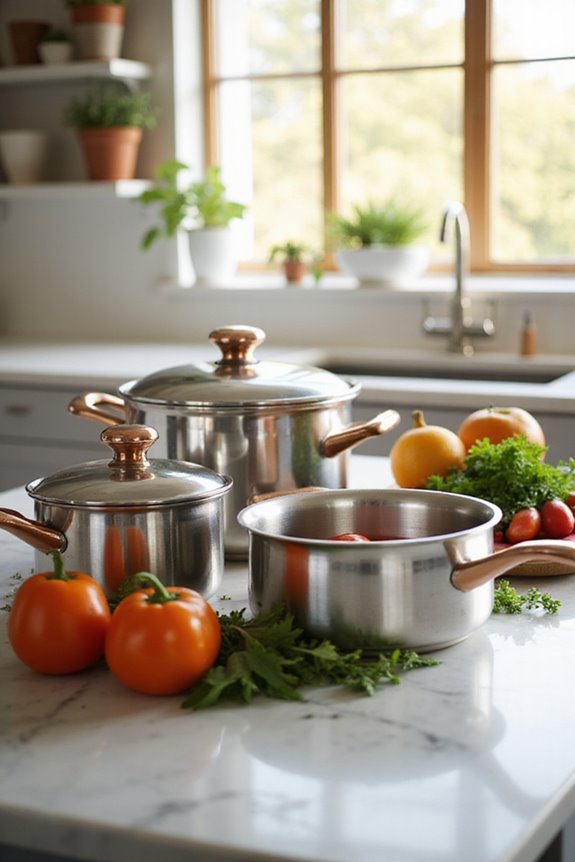
If you’re looking for cookware that combines efficiency with ease of use, aluminum might just be your new best friend in the kitchen! Its lightweight handling makes it a breeze to maneuver—imagine flipping pancakes without that awkward, heavy pan weighing you down. With incredible thermal efficiency, aluminum heats quickly and evenly, meaning our meals cook uniformly without hot spots. This not only saves us time but also energy—who doesn’t love that? Plus, the quick cooling after cooking makes for safer handling when we’re in a hurry. Combine all these perks, and we’ve got a versatile kitchen companion. Therefore, it’s important to consider durable material constructions when choosing cookware. So why not embrace aluminum cookware? It’s practical, affordable, and a joy to use in our everyday cooking adventures!
Recommended Products

Set includes 2.3-qt saucepan with lid, 3.5-qt saucier with lid, 5-qt saute pan with lid, 8.9-qt Dutch oven with lid, and 11" Proline fry pan

Three-layer bottom technology: the stainless steel base and aluminum core distributes heat quickly and evenly, saving energy

10-Piece Set Includes: 6-quart stock pot with metal lid, 3-quart sauté pan with metal lid, 3-quart and 1.5-quart saucepans with metal lids, and 8-inch and 10-inch frying pans.
The Advantages of Anodized Aluminum
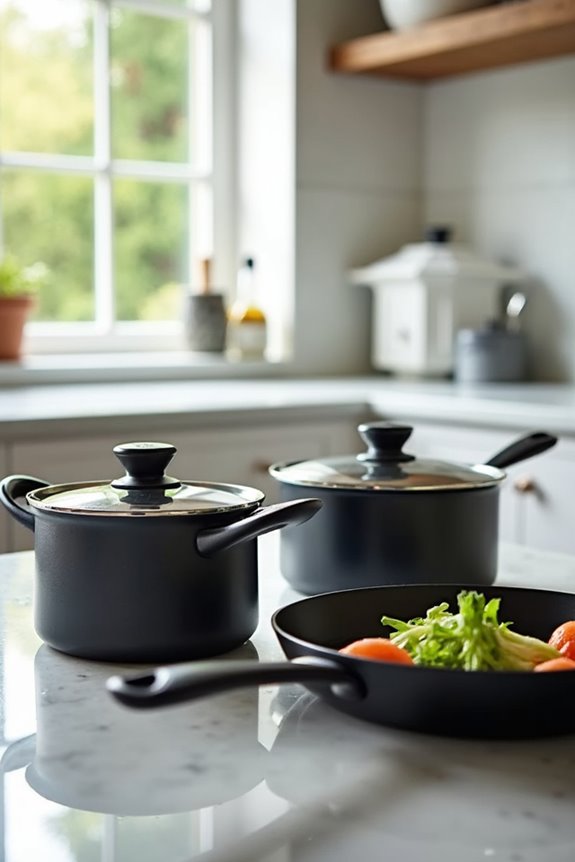
Aluminum cookware has a lot of great perks, but let’s take things up a notch with hard anodized aluminum. This beauty boasts incredible anodized durability that resists scratches and dents, making it a long-lasting investment for our kitchens. Plus, its non-reactive surface guarantees that our acidic foods stay flavorful—no metallic taste, thank you!
With excellent heat conductivity, it distributes heat evenly, perfect for mastering those tricky sautéing skills. And don’t worry about being limited; it works beautifully on all cooktops and in the oven! Just remember to hand wash and avoid metal utensils, and you’ll enjoy this versatile cookware for years. So, let’s embrace the benefits of hard anodized aluminum together—it truly makes cooking a joy! Additionally, many ceramic pot sets, like SENSARTE’s 14-piece set, offer similar versatility and durability, making them a fantastic choice for any kitchen.
Recommended Products

Product 1: Triple-reinforced PFOA-free surface that is now 4x stronger
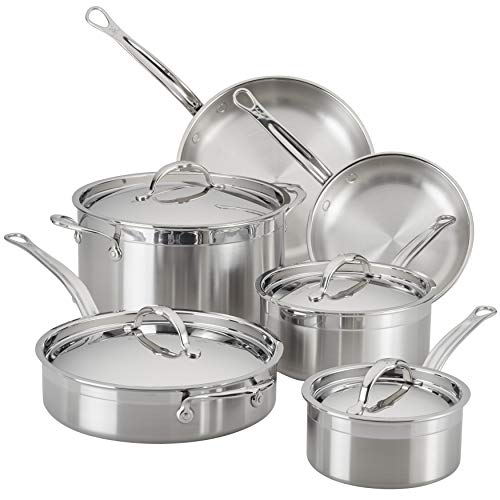
PROCORE ALUMINUM: ProBond Forged Professional Clad Stainless Steel pots and pans are handcrafted in Italy and feature a tri-ply body with a responsive pure aluminum core for optimum performance, maximum durability, and fast, even heat distribution

Product 1: TIMELESS PROFESSIONAL APPEAL: All-Clad D3 Stainless is the perfect choice for anyone who loves to cook. Beyond the classic stainless-steel style, you will find a well-constructed, high-performance, easy to use kitchenware set for all, from beginner to culinary artist.
Why Choose Stainless Steel?
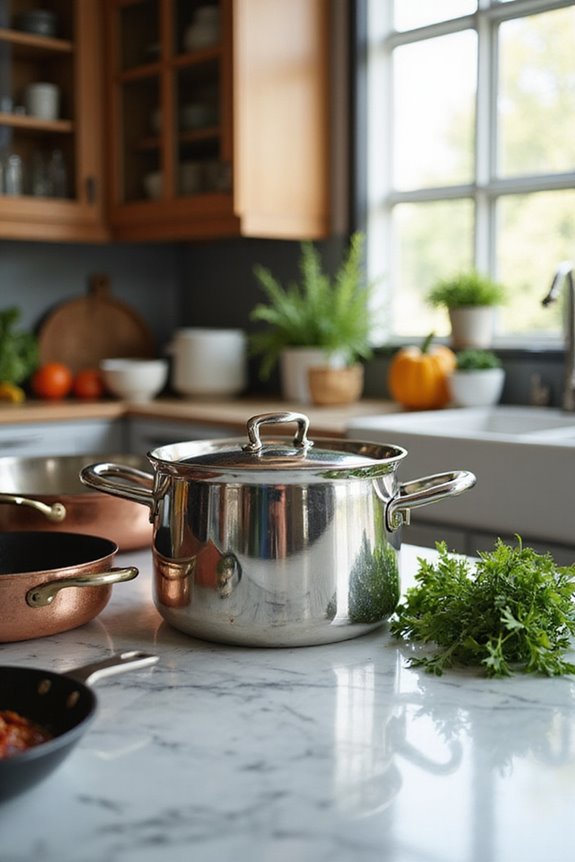
Stainless steel cookware is a kitchen superhero that deserves a spot in our cooking arsenal. With impressive stainless steel advantages, it’s non-reactive, meaning we can whip up zesty tomato sauces without fear of altering flavors. Plus, it’s tough as nails—thanks to its high chromium and nickel content, we’ll enjoy stainless steel longevity that outlasts many fancier options. Scratches? Not a problem here; we won’t have to worry about harmful coatings flaking off. Clean-up is a breeze, and it’s dishwasher safe for days we need quick solutions. Let’s also chat about its versatility; from sautéing to baking, stainless steel is our reliable sidekick in the kitchen, ensuring perfectly cooked meals every time we fire up the stove! It’s also worth noting that well-maintained cast iron skillets can offer exceptional service for generations, further emphasizing the benefits of durable cookware options.
Recommended Products

THE ULTIMATE 8-PIECE SET: A classic set featuring a variety of styles and sizes, including the Copper Casserole Pot, Copper Sauce Pan, Copper Flared Sauce Pan, Copper Heavy Sauté Pan, along with all matching lids

Enjoy professional cooking with this 14 piece cookware set which includes 10 inch and 12 inch Fry Pans, 2 Quart and 3 Quart covered Sauce Pans, 3 Quart and 6 Quart covered Sauté Pans, 12 inch covered chef’s pan and an 8 quart covered stockpot

Made in France. Mauviel is the leading cookware manufacturer for professional and household chefs throughout the world. The 16-piece set includes 1.8-qt Saucepan with lid, 2.6 qt. Saucepan with lid, 3.3-qt Saucepan with lid, 3.3-qt. Sauté pan with lid, 3.6-qt Curved splayed Sautepan, 7.87" Frying pan, 10.24" Frying pan, 3.2-qt Rondeau with lid, 6.1-qt Stew pan with lid and 0.2-qt Copperbrill
Exploring Carbon Steel Options
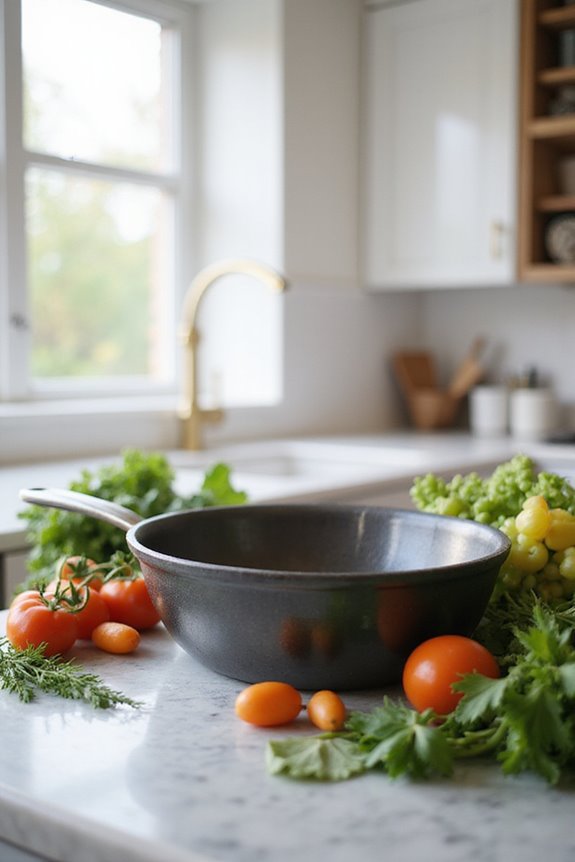
Having explored the impressive benefits of stainless steel cookware, it’s time to shine a light on another star of the kitchen: carbon steel. Think of it as the cooler cousin of cast iron! With quick and even heating, carbon steel means we can toss our pans on the stove and start cooking in minutes. Its durability is impressive too, withstanding high temperatures and easily reseasoned to keep our meals delicious. Speaking of meals, the naturally developed non-stick surface is both safer and healthier than synthetic options. Just remember, a little carbon steel maintenance goes a long way! So, let’s embrace this versatile cookware and elevate our cooking adventures, one perfectly seared dish at a time! Additionally, carbon steel skillets also benefit from seasoning techniques that improve their non-stick properties over time.
The Strengths of Cast Iron Cookware
When it comes to cookware, few materials stand out quite like cast iron. Its remarkable cookware strength and durability benefits are hard to beat! With proper care, cast iron can last multiple lifetimes and even improve with age. You know that feeling when the heat just won’t let up? That’s cast iron for you! Its heat retention is exceptional, keeping your food perfectly cooked without those pesky hot spots. Plus, the natural non-stick surface means we’re all cooking healthier meals with less oil—what’s not to love? Just remember, a little seasoning goes a long way. So, let’s embrace the charm of cast iron and reveal its cooking potential in our kitchens! Let’s create some delicious memories together!
Recommended Products

Enameled cast iron delivers superior heat distribution and retention


Caraway 8in + 10in Fry + 12in Fry Set (no lids) + 3Qt+ 4.5Qt Saute Duo Black
The Benefits and Drawbacks of Copper Cookware
While we might think of copper cookware as a luxury item, its benefits really make it worth considering for any home chef. The copper advantages, like excellent thermal conductivity, mean our food cooks evenly and quickly. We can adjust the temperature with the slightest change, which is fantastic for delicate sauces. Plus, that beautiful copper adds charm to our kitchens!
However, we should also consider the copper disadvantages. It’s more expensive, can be heavy, and needs a bit of upkeep to keep it shining. Not to mention, it can react with acidic foods unless it’s lined properly. So, while copper can be a stunning addition to our kitchen, it’s wise to weigh the pros and cons before diving in.
Recommended Products

Made in France. Mauviel is the leading cookware manufacturer for professional and household chefs throughout the world. The 12-piece set includes 1.8-qt Saucepan with lid, 2.6 qt. Saucepan with lid, 3.4-qt Saucepan with lid, 3.2-qt. Sauté pan, 3.4-qt Curved splayed Saute pan, 7.87" Frying pan, 10.24” Frying pan, and a 6.2 qt Stew Pan with lid

Includes - One 8.5″ and 11″ Skillet, one 1.5qt and 3qt Saucepan with lids, one 3.5qt Sauté pan with lid, and a 6qt stockpot with lid. Handcrafted in Italy with a lifetime warranty; hand-wash and dry with a soft cloth.

𝗖𝗼𝗺𝗽𝗹𝗲𝘁𝗲 𝟳-𝗽𝗶𝗲𝗰𝗲 𝗰𝗼𝗼𝗸𝘄𝗮𝗿𝗲 𝘀𝗲𝘁: This set includes essential kitchen pieces such as a 1.3 quart saucepan with lid, 4.4 quart sauté pan with lid, 5.7 quart saucepan with lid, and a 9-inch frying pan, all designed to meet your culinary needs.
Key Considerations When Selecting Cookware
Choosing the right cookware can feel overwhelming, especially with so many materials and options out there. First, think about your cooking methods. High-heat techniques, like searing, call for materials like cast iron or carbon steel. For delicate tasks, nonstick surfaces are your best friend. If you’re flexible with styles, stainless steel is fantastic for durability and heat conduction.
Next, consider material properties. Copper and aluminum heat quickly, while stainless steel is low-maintenance. Keep in mind that some cookware isn’t induction-friendly, so check compatibility. And let’s not forget budgeting! While copper looks great, it can hit the wallet hard. Balancing cost and functionality can be a game-changer. So, let’s find the perfect match for your kitchen adventures!
Tips for Maintaining Your Cookware
Maintaining your cookware isn’t just about keeping things clean; it’s about preserving the investment we’ve made in our kitchen tools. We should use gentle cleaning techniques: for non-stick pans, a soft sponge and warm, soapy water are our best friends. Remember, cast iron loves a good rinse with hot water—no soap needed!
Let’s not forget the importance of seasoning tips; after cleaning cast iron, a thin coat of vegetable oil keeps it happy and rust-free. When using stainless steel, a quick oil rub after washing helps maintain its shine. So, let’s treat our cookware right, keeping it in top shape to enjoy those delicious meals together! And hey, no dragging or sliding—our stovetops deserve love too!
Frequently Asked Questions
Which Cookware Material Is Best for High-Heat Cooking?
When considering high-heat cooking, we believe cast iron’s heat retention and stainless steel’s durability make a fantastic duo. With cast iron thriving at 1,200°F, our meals will always be perfectly seared and deliciously flavorful.
Can I Use Metal Utensils With All Cookware Types?
We can’t use metal utensils with all cookware types. While they work great with stainless steel, we should avoid them on nonstick or ceramic surfaces. Each material has its quirks, so let’s choose wisely together!
How Do I Prevent My Cookware From Warping?
Like a gentle breeze eases into a room, we can prevent cookware from warping by ensuring even heat distribution and practicing proper pot maintenance. Slow heat adjustments and careful cooling keep our beloved pans in perfect harmony.
What Cookware Is Safest for Everyday Use?
For everyday safety, we find that stainless steel and ceramic are some of the safest materials. They stand the test of time, ensuring our meals remain healthy and delicious without hazardous chemicals interfering. Let’s cook confidently together!
How Can I Tell if My Cookware Is High-Quality?
When we think of cookware, it’s like choosing a partner for a dance; quality indicators matter! Reliable cookware brands show durability, efficient heat distribution, and thoughtful design. Together, we’ll whip up culinary masterpieces with confidence!