As an Amazon Associate, we earn from qualifying purchases. Some links on this site are affiliate links at no extra cost to you. Our recommendations are based on thorough research and editorial judgment.

Best Dutch Ovens For Baking Bread

When we’re on the hunt for the best Dutch ovens for baking bread, we love brands like Le Creuset and Staub for their high-quality heat retention and moisture control. Enameled cast iron is fantastic for crispy crusts, while Lodge offers a wallet-friendly option. A 4 to 6-quart size is ideal for steam circulation. And trust us, timing that lid removal can make or break your loaf! Stick with us, and we’ll explore more tips and tricks for perfect bread.
Key Takeaways
- Le Creuset and Staub deliver excellent baking results with durable materials and features enhancing crust quality and moisture retention.
- Lodge offers an affordable yet reliable option, making it a great choice for beginner bakers seeking good heat retention.
- Emile Henry provides a lightweight alternative with a dome lid, perfect for those preferring easier handling while still achieving excellent bread.
- Optimal sizes range from 4 to 6 quarts, ensuring proper steam circulation for a well-risen loaf.
- Consider material types like enameled cast iron for low maintenance or bare cast iron for traditional crust, based on your baking style.
Overview of Dutch Ovens for Bread Baking
You may be interested


When it comes to baking bread, a Dutch oven is like your trusty sidekick—always there to help you achieve that perfect crust and fluffy interior. These cast iron beauties trap steam and distribute heat evenly, giving our loaves that professional touch. They create a closed, steamy environment that allows for great bread variations, from crusty sourdough to chewy focaccia. Additionally, using a Dutch oven can mimic the effects of a baking stone’s micro-porous structure to enhance moisture absorption and improve crust quality.
Top Brands and Their Features
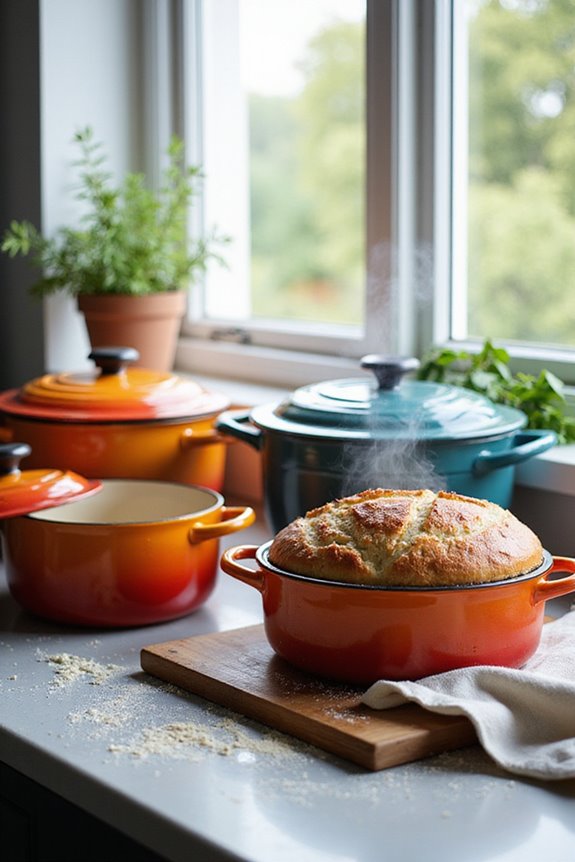
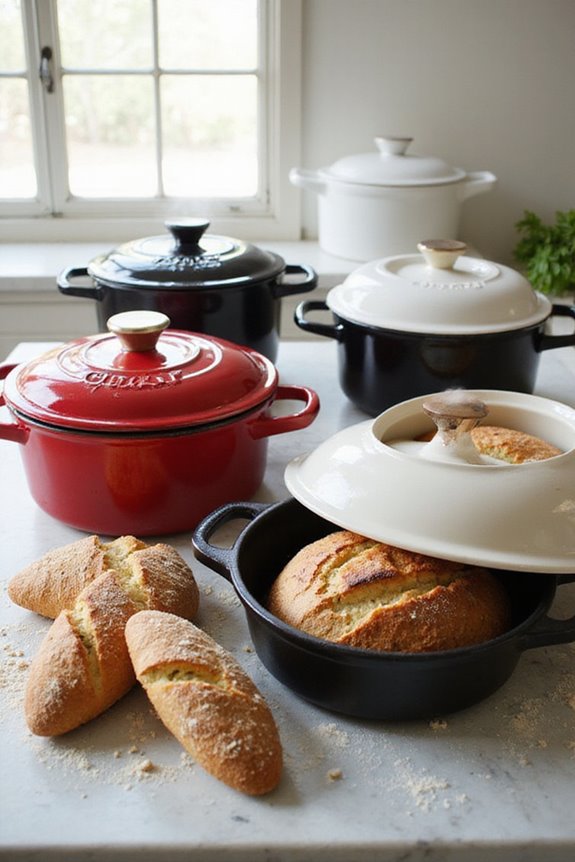
As we immerse ourselves in the world of Dutch ovens, you’ll find that each brand brings something unique to the table. Let’s start with the Le Creuset comparison; its enameled cast iron guarantees durability and performance, especially for crispy crusts. Then, consider the Staub benefits—its self-basting lid creates a humid baking environment, perfect for artisan bread. If you’re watching your wallet, Lodge affordability can’t be beaten while still providing durable heat retention. For something lighter, the Emile Henry advantages feature a dome lid mimicking traditional ovens, making it a joy to use. Finally, don’t overlook other brands like Made In or Caraway—they offer solid options too! So, let’s find what suits our baking adventures best! Additionally, choosing a panini press with a nonstick surface can make cleanup as effortless as baking with your favorite Dutch oven.
Material Types and Their Benefits
Choosing the right material for your Dutch oven can make all the difference in your bread-baking journey. It’s about finding the perfect balance between material advantages and maintenance requirements. Enameled cast iron is a fantastic option; it retains heat beautifully and requires minimal upkeep—no seasoning needed! Bare cast iron may require a bit more love with regular seasoning, but it excels in creating that perfect crust traditional bakers crave. For those who prefer lightweight options, ceramic offers easy handling, though it heats up slower. Finally, stainless steel is durable and easy to clean, yet it struggles to match the heat retention of cast iron. Each material has its charm—choose what suits your baking style best! Additionally, cast iron skillets are versatile tools that can be used for various cooking techniques, enhancing your overall culinary experience.
Recommended Products

Enamelled cast iron cocotte, ideal for one-pot dishes and roasts, to serve 4-5 people

CAST IRON ADVANTAGE: Smooth ceramic surface distributes and retains heat evenly for perfect results, ready to use- no seasoning required
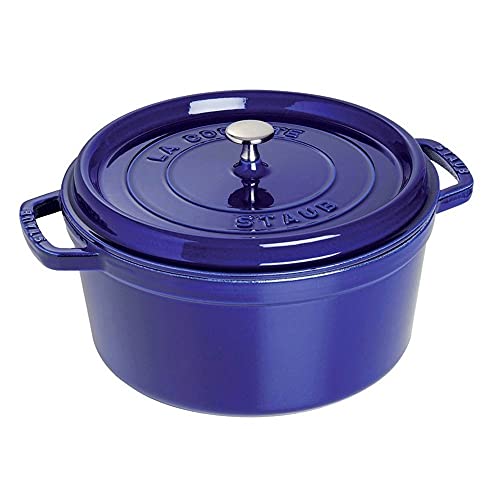
Round enameled cast iron coaster with a volume of 3.8 liters, ideal for gilding, slow cooking and trendy serving of meat, fish, fruit or vegetables
Key Features to Consider
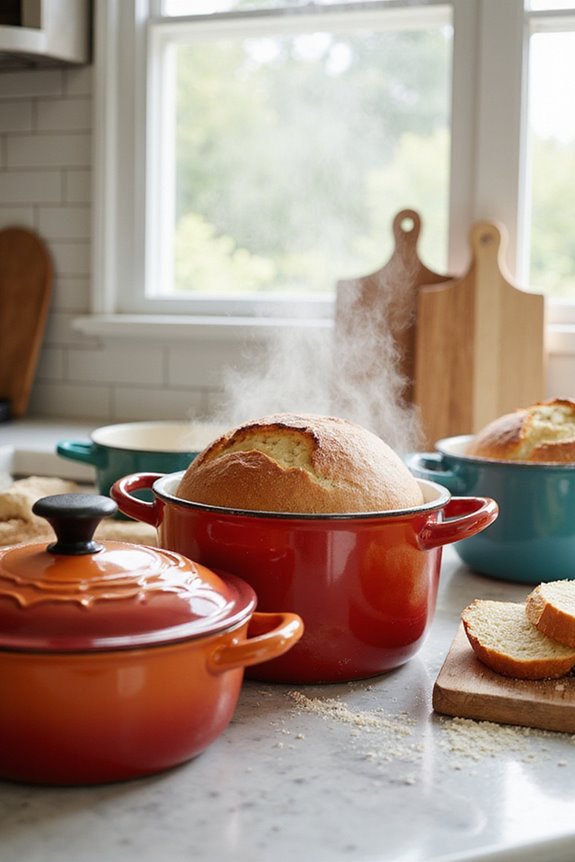
While it might seem like any Dutch oven will do, there are actually key features that can elevate our bread-baking experience to new heights. First, let’s talk size specifications; a Dutch oven between 4 and 6 quarts strikes a sweet spot for steam circulation and loaf expansion. Of course, if we’re feeling ambitious, larger options, like 7 1/4 quarts, can handle bigger loaves with grace. Next, lid features are essential—tight-fitting lids trap steam like a pro, creating that perfect baking environment. We want to guarantee the lid is easy to handle but fits snugly to keep all that delicious moisture inside. Additionally, heavy-duty cast aluminum construction can significantly improve heat distribution, ensuring even baking throughout. So, let’s take time to reflect on these features, guaranteeing our bread turns out fabulous every time!
Recommended Products

Enameled cast iron delivers superior heat distribution and retention; Ready to use, requires no seasoning

6.25-quart capacity 1 quart = 1 serving size, so this is the ideal pot to prep dinner for 6-7 servings

Enameled cast iron delivers superior heat distribution and retention; Ready to use, requires no seasoning
Benefits of Using a Dutch Oven
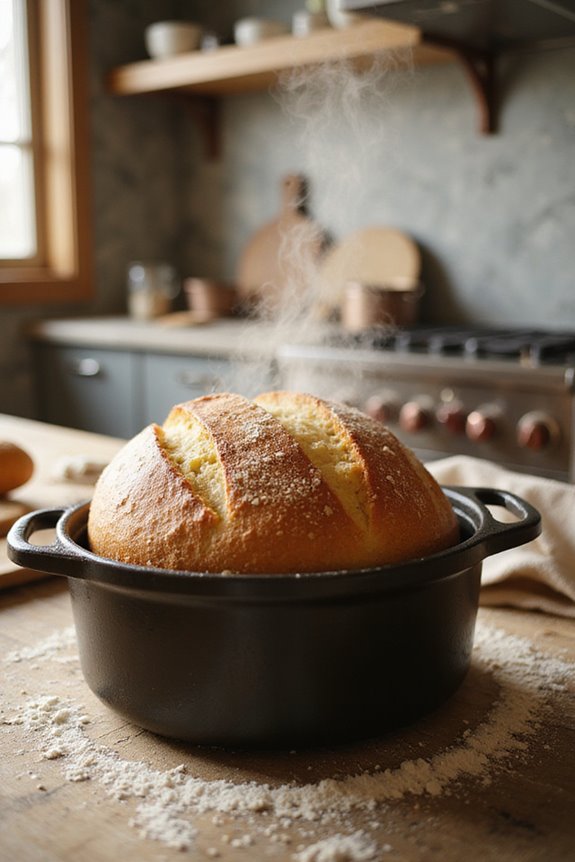
When it comes to baking bread, using a Dutch oven makes a world of difference. The heat retention and moisture sealing properties are game changers. By trapping steam, we create a moist environment that helps our dough rise beautifully. It’s like giving our loaves a mini spa treatment! This steam not only promotes a golden, blistered crust but also guarantees that our bread has that desirable oven spring. Plus, those thick cast iron walls maintain consistent temperatures, so we get lovely, even baking every time. With just one vessel, we can elevate our homemade bread from good to bakery-worthy, all while simplifying our process. So, let’s embrace the Dutch oven and enjoy all the deliciousness it brings! Additionally, heavy-duty options like cast iron models are perfect for consistent heat distribution and durability in our baking adventures.
Common Challenges and Considerations
As we plunge into the domain of baking bread with a Dutch oven, it’s important to recognize the common challenges we might face along the way. We’ve all felt that heart-sinking moment when our loaf is burnt because we didn’t manage temperature adjustments carefully. Lowering the preheat to 425°F can save us from those crispy bottoms! And let’s not forget steam control—keeping that lid on traps moisture, giving us the ideal rise. But timing is key; if we lift the lid too soon, we risk losing steam and ruining our crust. By placing our Dutch oven in the middle rack rather than directly on a hot stone, we can help prevent those pesky burns. Let’s embrace these challenges together!
Comparing Popular Dutch Oven Brands
Finding the right Dutch oven can feel like searching for a needle in a haystack, especially with so many brands vying for our attention. Let’s consider some popular choices together. Le Creuset and Staub stand out for their durability and excellent Dutch oven performance, with their enameled cast iron ensuring even baking and heat retention. Lodge offers affordability without sacrificing much on quality—perfect for those of us just starting our bread-baking journey. If we’re leaning towards something unique, Emile Henry’s ceramic design is a delightful alternative, though it’s more fragile. Other brands like Cuisinart and Great Jones tempt us with stylish options, but we might compromise on steam retention. Happy baking, everyone! Let’s find our perfect pot!
Recommended Products

Suitable for all types of hobs, incl. induction, can also be used in the oven/grill

Products sold and shipped by Amazon.co.jp are genuine Japanese products. Authentic products are made to meet Japanese inspection standards and come with a serial number for a lifetime warranty

Recommendations for Different Budgets
Now that we’ve explored some popular Dutch oven brands, let’s talk about options tailored to fit your budget. For budget baking, we can’t recommend the Lodge 5-quart enameled Dutch oven enough. It’s durable, affordable, and performs beautifully for bread. Just remember, with budget models, the enamel might chip after heavy use, so treat it with love! If you’re willing to spend a bit more, the Emile Henry Bread Cloche is a fantastic ceramic alternative that creates a magical steam environment for artisan loaves. For those who want the best, high-end brands like Le Creuset and Staub offer lifetime quality and beautiful designs. Don’t forget to look at stainless alternatives, as these can be stylish and efficient too! Happy baking!
Recommended Products

Smooth enamel bottom works on all stovetops, including gas, electric, glass, ceramic, induction, and halogen

Enameled cast iron delivers superior heat distribution and retention; Ready to use, requires no seasoning

COMPLETE CAST IRON SET: Includes a 10.5” skillet, matching grill pan, 3.5 qt braiser pan, and 6.5 qt cast iron Dutch oven with lid, perfect for frying, searing, baking, grilling, braising, and simmering with steady, even heat.
Tips for Baking Bread in a Dutch Oven
When we’re baking bread in a Dutch oven, we want to make sure we get it just right to achieve that perfect crust and crumb. Preheat your Dutch oven at 450°F for 30 to 45 minutes—that’s essential for steam generation and an even bake! Remember to keep the lid on for the first 20-25 minutes to trap that steam, and after revealing, let your bread bake for another 20-35 minutes until golden and crunchy. We need to pay attention to dough hydration too; adjust if needed for consistency. Use parchment paper for easy transfers and scoring the dough helps control its expansion. Let’s cool our loaf on a wire rack—no soggy bottoms allowed! Happy baking!
Frequently Asked Questions
Can I Use a Dutch Oven for No-Knead Bread Recipes?
Absolutely, we can use a Dutch oven for no-knead bread recipes! It’ll make our dough rising feel magical, creating crusty perfection that’ll amaze our taste buds and brighten our kitchen with its delightful aroma.
What Size Dutch Oven Is Best for Sourdough Bread?
For sourdough bread, we find that a Dutch oven with an ideal capacity of 5 to 7 quarts perfectly accommodates our bread size. This guarantees our loaves rise beautifully, achieving that perfect crust we all love.
How Do I Prevent Bread From Sticking to the Dutch Oven?
To keep our bread from sticking, we’ve got to follow some golden baking tips. Proper dough preparation, parchment layers, and a sprinkle of cornmeal create an irresistible, non-stick magic that guarantees our loaves release effortlessly.
Can I Bake Bread Directly on the Dutch Oven Lid?
No, we can’t bake bread directly on Dutch oven lids. Those lids are meant to trap steam, enhancing our baking techniques. Let’s stick to the pot for the best results and perfect crust.
Do All Dutch Ovens Require Seasoning Before Use?
Not all Dutch ovens need seasoning before use. Pure cast iron types do, but enameled ones don’t. We should always remember proper cast iron care for the best cooking experience, regardless of Dutch oven types.