As an Amazon Associate, we earn from qualifying purchases. Some links on this site are affiliate links at no extra cost to you. Our recommendations are based on thorough research and editorial judgment.

What Is Roasting?

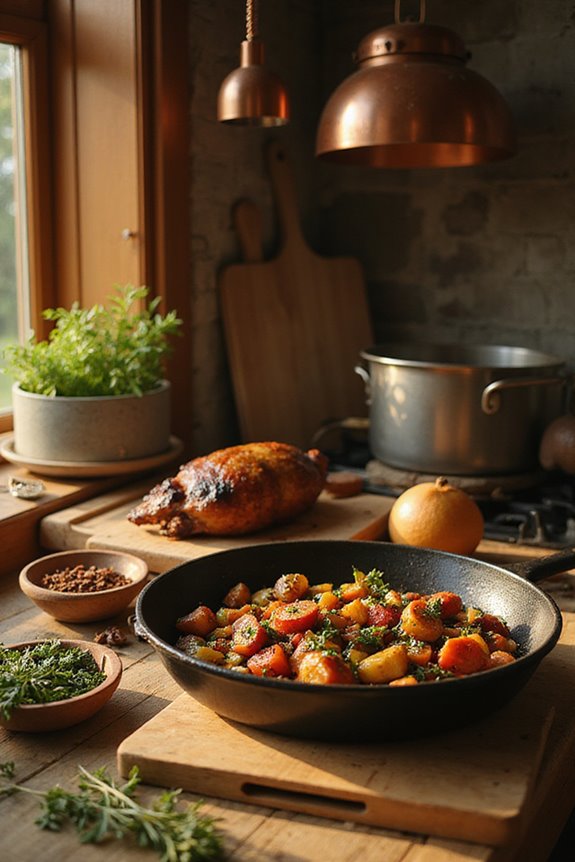
Roasting is a fantastic dry heat cooking method we use to turn meats and veggies into delicious and aromatic dishes. It works by evenly distributing heat, enhancing flavors, and promoting caramelization, so everything gets that golden, mouthwatering touch. We can roast at different temperatures for juicy results or crispy exteriors, depending on what we’re making. Plus, it’s a healthier way to cook since it typically needs less oil. Stick around, and we’ll uncover more roasting tips and techniques!
Key Takeaways
- Roasting is a dry heat cooking method that distributes heat evenly, starting at temperatures of 300 °F.
- This technique enhances flavors, preserves nutrients, and caramelizes sugars in meats and vegetables.
- Roasting can be performed at low or high temperatures, depending on the desired texture and juiciness of the food.
- Nutritionally, roasting requires little oil, making meals healthier while retaining essential vitamins.
- Historically, roasting has influenced culinary traditions and cooking tools, symbolizing prestige in many cultures.
Definition of Roasting



When we think about cooking, roasting stands out as one of those timeless methods that really brings out the best in our food. It’s a dry heat method that uses indirect heat, allowing hot air to circulate around our ingredients. This gentle yet efficient cooking technique promotes even heat distribution, creating that mouthwatering browned crust we all love while keeping the inside tender and moist. Typically, we’re looking at roasting temperatures of at least 300 °F. Whether we’re roasting a whole chicken or some sweet root vegetables, this cooking style enhances flavors and preserves nutrients beautifully. Plus, it’s pretty hard to resist the enchanting aroma that fills our kitchens! So, let’s embrace roasting and elevate our culinary creations! Additionally, using airtight lids can help preserve the freshness of other ingredients during the cooking process.
Culinary Uses of Roasting
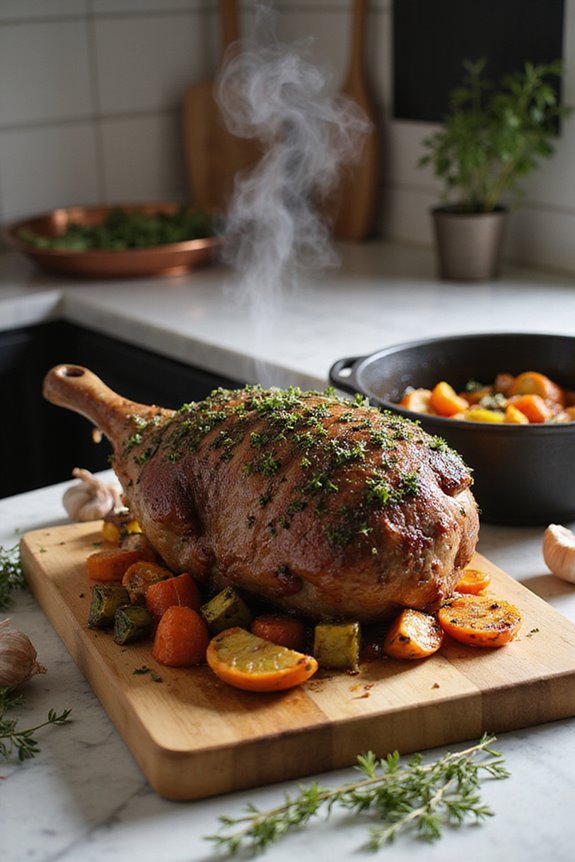
Roasting is more than just a cooking method; it’s a culinary adventure that transforms ingredients into mouthwatering meals. Whether it’s succulent roasted meats like chicken or tender lamb, or vibrant vegetables like Brussels sprouts and carrots, we discover that roasting enhances flavors through delicious caramelization. Let’s not forget about the exciting taste pairings we can create; roasted veggies and meats mixed together in a traybake are always a hit! We can experiment with roasting variations too, choosing high heat for quick browning or slower cooking to keep everything juicy. Additionally, using a heavy-duty baking tray can help achieve even heat distribution, ensuring perfectly cooked dishes. So, let’s embrace this technique at our next gathering; after all, nothing says comfort like the warm, inviting aromas of a roasting feast!
The Roasting Process and Techniques
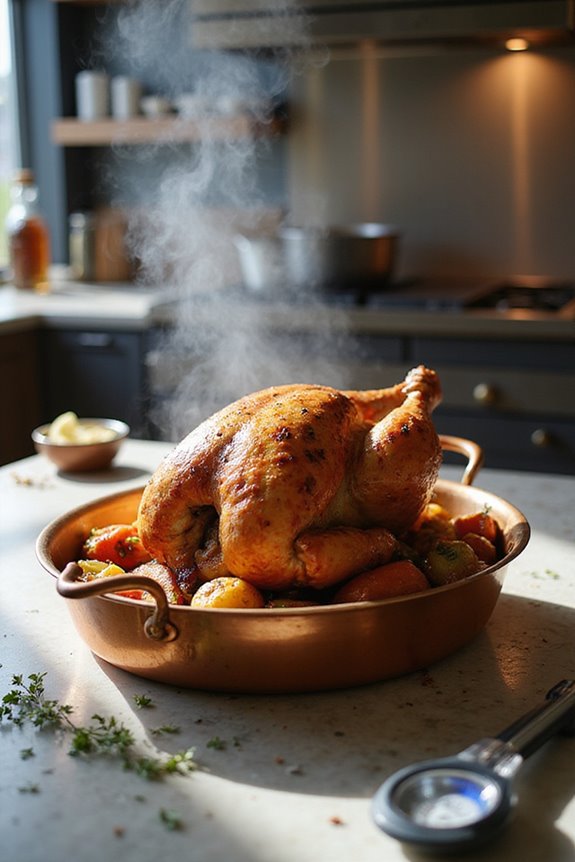
Exploring the nuances of roasting takes our culinary journey to the next level. Together, we can appreciate the essential roasting techniques and principles that elevate our dishes. We can roast using various methods—slow roasting retains moisture and tenderness in larger cuts of meat, while high-temperature roasting gives us that delightful, crusty exterior on tender cuts. Don’t forget the power of a combination approach, starting high to form a crispy shell and finishing low for juiciness. Using the right roasting pan not only helps with even cooking but catches those precious drippings for sauces. So, whether we’re mastering meat or experimenting with veggies, let’s embrace these techniques and enjoy the art of roasting! Additionally, consider incorporating ergonomic jar openers to simplify meal prep and enhance your cooking experience.
Flavor Development in Roasting
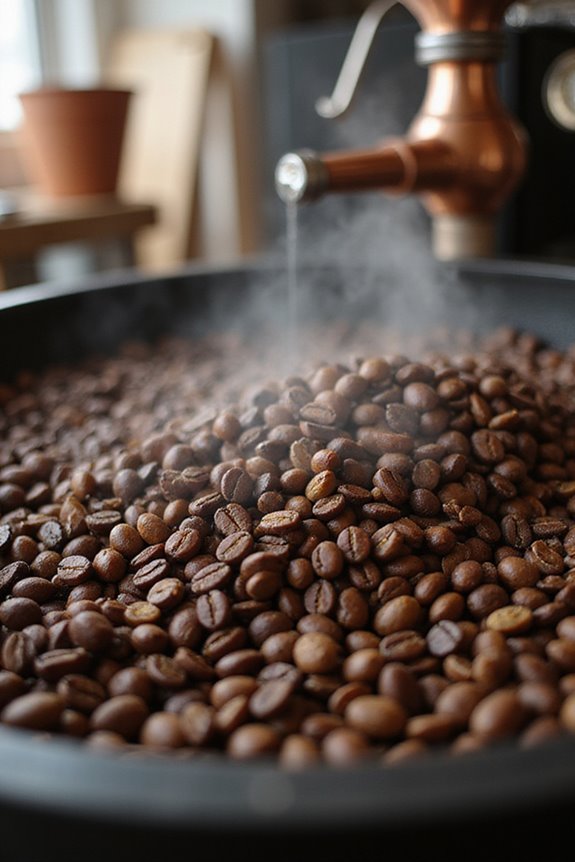
Understanding the art of flavor development can transform the way we approach roasting. By embracing Maillard reactions, we uncover the secrets behind those rich, complex flavors we love. When sugars and amino acids dance together under heat, they create hundreds of delightful compounds that bring roasted coffee—and other foods—to life. The caramelization effects kick in a bit later, adding sweet but intricate notes that deepen our flavors. It’s all about finding that sweet spot with time and temperature; a delicate balance can make or break our roast. So, let’s pay attention to the first and second cracks, and remember: a well-roasted bean can go from simple to spectacular. Additionally, utilizing broiler pans can enhance the roasting process, ensuring optimal heat distribution and flavor development. Let’s dive deeper together!
Nutritional Benefits of Roasting
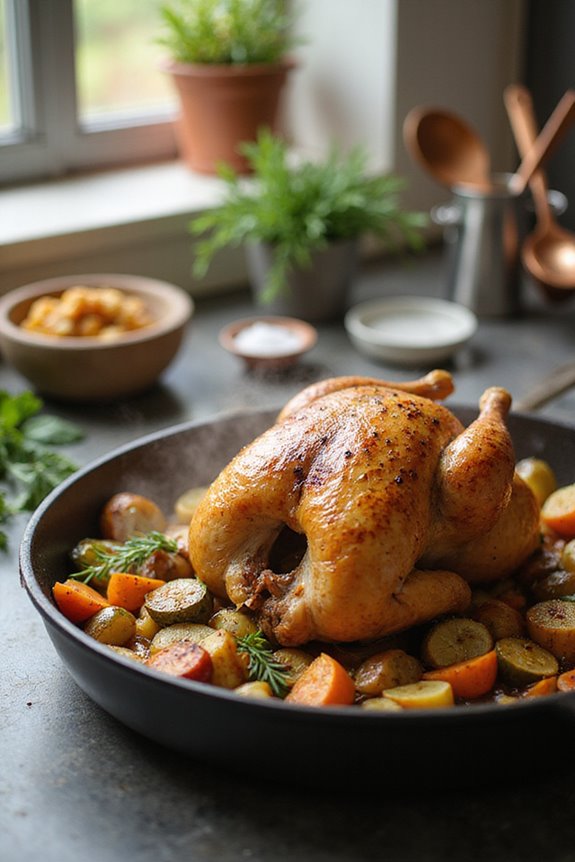
When it comes to enjoying our favorite roasted foods, we often overlook just how beneficial they can be for our health. Roasting techniques not only elevate flavors but enhance nutrient absorption too. For example, it breaks down antinutrients in nuts and seeds, helping our bodies absorb essential minerals like iron and zinc. Plus, roasting keeps vitamins—like vitamin C and certain B vitamins—intact, making our meals even healthier. This method often requires little oil, so we get delicious satisfaction without added fats. Combining roasted veggies and proteins creates balanced meals that are both nutrient-dense and heart-friendly. Additionally, using nonstick cookware can make the roasting process even easier, ensuring that food doesn’t stick and cleanup is a breeze. So next time we fire up the oven, let’s remember these nutritional perks and enjoy the benefits as much as the flavors!
Historical Significance of Roasting
Although roasting might seem like a simple cooking method, its historical significance is rich and intriguing. We’ve got to appreciate how roasting has shaped cultural evolution and culinary traditions over centuries. Picture early humans gathering around open flames, discovering that cooking meat not only tastes better but also keeps them healthier. Fast forward to ancient times, and roasting became a sign of prestige in royal kitchens, with spit-roasted game gracing the tables of nobility. It wasn’t just about flavor; it symbolized social status. As technology advanced, roasting evolved with new tools, reflecting a balance between practicality and artistry in our culinary practices. Let’s cherish this delicious journey from fire to fork together—it’s part of what makes us human!
Cultural Impacts of Roasting
Roasting isn’t just a cooking technique; it’s a vibrant thread woven through the fabric of culture and community across the globe. Each style of roasting reflects our diverse coffee heritage and traditions. For instance, Colombian roasting highlights local flavors, showcasing regional pride. Meanwhile, light roasts from the Arabian Peninsula celebrate centuries of rich history. As we sip on our brew, let’s appreciate how these methods shape our social identity. Coffee houses, born from Ottoman traditions, foster connectivity and lively discussions—reminding us that we all share in this ritual. So, whether we’re enjoying Japanese precision or Italian espresso, let’s embrace the communal joy coffee roasting brings, enriching our lives with every aromatic cup we cherish!
Industrial and Food Processing Roasting
In the world of food processing, mastering industrial roasting techniques can seem overwhelming, but it doesn’t have to be. We’re here to guide you through the essentials! Industrial roasting isn’t just about tossing food in a hot oven; it’s about precise control of temperature and time. Think of roasting chicken, for instance. We adjust the temperature from 55°C to 120°C for perfectly cooked meat that’s juicy and flavorful. Plus, techniques like airflow management and drum speed can greatly enhance heat transfer. Don’t forget about surface pH adjustments—these little details boost that delicious browning we all crave! So, let’s dive deep into these roasting techniques, and before you know it, you’ll be an expert in no time.
Best Practices for Roasting at Home
For anyone enthusiastic to try their hand at roasting coffee at home, creating the perfect cup is totally within reach! First, let’s pick a well-ventilated spot—outdoors or near a window works wonders. Now, we’ll want to measure our green coffee beans accurately; starting with 125 grams is great for consistency. As for equipment choices, we can use a stovetop pan, oven, or even a specialized roaster—whatever suits our style! Remember to preheat our roasting gear to around 350-500°F. Stir constantly to prevent scorching—no bean should linger! After roasting, cool those beauties quickly with a colander to preserve flavors. Finally, store our roasted treasures in airtight containers for the best experience. Happy roasting!
Frequently Asked Questions
Can I Roast Food Without an Oven?
Yes, we can absolutely roast food without an oven! By exploring stovetop roasting techniques or grilling alternatives, we can achieve delicious results while keeping things cozy and intimate in our kitchens. Let’s get creative together!
What Types of Oils Are Best for Roasting?
Picture a cozy hearth, where olive oil dances with vegetables. We find harmony in avocado oil’s warmth, coconut oil’s sweetness, and the whispers of grapeseed, vegetable, and peanut oils, each enhancing our flavors beautifully together.
How Do I Know When Roasted Meat Is Done?
To know when our roasted meat’s done, we should rely on meat temperature rather than just doneness indicators. A thermometer gives us accurate results, ensuring delicious, perfectly cooked meat every time. Let’s savor our success together!
Can I Roast Frozen Vegetables?
Absolutely, we can roast frozen vegetables! By mastering roasting techniques and focusing on proper frozen vegetable preparation, we’ll create something delicious together, turning ice into golden caramelized bites that nurture our taste buds and our hearts.
What Are the Best Seasonings for Roasting?
For roasting, we love using balanced salt blends with herby combinations like thyme, oregano, and parsley. It really brings out those flavors, transforming our dishes into comforting, aromatic experiences that everyone will enjoy together.