As an Amazon Associate, we earn from qualifying purchases. Some links on this site are affiliate links at no extra cost to you. Our recommendations are based on thorough research and editorial judgment.

How To Make Non Dairy Ice Cream?

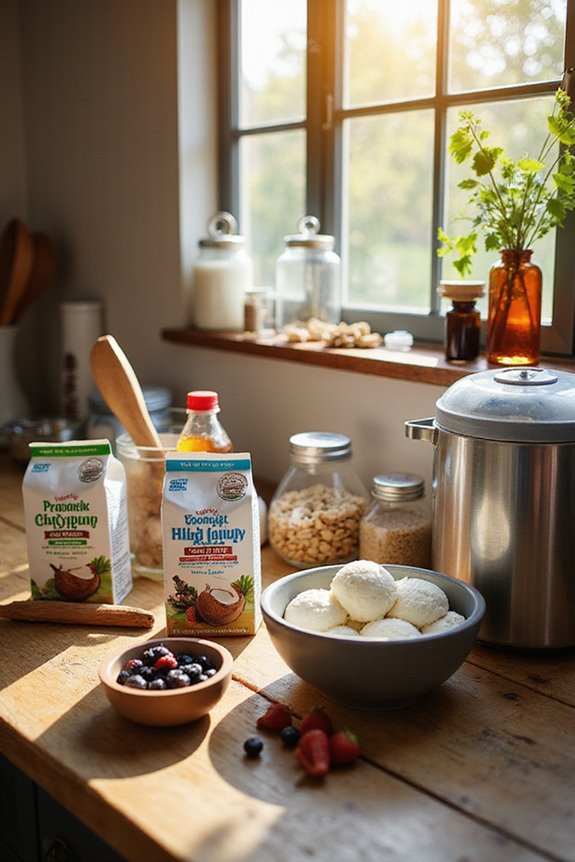
Making non-dairy ice cream is a fun adventure! We start by choosing a creamy milk base like coconut or oat milk—both add fantastic flavor. Then, let’s mix in solid fats like coconut butter for a rich texture, and don’t forget sweeteners like maple syrup to jazz things up. We’ll add stabilizers to keep it smooth and churn it until fluffy. With endless flavor options and mix-ins to explore, we can create delicious treats together! Want to learn more about perfecting your ice cream?
Key Takeaways
- Choose a non-dairy milk base like coconut, soy, or oat for desired flavor and texture.
- Incorporate a blend of solid and liquid fats for creaminess, such as coconut butter and avocado oil.
- Use stabilizers like guar gum and mono- and diglycerides to achieve a smooth texture and prevent ice crystals.
- Churn your mixture in an ice cream maker or manually every 30 minutes, then freeze to firm up.
- Experiment with mix-ins and presentation, such as fruits, nuts, and sauces, to elevate your ice cream experience.
Choosing the Right Non-Dairy Milk Base



When we’re picking the right non-dairy milk base for our ice cream, we want to keep a few key things in mind, starting with flavor and texture. For example, if we crave a rich, tropical touch, coconut milk’s natural sweetness might win us over. But if dietary restrictions are a concern, soy milk often gives a neutral flavor and a boost in protein, which helps give our ice cream structure. Oat milk lends a creamy consistency without overpowering flavors, allowing our added ingredients to shine. Let’s not forget nut milks; they can offer delightful, unique flavors. Ultimately, our choice hinges on flavor intensity and how well it aligns with the flavors we want to create. Expandable designs in kitchen drawer organizers can also inspire us to keep our ice cream-making tools neatly arranged. Happy scooping!
Selecting Non-Dairy Fats for Creaminess
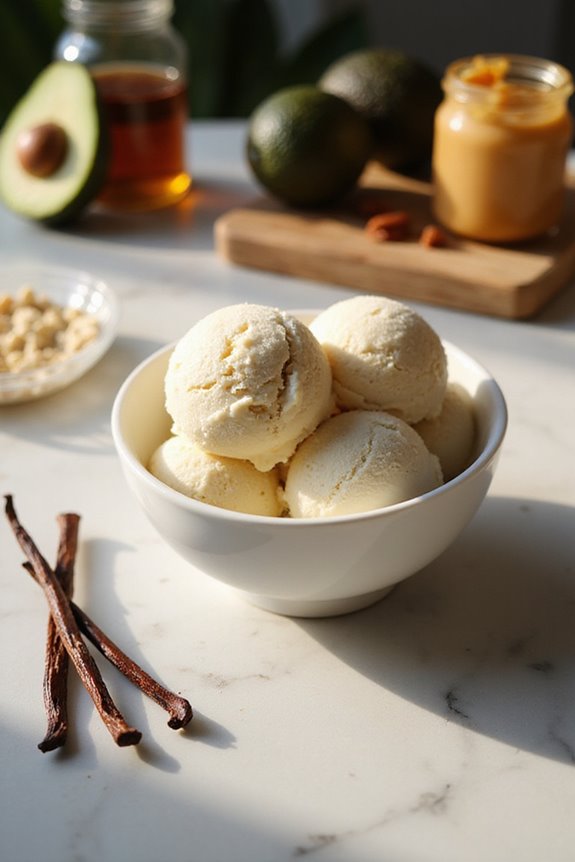
Now that we’ve picked the perfect non-dairy milk base for our ice cream, we can turn our attention to another ingredient that makes all the difference: non-dairy fats. For that creamy texture we all crave, we should aim for fat blends with 60-80% solid fats, like coconut or cocoa butter. These fats provide structure and promote that sought-after creaminess. Pairing them with 20-40% liquid oils, such as avocado or sunflower, keeps things smooth and silky. Remember, coconut oil’s mild flavor works well with almost anything, while cocoa butter amps up richness. Additionally, using eco-friendly nonstick surfaces can help when cooking or melting these fats, ensuring a seamless cooking experience. So, let’s experiment with our fat blends to control flavor impact and get that premium mouthfeel we love in our ice cream adventures! Happy creating!
Essential Sweeteners for Flavor
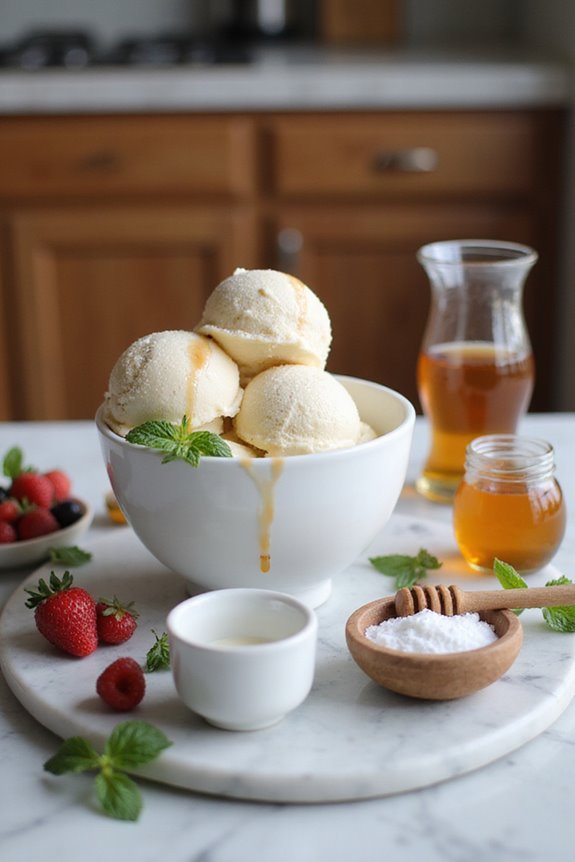
To create the perfect non-dairy ice cream, we’ve got to talk sweeteners—those magical ingredients that elevate our treats from good to absolutely scrumptious. Starting with sucrose gives us that classic sweetness we all love, but let’s explore sweetener combinations to hit that flavor balance. Adding maple syrup or coconut sugar can introduce delightful notes that charm our taste buds. Agave nectar and date syrup are also fantastic, bringing unique sweetness along with nutrients. We can even get creative with fruit purees for extra zing! Remember, finding the right mix of textures and flavors is key, so don’t shy away from experimenting. After all, a little sweetness goes a long way in making our ice cream irresistibly tasty! Additionally, using high-quality ingredients can significantly enhance the overall flavor and texture of your ice cream.
Adding Stabilizers and Emulsifiers
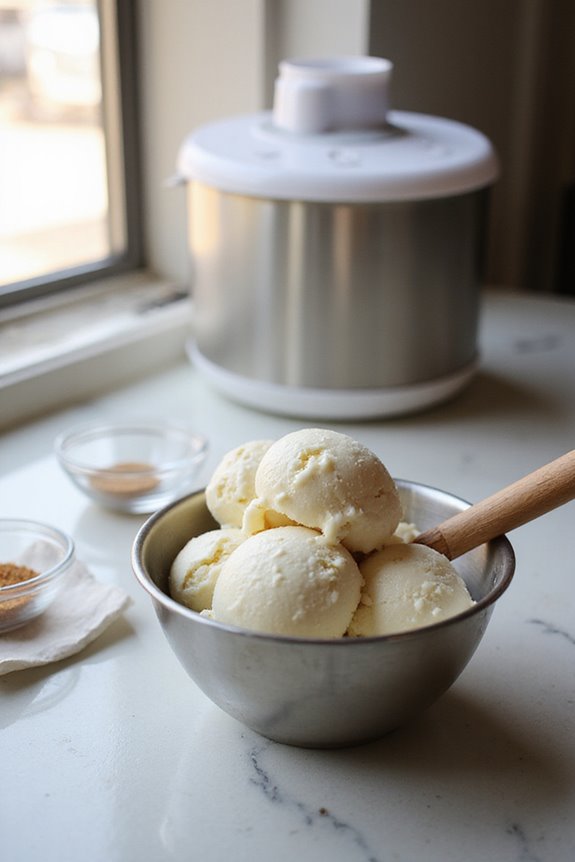
After we’ve sweetened our non-dairy ice cream to perfection, it’s time to think about stabilizers and emulsifiers. They’re key to achieving that creamy texture we all love! For instance, combining guar gum with locust bean gum offers amazing stabilizer functionality and ice crystal suppression. Who doesn’t want a smooth melt? We often recommend a blend—let’s say 0.8g of LBG, 0.4g of guar, and a dash of lambda carrageenan for that perfect mouthfeel. And, don’t forget the emulsifier synergy! Mono- and diglycerides help our fat and water mix beautifully. The right stabilizers and emulsifiers will elevate your ice cream from good to irresistible, preventing the dreaded whey-off. Trust us, a little goes a long way toward perfection! Additionally, considering heat resistance of your ingredients is essential to ensure optimal results during the freezing process.
Flavoring Options for Non-Dairy Ice Cream
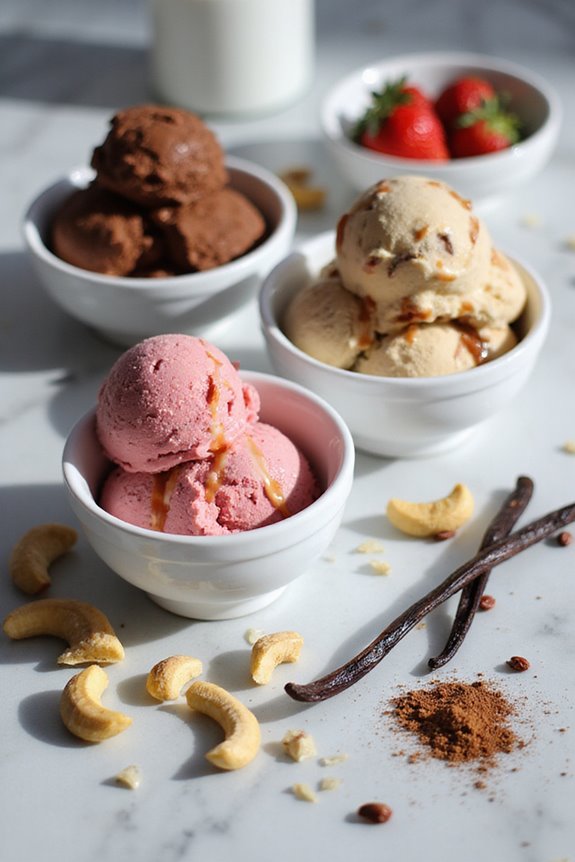
Flavoring non-dairy ice cream opens up a world of delicious possibilities! We can start with fruity delights like fresh strawberries or tropical mangoes, bringing natural sweetness that dances on our taste buds. Don’t forget nut inspirations—think creamy almond butter or crunchy hazelnuts for added richness. If you’re a chocolate lover, consider dark cocoa powder or a swirl of fudge to satisfy your cravings. Spice enhancements like cinnamon or vanilla can elevate every scoop, while gourmet innovations surprise us with unexpected flavors like miso or herbal notes. Additionally, using an ice cream maker allows for greater customization in creating your unique flavors and textures. So, let’s get creative! Mix and match these flavors, and we’ll discover our forever favorite non-dairy ice cream together. After all, who said dairy gets all the fun?
The Importance of Homogenization
Creating delicious non-dairy ice cream isn’t just about choosing the right flavors; the process we use plays a big role too. One vital step is homogenization, which has some fantastic benefits! By mechanically breaking down fat globules into smaller, uniform particles, we create a strong fat network that enhances the creaminess and mouthfeel. This process guarantees that our mix stays stable and prevents any unsightly fat separation. Think of it as giving our ice cream a smoother ride through the freezer! When we properly homogenize, we improve the texture and even increase shelf life, which means longer enjoyment for us. So, let’s embrace this step and enjoy the delightful creaminess that comes from a well-homogenized non-dairy ice cream!
Techniques for Improving Texture
When we think about making non-dairy ice cream, improving texture is essential to achieving that creamy, dreamy experience we all crave. First, let’s talk stabilizers like guar gum and xanthan gum; they work wonders for texture optimization. Guar gum keeps things smooth, while xanthan gives a nice mouth-coating feel—just don’t go overboard or it might get chewy! Including plant-based fats like coconut oil can enrich mouthfeel, too—getting that creamy vibe without dairy. Then, there’s air incorporation; a little aeration can make a big difference, creating those delightful tiny bubbles for extra creaminess. Finally, balance sugar levels to avoid icy textures while enhancing sweetness. With these techniques for viscosity enhancement, we’ll help each other create mouthwatering masterpieces!
Aging the Ice Cream Mixture
Aging the ice cream mixture is one of those steps that might seem tedious at first, but trust us—it’s absolutely worth it! During this aging process, we allow the mixture to sit at an aging temperature of 2°C to 5°C for about 4 to 24 hours. This time lets fats crystallize and proteins hydrate, enhancing viscosity, texture, and flavor balance. Remember, proper aging benefits our final product by improving whipping capacity and creaminess. We can use insulated tanks or refrigerated rooms to control the temperature and avoid freezing. Just a quick tip—over-aging can spoil the mix, so keep an eye on the clock! In the end, this step is magic for achieving that smooth, delightful non-dairy ice cream.
Churning and Freezing Your Mixture
Let’s plunge into the exciting world of churning and freezing our non-dairy ice cream mixture! For that creamy goodness we crave, we’ll start by ensuring our ice cream maker bowl is frozen overnight. When we pour in our chilled mixture, churning it for 15 to 25 minutes will give us the perfect soft-serve consistency. And here’s a pro tip: add any fun mix-ins like chocolate shavings during those last few minutes to keep their texture intact! If we don’t have an ice cream maker, no worries! Just use a shallow dish, scrape the edges every 30 minutes, and we’ll still create something delicious. Remember, rapid freezing post-churning is key to preventing large ice crystals and keeping our treat smooth.
Creative Inclusions and Mix-Ins
Mixing in creative inclusions can transform our non-dairy ice cream from simple to sensational! Imagine unique flavor combinations like tart cherries swirling with creamy bases or crunchy pecans sprinkled throughout. Nuts like pistachios and walnuts, toasted to perfection, add fun texture twists that keep every bite exciting. Fresh fruits, whether pureed or in chunky pieces, bring bursts of natural sweetness, making our ice cream feel light and invigorating. And let’s not forget the irresistible chocolate chips or caramel swirls that bring richness and depth! For an adventurous twist, try crushed cinnamon buñuelos or matcha powder for flavor surprises. So, let’s experiment together and create delightful textures and flavors that’ll impress everyone at our next gathering!
Frequently Asked Questions
Can I Use Any Kind of Non-Dairy Milk in Ice Cream?
Sure, we can use different non-dairy milks for ice cream! Each milk has unique texture differences, so experimenting helps us find the perfect creamy base that suits our taste. Let’s create something delicious together!
How Do I Avoid Ice Crystals in Homemade Non-Dairy Ice Cream?
To avoid ice crystals in our homemade non-dairy ice cream, let’s focus on a creamy texture. Using freezing tips, like stabilizers and mixing thoroughly, helps create that luscious mouthfeel we all crave together.
Is There a Vegan Option for Stabilizers and Emulsifiers?
We can use plant-based emulsifiers like soy or sunflower lecithin alongside natural stabilizers like guar gum and gum Arabic to create a deliciously creamy and smooth vegan ice cream that we all can enjoy!
How Can I Enhance the Sweetness Without Adding Sugar?
We can enhance sweetness naturally by experimenting with fruit purees like bananas and mangoes, and using natural sweeteners like maple syrup or agave nectar to create a rich flavor without adding refined sugar.
Can I Make Non-Dairy Ice Cream Without Using a Machine?
Absolutely, we can make non-dairy ice cream without a machine! By using blending techniques and simple freezing methods, we’ll create a delicious treat that’s creamy and satisfying, all while enjoying the process together.