As an Amazon Associate, we earn from qualifying purchases. Some links on this site are affiliate links at no extra cost to you. Our recommendations are based on thorough research and editorial judgment.

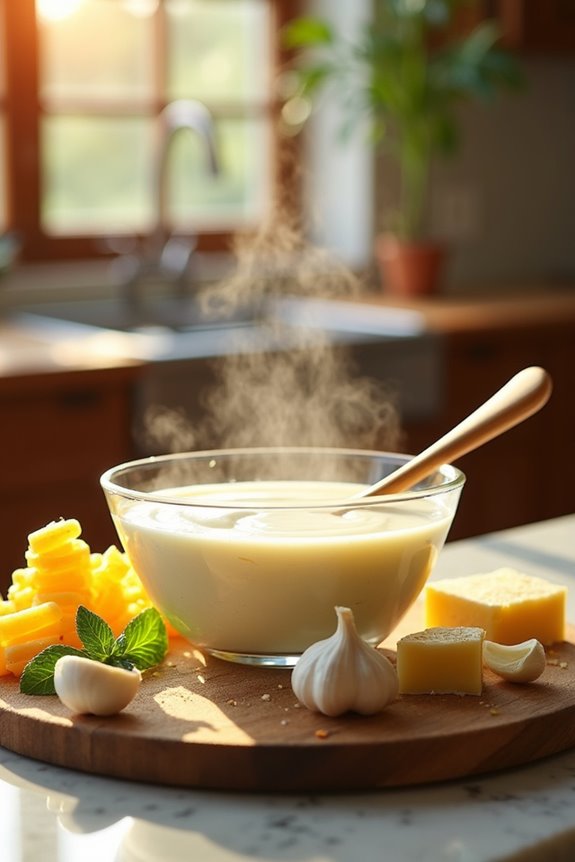
How To Make Alfredo Sauce?

Making Alfredo sauce is super easy and delicious! We start by melting unsalted butter in a skillet, then stirring in heavy cream and minced garlic. Next, we whisk in freshly grated Parmigiano-Reggiano until it’s nice and smooth. Season with salt and pepper, and if the sauce is too thick, just add a splash of starchy pasta water. Serve it over fettuccine for that classic touch. Stick around, and we’ll explore more ways to elevate this creamy goodness!
Key Takeaways
- Melt unsalted butter in a skillet over low-medium heat, then slowly stir in heavy cream for a rich base.
- Add minced garlic, Italian seasoning, salt, and black pepper to the mixture for flavor.
- Gradually whisk in freshly grated Parmigiano-Reggiano cheese to create a creamy consistency.
- Adjust seasoning to taste and use starchy pasta water to achieve desired thickness.
- Serve immediately over fettuccine or your choice of pasta, garnished with fresh herbs.
Essential Ingredients for Alfredo Sauce



When it comes to making a delicious Alfredo sauce, picking the right ingredients is kind of like setting the stage for a great play—you need the best performers to shine. To craft that creamy delight, start with unsalted butter for a rich texture and freshly grated Parmigiano-Reggiano cheese, which melts beautifully and provides authentic flavor. Add heavy cream for that luxurious feel, but remember, traditional Italian cuisine often skips the cream! Don’t forget fresh minced garlic for zest and a pinch of salt and black pepper to elevate the taste. Use starchy pasta water for a silky consistency. Trust us, these key ingredients will make your Alfredo sauce a showstopper—your guests won’t believe you whipped it up at home! Additionally, using a pressure cooker can significantly reduce cooking time, making meal preparation even more efficient.
Step-by-Step Preparation of Alfredo Sauce
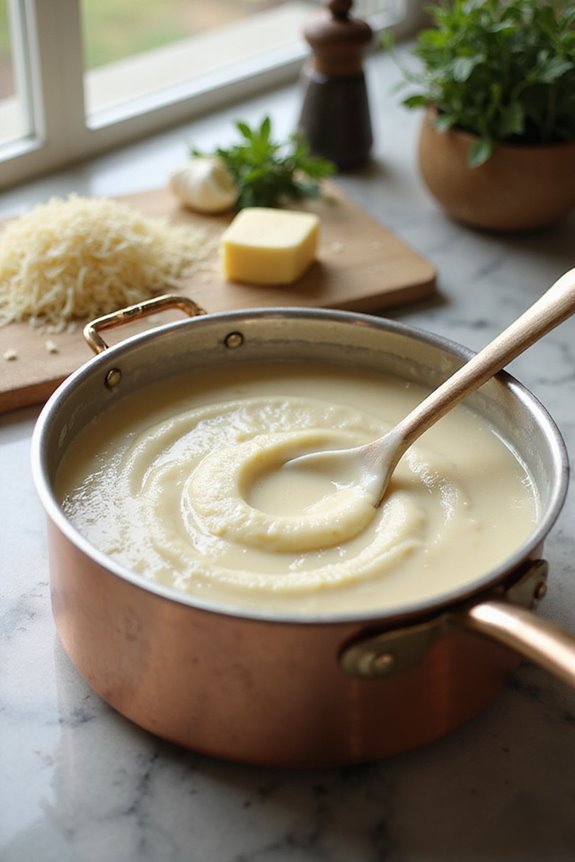
Crafting Alfredo sauce is both an art and a science, and we’re here to guide you through the process. Let’s start by heating unsalted butter and heavy cream in a skillet over low-medium heat. As they warm, we’ll stir in minced fresh garlic, along with Italian seasoning, salt, and pepper. This part dispels those Alfredo myths—fresh ingredients really do make a difference! Slowly add grated Parmesan cheese, whisking to avoid clumps. If you want to experiment, don’t shy away from ingredient swaps; just keep cheese and cream ratios in mind. Remember, using non-toxic materials for your cookware can enhance the safety and quality of your cooking. Finally, taste and adjust seasoning before serving. A little patience goes a long way; trust us, it’s worth it for that creamy goodness! Enjoy every bite!
Key Characteristics of Authentic Alfredo Sauce
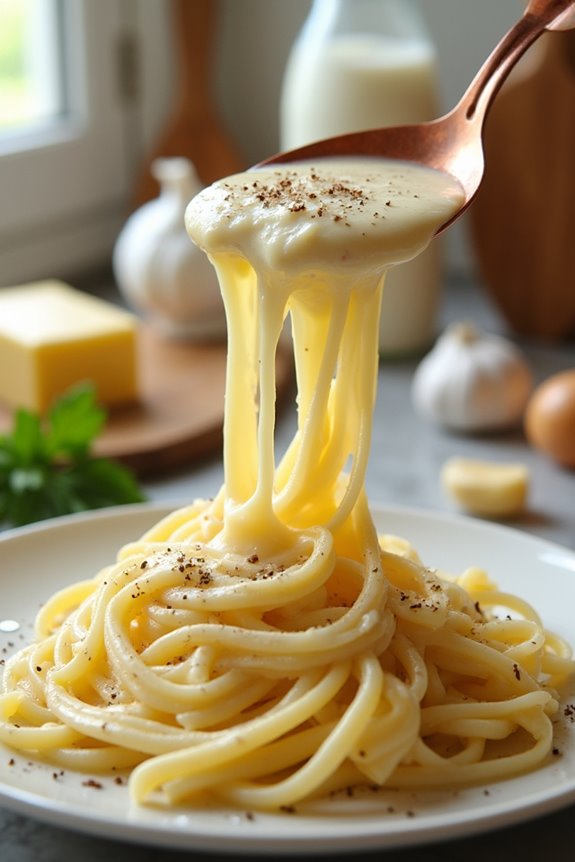
Authentic Alfredo sauce might seem simple, but it carries a rich history and remarkable flavor that we can’t overlook. Born in early 20th century Rome, its historical origins are tied to Alfredo Di Lelio, who believed in celebrating pasta with just butter and Parmigiano Reggiano—no cream or garlic in sight! This minimalism emphasizes the cultural significance of quality ingredients. The sauce’s texture is delightfully silky, achieved by emulsifying butter and cheese with pasta’s cooking water. It keeps things light, allowing the delicious flavors of aged cheese to shine through. So when whipping up this dish, let’s toss it with love—just remember to serve it hot to preserve that beautiful, creamy coating! Enjoy the genuine Italian experience! Additionally, using premium materials in your cooking tools can enhance the overall cooking experience.
Nutritional Highlights of Alfredo Sauce
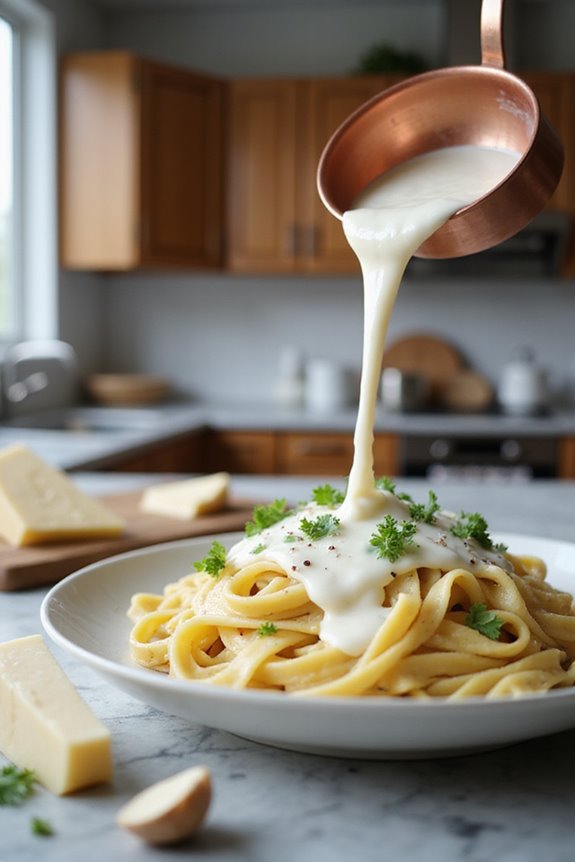
While we all love a rich, creamy Alfredo sauce, it’s essential to understand what we’re putting on our pasta. Typically, Alfredo sauce is calorie-dense, packing around 140 calories per serving, with high fats and cholesterol. That’s where we need to watch out for dietary risks, especially if we’re managing heart health. But hey, there’s good news! Alternative sauces, like vegan or low-calorie options, can offer flavor with lower fats and cholesterol. Just remember, they might still have high sodium levels. When making choices, a little knowledge can go a long way: consider whipped cottage cheese for a protein boost or try a veggie-based sauce. It’s all about balance, so let’s enjoy our pasta wisely! Additionally, consider using eco-friendly storage solutions to keep any leftover sauce fresh for your next meal.
Common Variations and Flavor Enhancements
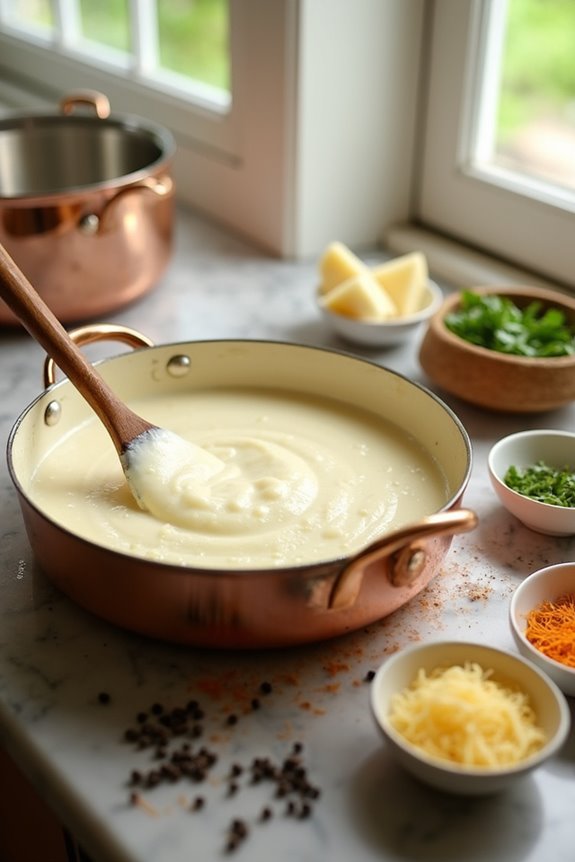
When we think about making Alfredo sauce, it’s exciting to realize how many variations and enhancements we can explore. While classic Parmesan is our go-to, mixing in Parmigiano Reggiano or Romano can elevate our sauce. We might even try sharp Asiago for that nutty kick! Cheese blends add depth, so let’s not shy away from combining Parmesan with Pecorino Romano for complexity.
Herb variations, like fresh parsley or a squeeze of lemon juice, brighten the sauce, cutting through the richness beautifully. A sprinkle of black pepper or red pepper flakes can also amp up the flavor. Remember, experimenting with these touches not only personalizes our dish but makes each mouthful uniquely delightful! Additionally, incorporating high-quality cheese types can significantly enhance the flavor profile of your Alfredo sauce.
Tips for Achieving Ideal Alfredo Sauce
So we’ve explored the fun ways to enhance our Alfredo sauce with different cheeses and flavors, but let’s make sure we’re getting the basics right. To achieve that creamy consistency we all crave, we need to maintain low, gentle heat when melting our butter and heating cream. Remember, no boiling! When incorporating our nourishing fats, like butter and cream, using freshly grated Parmigiano-Reggiano is key. We should stir in cheese gradually to prevent clumping. And don’t forget that starchy pasta water—it’s a magical thickener! For those using dairy alternatives, just temper slowly with warm sauce. Finally, a bit of salt and freshly cracked pepper adds depth without being overwhelming. Let’s make that sauce sing!
The Importance of Using Fresh Ingredients
Using fresh ingredients can truly elevate our Alfredo sauce from good to unforgettable. When we choose fresh herbs and seasonal vegetables, we’re not just making a dish; we’re creating an experience. Fresh ingredients retain essential nutrients, enhancing both flavor and health benefits. Imagine the vibrancy of a perfectly ripe tomato or the aromatic touch of basil—these elevating elements can make a real difference!
Plus, fresh dairy like cream and butter guarantees our sauce has that rich, velvety texture we crave. Let’s steer clear of wilted greens that offer less than ideal mouthfeel. By opting for fresh, we support local farmers and enjoy a more authentic taste. So, next time we cook, let’s prioritize freshness for a creamy, dreamy Alfredo!
How to Properly Melt Butter
Melting butter might seem simple, but mastering the technique can make a big difference in our cooking, especially for that dreamy Alfredo sauce. When we use the stovetop technique, let’s cut the butter into small pieces and melt it over low heat, stirring occasionally to avoid any burning. If we’re in a hurry, microwave melting works wonders—just place the butter in a microwave-safe bowl, cover it, and heat in 10-15 second increments, stirring in between. This way, we can prevent any splattering and achieve that gorgeous, velvety melt. Regardless of the method we choose, remember to be patient and attentive—our Alfredo sauce deserves the best, and we won’t settle for anything less!
The Role of Garlic in Alfredo Sauce
Garlic is the unsung hero in our creamy Alfredo sauce, adding a depth of flavor that simply can’t be ignored. We love using fresh garlic cloves because they bring a richness that garlic powder just can’t match. Employing smart garlic preparation techniques, like crushing or mincing, helps release its aromatic flavor profile. When we sauté minced garlic in butter for just a minute or two, we infuse the sauce without risking bitterness. This gentle cooking allows the garlic’s warm, savory essence to blend beautifully with the cream and cheese. Trust us—a touch of garlic not only elevates the sauce but also creates a stunning balance. So go ahead, let garlic work its magic and enhance your Alfredo experience!
Choosing the Right Cheese for Alfredo
When it comes to making the perfect Alfredo sauce, choosing the right cheese can make all the difference. We’ve found that freshly grated Parmesan is a classic choice for its sharp, nutty flavor and smooth cheese texture. If you want to elevate your dish, consider using Parmigiano-Reggiano for that authentic taste! For a sharper kick, Pecorino Romano works wonders, while Gruyere adds a creamy depth. Remember, cheese freshness is key—pre-grated options can leave your sauce grainy, which isn’t what we want! Mixing Parmesan and Gruyere creates a silkier texture, adding a twist to the traditional flavor. So, let’s choose wisely and enjoy a delicious Alfredo that embraces both richness and charm!
Cooking Cream: Dos and Don’ts
While many of us may dream of creating the perfect Alfredo sauce, the secret often lies in the choice and treatment of our ingredients—especially cooking cream! First, let’s talk about cooking cream guidelines. Always add it towards the end of cooking; this helps prevent curdling, which we definitely want to avoid. Gentle heating and stirring will keep our sauce smooth and creamy.
Now, a quick note: cooking cream’s lower fat content isn’t ideal for whipping, so let’s skip that. Remember, heating it gradually allows us to enjoy that silky texture without heaviness. Finally, be cautious with acidic ingredients; they can ruin our creamy dream. If we follow these cream preparation techniques, we’re on our way to Alfredo success!
Creating the Perfect Consistency
Creating the perfect consistency in Alfredo sauce can feel like a challenging task, but we’re here to make it easier! First, let’s focus on adjusting thickness. Start with melted butter and gently stir in heavy cream, simmering to blend flavors without any rush. Emulsion techniques are crucial here; whisk or stir continuously as we add room-temperature cheese for that creamy smoothness we all crave. Remember to add cheese off the heat to prevent curdling. If we find the sauce too thick later, a splash of hot pasta water or a bit more cream will work wonders. And don’t forget, our sauce will thicken as it cools, so keep that in mind and serve it warm for the best experience!
Serving Suggestions for Alfredo Sauce
Serving Alfredo sauce is where the magic truly happens, and we can really get creative! When it comes to pasta pairings, we love fettuccine for its ability to hold that creamy goodness, but don’t shy away from using short pasta like penne for a fun twist. For protein choices, grilled chicken or shrimp bring great balance, while crumbled bacon adds a smoky delight. Don’t forget those vegetable additions—sautéed spinach or roasted garlic can elevate your dish! Feeling adventurous? Try Alfredo in alternative dishes like pizza or creamy soups. Finally, remember our garnishing tips: freshly grated cheese and a sprinkle of herbs can take your dish to new heights. Let’s enjoy this together!
Storing Leftover Alfredo Sauce
After we’ve enjoyed our delicious Alfredo sauce, it’s time to think about storing the leftovers properly. We should always use proper refrigeration by placing our sauce in an airtight container to keep it fresh and free from contamination. Remember to refrigerate it within two hours of cooking—bacteria loves the warm zones! It’s best to keep the sauce separate from pasta for easier reheating later. Don’t forget to label and date our containers so we can track freshness. Watch out for spoilage signs like mold, off colors, or a funky smell; if any of these pop up, it’s better to toss it. Let’s aim to use the sauce within 3 to 4 days for the tastiest experience!
Pairing Pasta Types With Alfredo Sauce
Have you ever wondered which pasta pairs best with Alfredo sauce? Let’s explore the delightful world of Alfredo pairings! Fettuccine is the classic choice—its wide ribbons cling beautifully to the rich, creamy sauce. Pappardelle brings a similar charm, but even more surface area for that luscious coating. If you’re feeling adventurous, try penne or fusilli; their ridges trap the sauce perfectly. For a fun twist, farfalle—or bowtie pasta—adds a playful elegance, especially in baked dishes. But remember, broader shapes like these really enhance your tasting experience. So, let’s choose wisely! With the right pasta shapes, we can elevate our Alfredo creations and bring a little Italian magic to our dinner tables. Bon appétit!
Frequently Asked Questions
Can I Make Alfredo Sauce in Advance?
Absolutely, we can make Alfredo sauce in advance! With our storage tips, we’ll keep it fresh for 3-4 days in the fridge and even freeze it for longer. Just remember to reheat gently for the best results!
How Long Does Alfredo Sauce Last in the Refrigerator?
Think of Alfredo sauce as a beautiful sunset—vibrant but fleeting. In our fridge, it lasts just 3 to 4 days. We should cherish proper storage for those precious moments together, respecting its sauce shelf life.
Is It Safe to Reheat Alfredo Sauce?
Yes, it’s safe to reheat Alfredo sauce if we follow proper reheating techniques and safety tips. Let’s gently heat it on the stove, stirring well, to keep it creamy and safe for enjoying again.
Can I Freeze Leftover Alfredo Sauce?
Absolutely, we can freeze leftover Alfredo sauce! Let’s make sure to follow some freezer friendly tips for sauce storage. Cooling it completely and using airtight containers will keep it tasting delicious for later enjoyment.
What Pasta Shape Works Best With Alfredo Sauce?
When we think about the best pasta for Alfredo, fettuccine noodles truly shine. But let’s not overlook rigatoni tubes, penne pasta, or even the delightful bowtie shape. Each brings a unique charm to our creamy dish!