As an Amazon Associate, we earn from qualifying purchases. Some links on this site are affiliate links at no extra cost to you. Our recommendations are based on thorough research and editorial judgment.

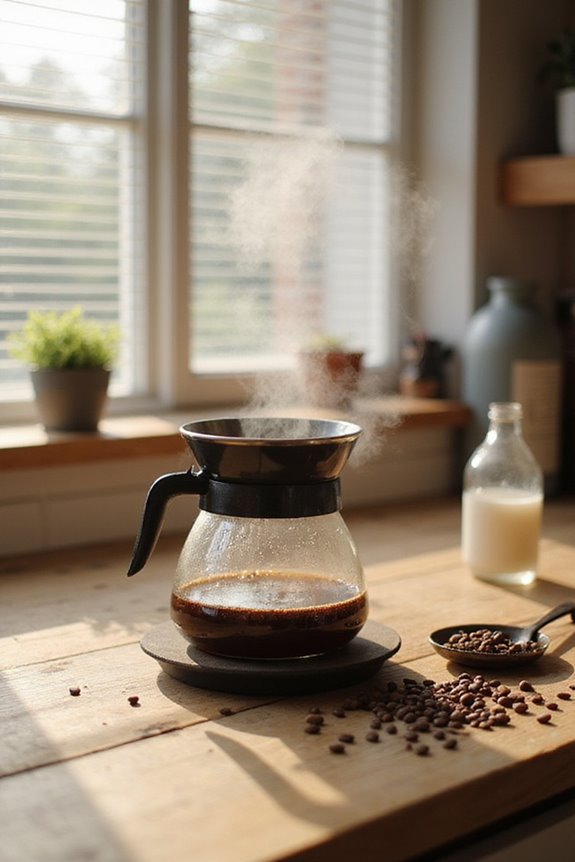
How To Descale A Coffee Maker?

To descale our coffee maker, let’s mix equal parts of distilled white vinegar and water. We’ll pour that into the reservoir and start a brew cycle. Halfway through, we let it sit for 15 to 30 minutes before discarding the mixture. Afterward, we fill it with fresh water and run a couple more cycles to flush out any lingering vinegar. It’s a simple process that keeps our coffee tasting great! Stick around to discover other tips!
Key Takeaways
- Mix equal parts distilled white vinegar and water, and pour into the coffee maker reservoir.
- Start the brew cycle and pause halfway to let the solution sit for 15-30 minutes.
- Discard the used vinegar solution, then refill the reservoir with clean water.
- Run several water-only cycles to flush out any lingering vinegar taste.
- Descale monthly or every 30-40 brews, especially in hard water areas.
Understanding the Importance of Descaling
You may be interested



When we brew our morning coffee, we often overlook an essential step that can make a world of difference: descaling our coffee makers. The descaling benefits are huge! By removing mineral buildup like calcium and magnesium, we not only keep our brewers functioning smoothly but also guarantee our coffee tastes amazing. Imagine enjoying that rich, flavorful cup without any bitter undertones from limescale! Plus, keeping our machines clean extends their lifespan and saves us from costly repairs. Regular descaling keeps water at the right temperature, leading to ideal extraction. So let’s make it a part of our routine—maybe once a month or so. Our taste buds and our coffee makers will thank us! Cheers to better brews! Additionally, some coffee makers like the Hamilton Beach 2-Way promote sustainability by eliminating the need for single-use pods.
Signs Your Coffee Maker Needs Descaling
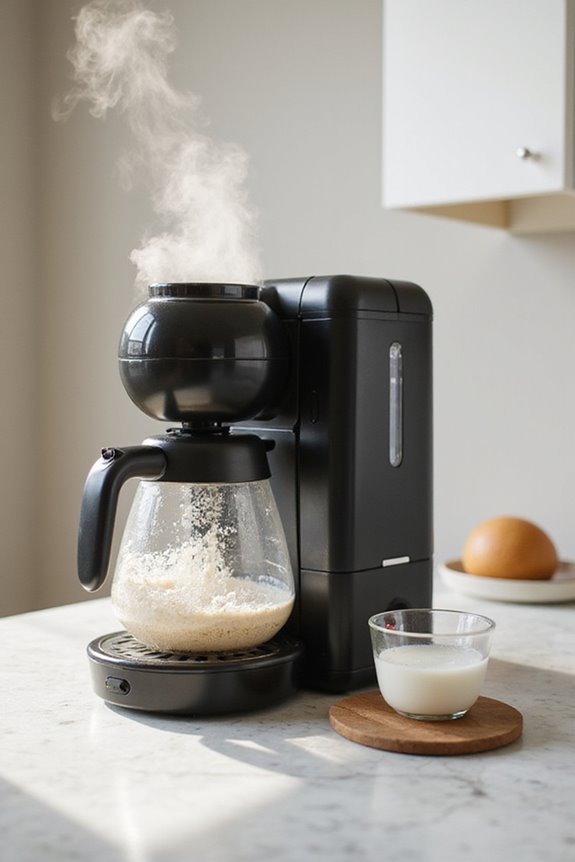
As we embrace the importance of keeping our coffee makers in top shape, recognizing the signs that it’s time to descale is key to brewing that perfect cup. If our coffee starts developing a bitter or metallic flavor, that’s often a signal of mineral buildup affecting extraction. We may also notice that our once vibrant coffee taste seems flat, or our machine performance is off—maybe it’s brewing slower than usual or producing irregular water flow. Even coffee served at a lukewarm temperature hints at heating issues caused by limescale. Let’s stay attentive to these signs: strange noises, visible scale buildup, or error messages are all calls to action. Descaling now will save us from brewing disappointments later! Regular maintenance, including cleaning ease, ensures our coffee makers function optimally and enhance the flavor of our brews.
Common Descaling Agents
Looking to keep our coffee makers in prime condition? Let’s chat about some common descaling agents. First up, commercial descalers—these specialized products from brands like Keurig or Nespresso are designed for fast, effective scale removal. They often use acids like sulfamic, ensuring our machines stay safe. Then there’s citric acid, which is strong yet cost-effective; it helps tackle stubborn limescale without that pungent vinegar smell. While vinegar may be an accessible option, it lacks the punch of citric acid. Moreover, regular maintenance and cleaning processes can significantly extend the lifespan of our coffee makers. So, when thinking about descaling techniques, we can weigh agent comparisons: commercial solutions versus DIY options. Whatever we choose, let’s make sure our coffee makers keep brewing that perfect cup!
Step-by-Step Guide for Vinegar Descaling
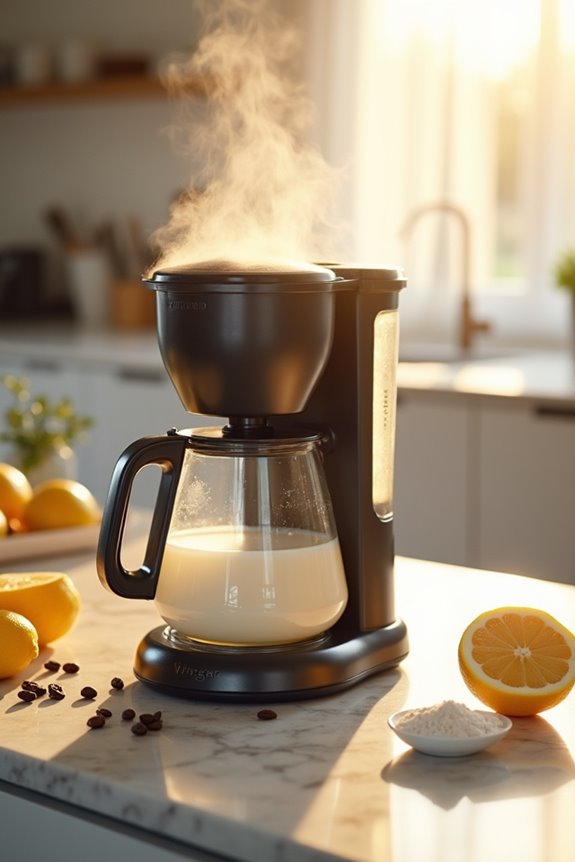
To keep our beloved coffee makers running smoothly, let’s plunge into the art of vinegar descaling! First, we’ll mix equal parts distilled white vinegar and water—this combo harnesses vinegar’s effectiveness to break down stubborn mineral buildup. Now, we’ll pour it into the reservoir and start our brew cycle. Halfway through, let’s pause and let the mixture work its magic for about 15-30 minutes. After resuming, we’ll discard the used solution and refill with fresh water. We need to run a couple of cycles to flush out any lingering vinegar flavor. This simple descaling technique not only enhances our coffee taste but can also extend our coffee maker’s life, giving it a longer lifespan and keeping it in top condition. Cheers to smoother brews!
Using Commercial Descaling Solutions
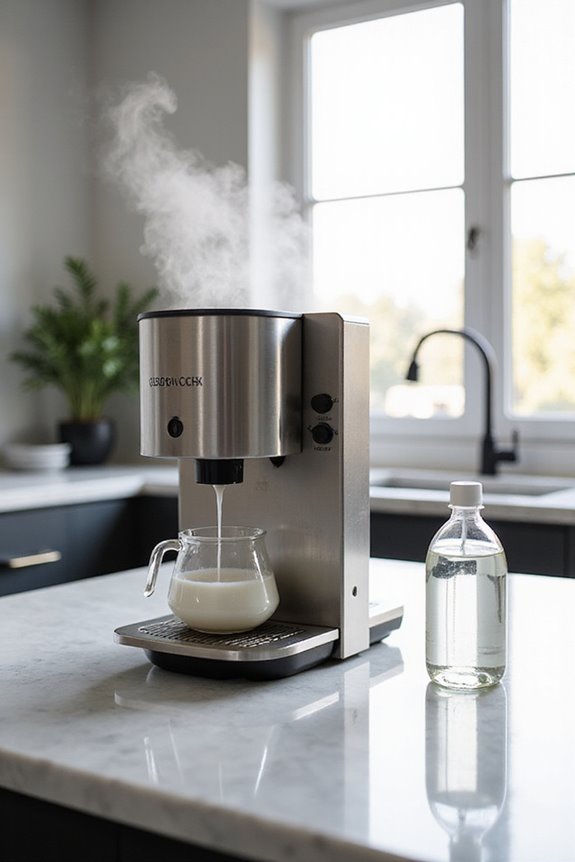
When it comes to keeping our coffee makers in tip-top shape, using commercial descaling solutions is a fantastic choice. These products shine when it comes to removing stubborn scale quickly, offering commercial descaler benefits that household options just can’t match. With strong acids like citric acid, they dissolve mineral buildup while being gentle on our machines—just what we need for descaling machine compatibility! Plus, many commercial options minimize that funky vinegar smell we dread. Just a heads-up: these solutions may be pricier but tend to save us on repairs in the long run. So, let’s follow the manufacturer’s guidelines, dilute our descaler as directed, and give our coffee machines the love they deserve for great-tasting brews every time! Additionally, using non-stick features in kitchen tools can enhance overall maintenance and ease of use.
Frequency of Descaling
Regularly descaling our coffee maker isn’t just a good idea; it’s essential for keeping our beloved brews tasting their best. Typically, we should aim to descale about once a month or every 30-40 brews. For us daily coffee drinkers, a monthly descaling routine maintains peak performance and flavor. If we’re in a soft water area, we can stretch that to every 3-4 months, while hard water enthusiasts may need to descale more often due to stubborn scale buildup. Let’s keep an eye out for signs like longer brew times or odd sounds that might indicate it’s time to refresh our maintenance schedule. Remember, a little proactive care goes a long way in preserving our coffee maker’s life!
Resetting Descale Indicator Lights
If we want to keep our coffee maker running smoothly, resetting the descale indicator lights is a must after a thorough cleaning. For many of us, using the right reset methods can make all the difference, like holding the 8oz and 10oz buttons for three seconds on most Keurig models. If the light persists, unplugging the machine before plugging it back in might just do the trick. Sometimes, simply lifting the water reservoir helps trigger a reset. And remember, if things still aren’t working, take a moment to check for any gunk that might be stubbornly lingering. With these troubleshooting tips, we can keep our beloved coffee makers in tip-top shape, ready to brew our next cup of joy!
Additional Tips for Coffee Maker Maintenance
Keeping our coffee maker in prime condition is key to brewing that perfect cup of joe. To start, we should regularly clean the removable parts, like the brew basket and water reservoir. Rinsing these daily and washing them thoroughly with warm, soapy water keeps bitterness at bay. Don’t forget to wipe down the sprayer head to avoid gunk build-up! For filter maintenance, if you’re using a permanent mesh filter, give it a good rinse to prevent oily residue. Also, we should deep clean our coffee maker with a vinegar-water solution every few months. Just remember, if we treat our coffee maker with a little love and care, it’ll keep serving us those delicious brews day after day!
Maintaining Optimal Coffee Flavor and Machine Lifespan
While we all love that rich, flavorful cup of coffee in the morning, maintaining the ideal flavor and lifespan of our coffee maker is just as essential. Descaling our machines regularly is key to achieving perfect coffee extraction. Mineral buildup can mess with water flow, causing inconsistent brew temperatures and, let’s be honest, nobody wants a burnt cup of coffee! Plus, it can lead to increased wear on our machine, hurting its longevity. By ensuring clean internal surfaces, we help preserve the aroma and intensity we love so much. So, let’s set a reminder to descale every few months and keep our brews tasting fresh while our coffee makers stay strong and happy. Cheers to great coffee!
Frequently Asked Questions
Can I Use Apple Cider Vinegar for Descaling?
Absolutely, we can use apple cider vinegar for descaling! Studies show it effectively cleans up to 95% of mineral deposits, plus the vinegar benefits include improved taste, making our coffee more flavorful and enjoyable.
What Are the Risks of Not Descaling Regularly?
If we neglect regular descaling, we risk weakened coffee quality and jeopardize our machine’s longevity. Scale buildup affects flavor and performance, leaving us disappointed with tepid brews and potentially costly repairs. Let’s prioritize maintenance together.
Do All Coffee Makers Require Descaling?
Not every coffee maker needs descaling, but most do. We should keep mindful of our coffee maker maintenance; descaling frequency varies with water hardness and usage, ensuring our brew stays delightful and flavorful.
How Long Does Descaling Take?
The descaling process duration usually takes about 30 minutes. It’s essential to address the impact of mineral buildup regularly, ensuring our coffee makers stay in top shape and continue brewing delicious coffee for us.
Is Descaling Safe for All Coffee Maker Brands?
They say a stitch in time saves nine, and when it comes to descaling, it’s vital to follow each coffee maker brand’s guidelines for safety. Let’s guarantee our machines stay healthy together, avoiding damage.