As an Amazon Associate, we earn from qualifying purchases. Some links on this site are affiliate links at no extra cost to you. Our recommendations are based on thorough research and editorial judgment.

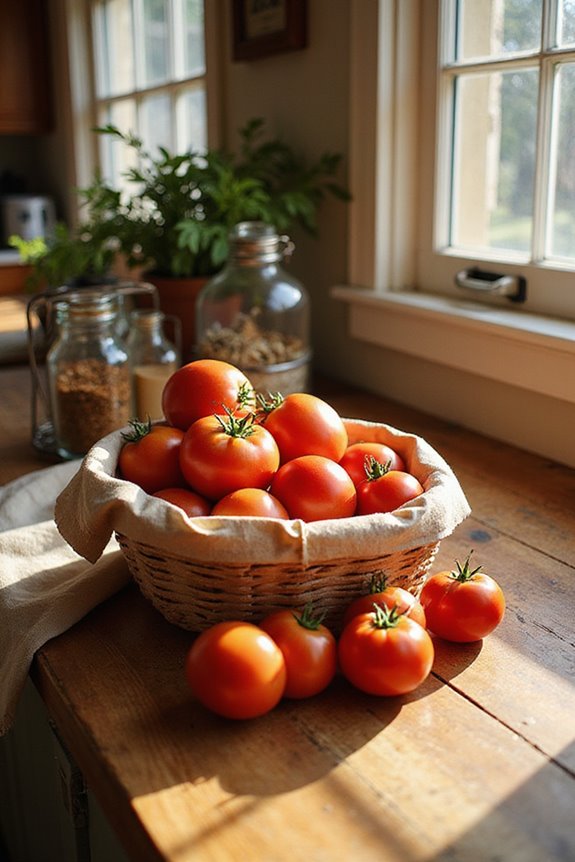
How To Store Tomatoes?

To store tomatoes properly, we want to keep them at cool room temperatures above 55°F and around 80-95% humidity. Avoid refrigerated tomatoes; they lose flavor and can get mushy. A well-ventilated container is key—think paper bags instead of plastic. Remember, more air means less spoilage! Check daily for ripeness and handle them gently. If we manage these tips, we can enjoy delicious tomatoes longer. Stick around, and we’ll share more helpful preservation techniques!
Key Takeaways
- Store tomatoes at cool room temperatures above 55°F (13°C) with humidity levels of 80-95% for optimal freshness.
- Use well-ventilated containers, such as paper bags, to promote air circulation and avoid plastic bags.
- Keep tomatoes uncovered to reduce spoilage and enhance air flow around the fruit.
- Monitor daily for ripeness, separating any overripening tomatoes to maintain quality.
- Consider long-term preservation methods, like freezing or dehydrating, for extending shelf life and maintaining flavor.
Ideal Storage Conditions for Fresh Tomatoes
You may be interested



When it comes to storing fresh tomatoes, we all want to keep their incredible flavor and texture intact, right? To achieve that, let’s consider ideal conditions. First, temperature is key—aim for a cool room, ideally above 55°F (13°C), as everything below that can mess with our precious tomatoes’ flavor and texture. The humidity should be high—around 80-95%—so placing tomatoes in a well-ventilated container helps, especially during those various ripening stages. And let’s avoid the plastic bags! They’re like a sauna for tomatoes. Instead, use paper bags or just leave them uncovered, so they can breathe. Remember, certain tomato varieties—like Roma or cherry—can last a bit longer. Additionally, storing them in a well-ventilated container will help maintain their freshness. So, let’s treat our tomatoes well; they deserve it!
The Impact of Refrigeration on Flavor
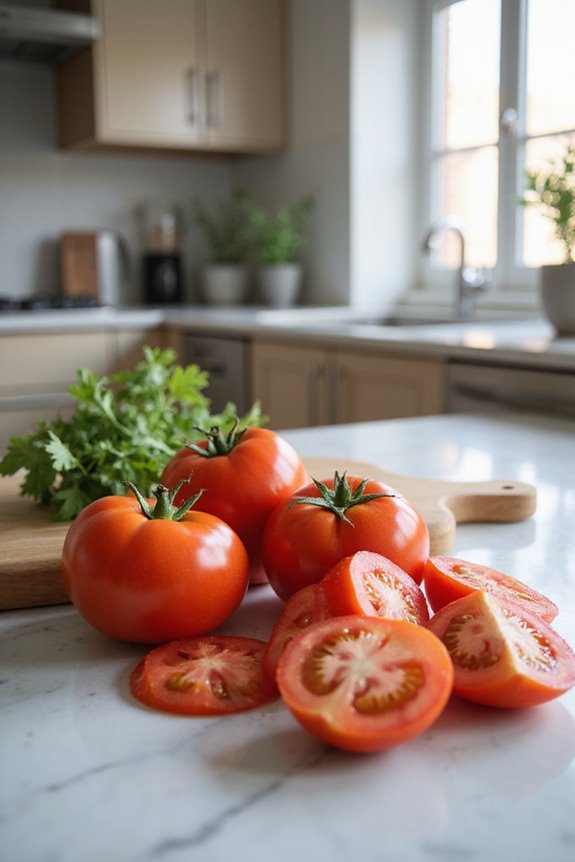
Storing fresh tomatoes might feel like an art form, and it’s all about maintaining their deliciousness. We’ve all been tempted to toss tomatoes into the fridge, thinking it’ll keep them fresh longer. However, refrigeration effects can actually suppress the flavor compounds that give each tomato its unique character. You see, chilling temperatures, especially around 5 °C, can reduce these volatile flavor compounds by almost 68%! The longer we keep them cold, the mushier and blander they become. Instead, if we can store them at a slightly warmer 7-8 °C, we might save some of that flavor. So let’s treat our tomatoes with the love they deserve and keep them at a cozy room temperature for maximum flavor enjoyment! Additionally, just like how cooking appliances can enhance the taste of various foods, the right storage method can also play a crucial role in preserving the quality of your produce.
Short-Term Cold Storage Techniques
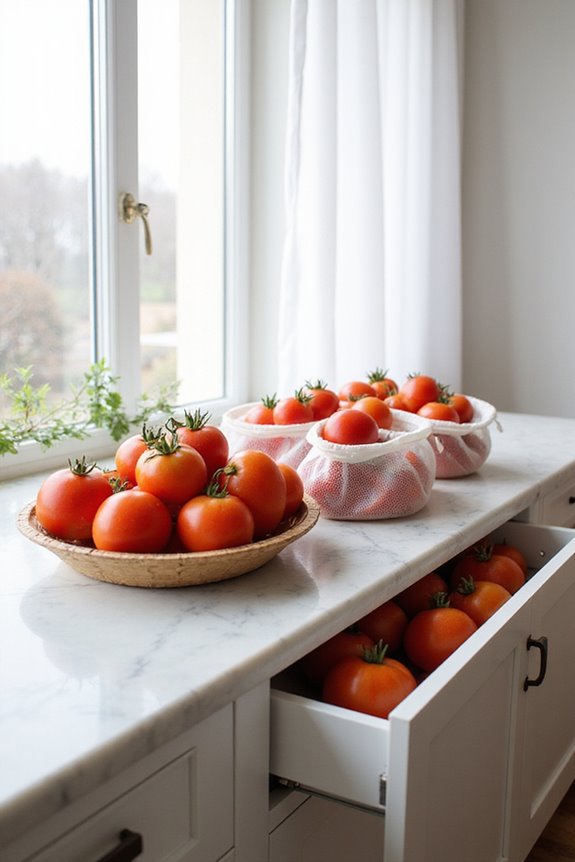
To keep our beloved tomatoes tasting fresh and vibrant, it’s essential to use effective short-term cold storage techniques. We should aim for a temperature range of 55°–68°F (13°–20°C) to avoid those pesky temperature fluctuations that can cause chilling injury. When storing, let’s choose well-ventilated containers; paper bags are perfect since they balance humidity levels without trapping moisture. And remember, never overcrowd the tomatoes—that way, they can breathe! Daily checks for ripeness are crucial; we don’t want to let any overripe fruit sneak in! If we’re feeling adventurous, placing an apple nearby can speed up ripening, but not too fast, alright? Overall, let’s keep an eye on our tomatoes so they stay delightful and delicious! Additionally, regular calibration is essential for maintaining the quality of stored produce and ensuring optimal flavor.
Recommended Products
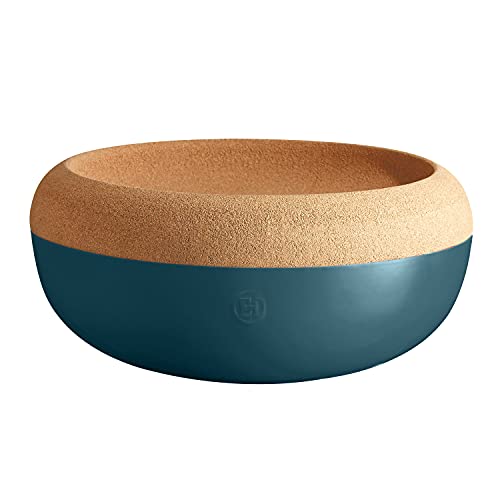
Made in France since 1850. Made of all natural materials. High-fired Burgundy clay using Emile Henry HR ceramic (high resistance)

Vented berry basket is ideal for fruits & veggies. Inner dimensions 3.875"L x 3.875"W x 1.75"D, perfect for small berries: blackberries, raspberries, blueberries.

100% Leak-Proof & Airtight: Ensures mess-free transport of your favorite foods
Proper Handling to Prevent Softening
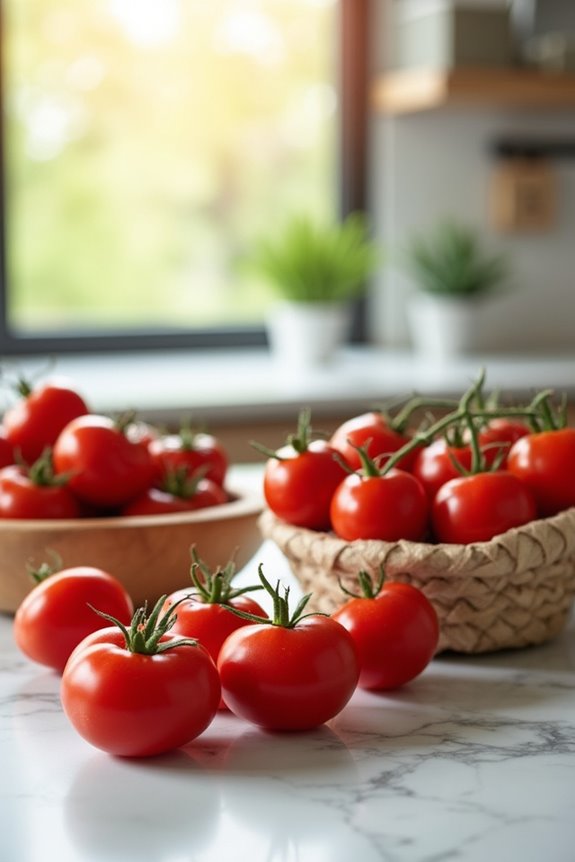
Although we might not think about it, how we handle our tomatoes can make a world of difference in keeping them firm and flavorful. First things first: let’s be gentle! Rough handling can lead to mechanical damage, which speeds up softening. When we harvest or pack our tomatoes, we should treat them like little treasures—this keeps their fruit integrity intact. Plus, storing them away from damaged fruits is key; those overripe buddies can leak ethylene, which encourages ripening in healthy tomatoes. And don’t forget to store them at the right temperatures to avoid chilling injuries. Remember, a little care goes a long way; by handling them carefully, we’re ensuring that our tomatoes stay vibrant and delicious for longer! Additionally, using stainless steel trays can help organize and store your tomatoes safely without causing bruising.
Balancing Humidity for Optimal Ripening
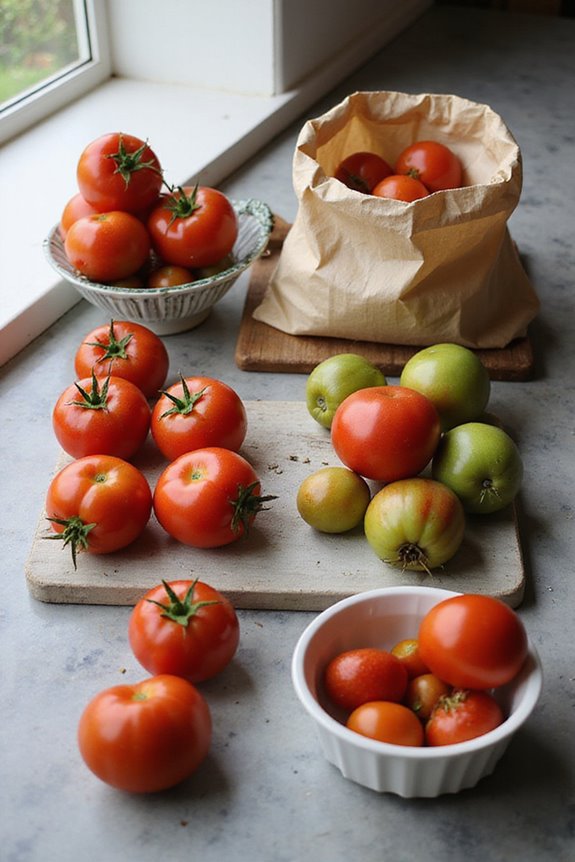
When we think about ripening tomatoes, it’s easy to overlook the role humidity plays in the process. Ideal moisture levels range from 85-95% relative humidity. This helps us control water loss and guarantees our tomatoes stay firm and flavorful. Too little humidity leads to shriveling, while too much can invite decay.
Using paper bags or ripening domes really helps with humidity control and ethylene management, letting our tomatoes breathe just right. We can sprinkle in some fun by storing them out of direct sunlight to avoid heat buildup. And don’t forget, gentle airflow is key! By balancing humidity, we’re not just extending shelf life; we’re also keeping our tomatoes tasty and vibrant for longer. Additionally, quality materials like ceramic can be beneficial for maintaining optimal conditions when storing produce. Happy ripening!
Long-Term Preservation by Freezing
Freezing tomatoes is a smart way to savor their summer goodness, even in the depths of winter. We should choose ripe, firm tomatoes and give them a good wash before removing the stems—it’s like prepping for a party! For skin removal, a quick dip in boiling water does the trick. Remember, frozen tomatoes will change in texture after thawing, becoming a bit mushy. So, if we’re planning to use them for cooking, that’s not a problem! We can toss them into soups or sauces directly from the freezer—no thawing necessary. Just keep them in airtight bags to avoid freezer burn, and we’ll enjoy that rich tomato flavor for months to come! Happy freezing!
Recommended Products

👈 Before you buy our little space saving bags, make sure to watch this explainer video for a special technique on how to open them

GERMAN ENGINEERING FOR LASTING QUALITY: Expertly crafted in Germany from special formula high-carbon NO STAIN steel and precision-forged from a single piece of solid steel using SIGMAFORGE technology.

APPLICATION SCENARIOS - Our large hexagon portable greenhouse can be versatile for gardens, labs, or indoors. Ideal for large plants, pots, tools, and shelves to put in. The pop up plant sunshine room offers warmth, cold resistance, and supports plant research with temp/humidity control. This is a perfect gift for gardening lovers
Tips for Freezing Tomatoes Effectively
To maximize our tomato preservation game, a few straightforward tips can make all the difference. First, let’s choose firm, ripe tomatoes and give them a thorough wash. Next, drying them completely is key—no one likes icy surprises! When it comes to freezing techniques, we can freeze whole tomatoes on a baking sheet first; this keeps them from clumping together later. For those who love slices, lay them out separately before bagging them. Using the right packaging materials is equally important—grab heavy-duty freezer bags or airtight containers. Don’t forget to squeeze out excess air before sealing! And hey, let’s label those bags with the freezing date. We’re all about that organized life, right? Happy freezing!
Recommended Products

BAG SIZE: 9" wide x 12" high, below the zipper (228mm x 304mm)

EXTEND YOUR FOOD’S SHELF LIFE: Protect it from freezer burn and oxidation, optimize storage space

HIGH-POWER 1.5 HP OIL PUMP PERFORMANCE: The VacMaster VP321 is equipped with a powerful 1.5 HP pump, delivering strong, consistent vacuum pressure for high-volume sealing. This commercial vacuum sealer machine ensures fast cycle times and reliable performance for demanding environments.
Dehydrating Tomatoes for Convenience
If you’re looking for a way to enjoy tomatoes long after their juicy harvest, dehydrating them is an excellent option we can tackle together. First, let’s wash and prep our tomatoes, removing those pesky stems and blemishes. With our slicing techniques, we’ll aim for uniform slices—thinner ones dry faster, so keep that in mind! Now, we can explore different dehydration methods; a food dehydrator set at 130°F to 135°F works best, while sun-drying takes longer. Remember to rotate our trays for even drying. Once dried, let’s cool them down before sealing, ensuring they won’t get funky on us. Storage is easy—just label jars and enjoy these tasty, convenient bites in our recipes whenever we like!
Recommended Products

SPACIOUS 30-LAYER DRYING - With a generous 30-layered food dehydrator machine measuring 15.7" x 14.9", our dehydrator provides an expansive drying space, perfect for jerky, meat, fruit, vegetables, and more.


ELECTRIC PRESERVER: Finally, a multi-tiered countertop electric food dehydrator that can preserve varieties of food! It produces nutritious food with very simple preparation. Prevent food to spoil and go to waste with the new NutriChef food preserver
Canning Methods for Shelf Stability
Ready to savor the taste of summer tomatoes all year long? Canning is one of our favorite methods for lasting shelf stability! Let’s focus on a few essential canning techniques. First, we need to acidify our tomatoes; adding bottled lemon juice or citric acid guarantees they stay safe. As we fill our jars with diced tomatoes, let’s remember to leave that 1/2 inch headspace for expansion. When we’re done, use a debubbler to eliminate air pockets—trust me, it’s worth it! For jar sealing, we tighten the lids just enough—no need to go overboard! After processing, let’s cool them slowly before storing them in a cool, dark place. Enjoy those delicious tomatoes, knowing we’ve done it right!
Recommended Products

ADVANCED DUAL PRESSURE & IH TECHNOLOGY – Master every grain with the ultimate versatility of Dual Pressure. Choose 2.1 Bar Ultra-High Pressure for tough grains or No-Pressure Induction Heating (IH) for delicate white and sushi rice. Our powerful IH system provides 360° even heating for faster cooking and perfect results every time.

Includes: Electric water bath canner + multi-cooker unit, Tempered glass lid, Steaming/canning jar rack, Recipe book

Automatically Extracts the Tomato Puree, separating it from the seeds and the skin - Fresh or Cooked
Additional Shelf-Stable Processing Techniques
When it comes to preserving our summer bounty, there are several methods beyond canning that can help us enjoy the deliciousness of tomatoes long after the season ends. For starters, dehydrating techniques remove moisture, concentrating flavors while extending shelf life. With a dehydrator, we can achieve consistent drying, but if we don’t have one, oven-drying works too! And let’s not forget pickling methods; marinating tomatoes in vinegar or brine adds a zesty twist and keeps them fresh for months. Both techniques require us to maintain proper acidity for safety, but they also result in delightful flavors. So, let’s get creative and store our tomatoes in unique ways that reflect our tastes—after all, who wouldn’t want to savor summer all year round?
Using Tomato Juice and Sauces for Preservation
There’s something rewarding about preserving tomatoes through juice and sauces—it’s like capturing the essence of summer in a jar! When we start with ripe, firm tomatoes, we guarantee a rich, vibrant product. After peeling and coring, we heat and crush them, ready to transform our kitchen. Don’t forget to add lemon juice or citric acid to maintain that necessary tomato acidity; it’s key to keeping our food safe. If we choose to add a teaspoon of salt, it’ll enhance flavors beautifully. Let’s boil our creations before canning, allowing flavors to intensify while reducing excess water. After sealing our jars, we can expect a shelf life of 12-18 months. Let’s savor summer all year round!
Fermenting Tomatoes for Unique Flavors
After savoring the vibrant flavors of our homemade tomato sauces, we might find ourselves curious about another fun way to enjoy tomatoes—fermentation. This process opens up a world of flavor variations that’ll delight our taste buds. To start, we’ll gently prick clean tomatoes and immerse them in a brine made with salt and water. Not only does this preserve the tomatoes naturally, but it also offers fermentation benefits, like boosting gut health with beneficial probiotics. As they ferment, we can add herbs like garlic or basil, enhancing those unique flavors. Let’s be patient—3 to 5 days can give us a nice tang, while longer waits promise more complexity. What a delicious treat for salads or direct snacking!
Recognizing Signs of Spoilage in Stored Tomatoes
While we love the taste of fresh tomatoes, we’ve got to keep an eye out for any signs of spoilage that can spoil our enjoyment. It’s important to know that overly soft or mushy tomatoes might already be on their way out. If we notice wrinkled skin or an off smell, it’s a sure sign we need to investigate further. A slimy surface or visible mold—whether fuzzy or colorful—definitely means it’s time to say goodbye. When we’re detecting freshness, checking for bulging cans or leaking jars also helps us avoid surprises. Remember, spoiled tomatoes aren’t just sad; they can be unhealthy too! So let’s stay vigilant to keep those delicious flavors coming, alright?
Frequently Asked Questions
Can Tomatoes Be Stored With Other Fruits or Vegetables?
They say “one bad apple spoils the bunch,” and that’s true for tomatoes too! Let’s remember the best storage tips: keep them separate from ethylene-producing fruits to guarantee their compatibility and longevity. Together, we can succeed!
How Can I Tell if a Tomato Is Perfectly Ripe?
To tell if a tomato’s perfectly ripe, we look for vibrant color indicators and give it an aroma check. A sweet scent and slight softness signal it’s ready to enjoy—just like nature intended.
What Are the Best Tomato Varieties for Storage?
For our best storage tomato varieties, we love heirloom options like Reverend Morrow’s Long Keeper and modern favorites like Red October. Utilizing proper storage techniques guarantees they last longer, bringing us delightful flavors throughout the months.
Is It Safe to Eat Tomatoes With Soft Spots?
It’s not safe for us to eat tomatoes with soft spots due to safety concerns. Those spots may harbor harmful bacteria, so let’s be cautious and discard any questionable tomatoes to protect our health.
Can I Use a Microwave to Ripen Tomatoes Faster?
While it might feel tempting to rush ripening with microwave techniques, we shouldn’t look at it as a true ripening method. It mainly alters texture, not triggering the ripening magic we cherish in tomatoes.