As an Amazon Associate, we earn from qualifying purchases. Some links on this site are affiliate links at no extra cost to you. Our recommendations are based on thorough research and editorial judgment.

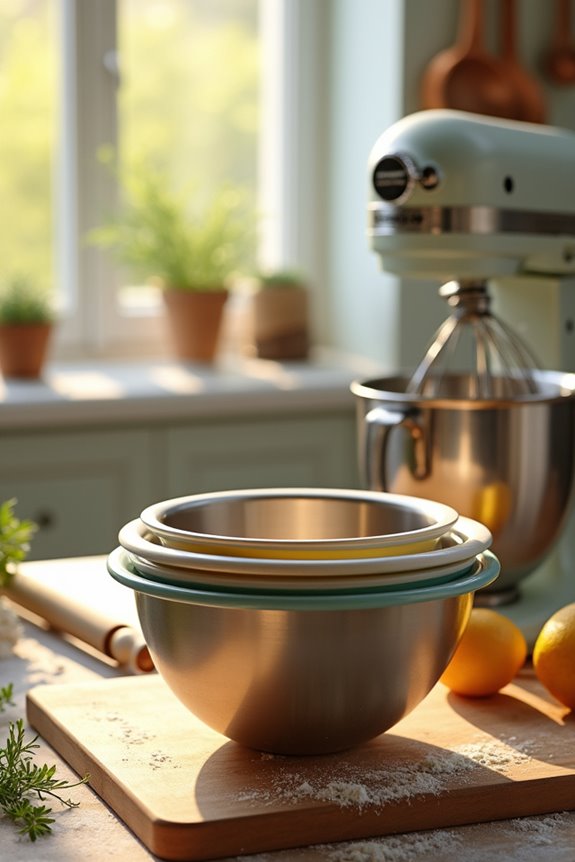
What Are Best Mixing Bowls?

When it comes to mixing bowls, we’ve got a range of great options. Stainless steel bowls are perfect for durability and chilling, while glass bowls are microwave-friendly and let us see our mixing progress. Plastic bowls are lightweight and budget-friendly, though they might hold onto odors. Don’t overlook ceramic for its rustic charm in the oven! Remember to choose the right size to prevent messes. Stick with us, and we’ll help you pick the perfect bowl set for your kitchen!
Key Takeaways
- Material Consideration: Choose glass or stainless steel for durability and versatility, while plastic is budget-friendly and lightweight for easy handling.
- Size Matters: Select bowls sized appropriately for tasks—4-5 quart for small projects, 12-20+ quarts for large batch mixing.
- Design Features: Look for ergonomic shapes and non-slip bases to enhance mixing efficiency and comfort during use.
- Aesthetic Appeal: Colorful finishes and whimsical designs can enhance kitchen style while functional designs improve usability.
- Maintenance Ease: Consider dishwasher-safe options, and follow care tips to ensure longevity and keep bowls looking great.
Overview of Mixing Bowl Materials
You may be interested

When we plunge into mixing bowls, we quickly discover that the materials they’re made from can make all the difference in our cooking adventures. Let’s chat about mixing bowl types and their material benefits! Glass bowls, for instance, are microwave-safe and heat-resistant, making them perfect for warming ingredients. They let us see our mixing progress, too—no need to peek! Meanwhile, lightweight plastic bowls are great for casual cooking but might retain some funky odors. Ceramic options provide charm and stability but handle them gently. Copper bowls are a favorite for pros, offering fantastic temperature control, though they need a little maintenance. Finally, silicone bowls are flexible and space-saving, but beware of their long-term durability! Additionally, the choice of material quality considerations plays a significant role in ensuring the durability and functionality of your mixing bowls. Happy mixing, friends!
Stainless Steel Mixing Bowls
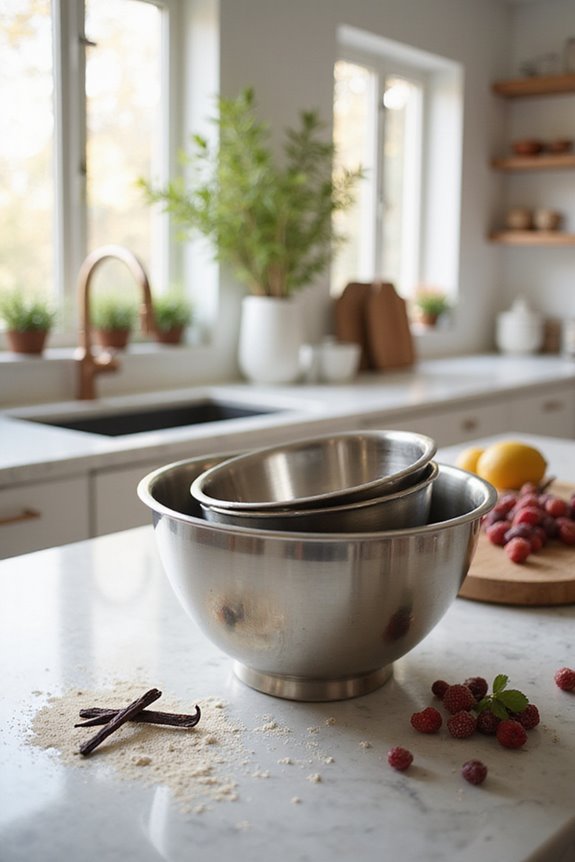
Stainless steel mixing bowls are a kitchen must-have, and for good reason! Their durability benefits are unbeatable; they resist stains and odors, making them perfect for daily use. Plus, they’re super lightweight, so mixing and transferring ingredients feels almost effortless. These bowls shine in versatility, serving both hot and cold ingredients without a hitch. Need to chill batters or toss together a hot pasta? No problem! They’re also easy to clean—many are dishwasher-safe, which is a blessing after a long cooking session. Look for non-slip bases and built-in measuring marks to make your tasks even smoother. Additionally, using meal prep containers can help streamline your cooking process and keep your ingredients organized. So, let’s embrace these shiny wonders that add a touch of elegance to our kitchens while handling all our mixing needs!
Glass Mixing Bowls
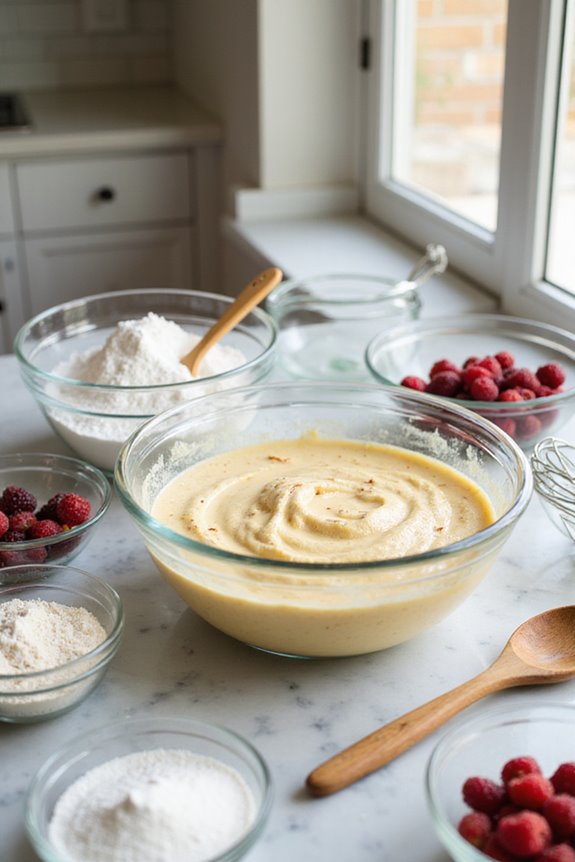
While we often think of glass as fragile, glass mixing bowls prove to be a fantastic addition to any kitchen. They’re surprisingly durable, offering serious benefits compared to other materials. We adore how they don’t retain stains or odors, contributing to healthier food prep. Plus, their scratch resistance means they withstand the hustle and bustle of our cooking adventures.
These bowls are microwave and dishwasher safe, making cleanup a breeze. The transparency lets us see our ingredients blend perfectly, and many have handy measurement marks! They’re also great for serving, reducing the number of dishes we need. Just remember to handle with care—they’re not invincible. With glass mixing bowls, we’re investing in sustainable kitchenware while keeping our meals free from flavor contamination. Additionally, glass mixing bowls are easy to clean and maintain, ensuring they remain a staple in your kitchen for years to come.
Plastic Mixing Bowls
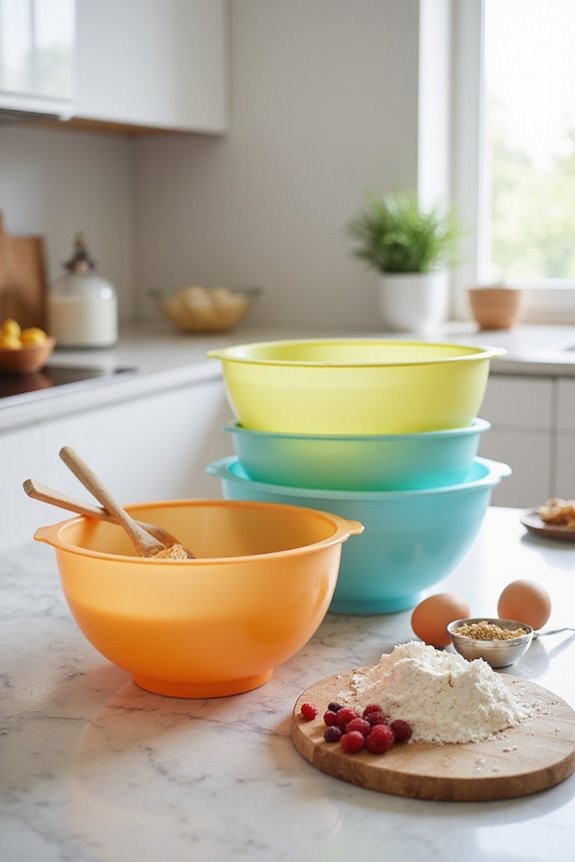
If you’re looking for a reliable and budget-friendly option in the kitchen, plastic mixing bowls definitely deserve a spot on your counter. We love how lightweight and portable they are, making them perfect for any cooking adventure. Many of us appreciate their durability factors, including shatter resistance and non-slip bases for extra stability. User testimonials often rave about features like pouring spouts and nesting sets that simplify our cooking tasks. Cleaning is a breeze since most are dishwasher safe, and their affordability means we can replace them when necessary. Just be mindful of potential odor and stain issues. Overall, plastic mixing bowls are a smart choice for anyone wanting versatility and simplicity in their kitchen! Additionally, these bowls are often made from food-grade materials, ensuring safety during food preparation.
Ceramic Mixing Bowls
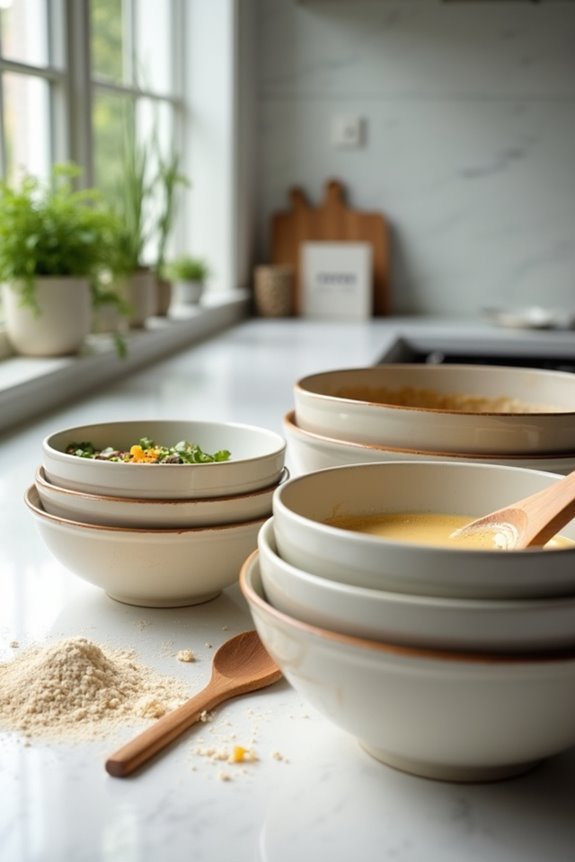
Shifting from the lightweight charm of plastic mixing bowls, let’s consider the timeless appeal of ceramic mixing bowls. These beauties not only bring ceramic advantages—such as being non-reactive and durable—but also boast a variety of ceramic styles that can elevate our kitchen’s aesthetics. From rich earth tones to vibrant glazes, they’re a joy to use and display. Their non-porous surface prevents lingering smells and flavors, which is perfect for switching between dishes. Plus, the stability they offer while kneading or mixing is unmatched. Oh, and who doesn’t love that they’re dishwasher safe? Whether we’re marinating meats or baking, ceramic mixing bowls deliver every time, making them a treasured piece in our culinary toolbox. Additionally, their non-toxic ceramic coating ensures a safe cooking experience, promoting health-conscious meal preparation.
Silicone Mixing Bowls
Have you ever wondered what makes silicone mixing bowls a must-have in any kitchen? With their silicone benefits, these versatile bowls offer flexibility that lets us mix without fear of breaking or cracking. Their non-stick surface is a game changer, allowing for easy food release—no more stubborn batter clinging to the sides! Plus, they’re lightweight and often come with grips or non-slip bases, making our mixing adventures a breeze. Fitness enthusiasts rejoice, too: these bowls can handle warm mixtures and are even dishwasher safe! While they might not be as stable during intense whisking, their ability to nest for storage more than compensates. Embrace the mixing versatility—our kitchen experiences will never be the same!
Key Features for Effective Mixing
When it comes to mixing bowls, knowing what features to look for can make all the difference in our culinary adventures. We want mixing efficiency, so choosing the right material is key. Stainless steel bowls are lightweight, durable, and can be chilled for dough mixing, while glass bowls let us see our ingredients blend without interruption. Bowl ergonomics matter too—look for non-slip bases and wide rims for a secure grip. An effective design helps reduce spills and keeps our counters clean. And let’s not forget compatibility with appliances; stainless steel and glass are ideal for hand and stand mixers. With the right features, our mixing experience will be smoother, and that glorious batter will be a joy to create!
Size and Capacity Considerations
Finding the right size and capacity for our mixing bowls is essential, and we can’t underestimate the variety out there. From small 5-quart bowls perfect for cake batter to giant 140-quart ones suited for commercial kitchens, knowing our needs helps us mix efficiently. We should consider bowl dimensions, as wider and taller bowls make mixing easier and prevent spills. A 5-quart bowl holds around 20 cups, while an 8-quart accommodates about 32 cups—ideal for those larger recipes we love. Let’s remember that while smaller bowls are great for daily baking, larger capacities shine when we’re whipping up big batches. So, choose wisely; our mixing adventures will thank us later! After all, no one wants dough everywhere, right?
Durability and Maintenance of Mixing Bowls
Durability is key when choosing our mixing bowls because no one wants to replace these essentials too often. When we talk about mixing bowl durability, stainless steel stands tall—it resists dents and is dishwasher safe. If we go for glass, handling it gently is essential, as it can chip. Let’s admit, no one wants a bowl turning into a jigsaw puzzle after a drop! For plastic, expect it to wear out sooner due to scratches and stains, while ceramic looks great but can chip. Remember those maintenance tips: clean stainless and glass bowls simply, but polish copper to keep it shiny! Choosing wisely will keep our bowls by our sides for years, making every bake-off a pleasure.
Design and Aesthetic Appeal
While we all love a good mixing bowl, let’s not forget that how it looks can make a big difference in our kitchens. Choosing bowls with whimsical designs adds a touch of charm to our culinary space. We should keep an eye out for those ergonomic shapes that feel wonderful in our hands, especially when we’re stirring up a storm! Those wide rims not only look appealing but also make our mixing easier and efficient. And let’s not overlook colors and finishes—glossy or matte, they can elevate our kitchen style. So, as we’re on this journey of selecting the perfect mixing bowl, let’s consider both function and beauty, making our cooking experience just a tad more delightful!
Price Range and Value for Mixing Bowls
When it comes to mixing bowls, it is understood that price can be a big factor in our choice. We often find ourselves facing budget considerations that shape what we can pick. Let’s explore a value analysis of what’s out there. You can snag a simple set for as low as $10, but spending $20 to $50 often gets you better materials and multiple pieces that really come in handy. Higher-end brands might cost $50 or more, but they serve us well for years. Remember, sets usually offer better value per bowl than buying individually. So, let’s consider what we truly need—durability, versatility, and functionality—before splurging. After all, a great mixing bowl is a kitchen investment worth making!
Best Uses for Different Bowl Materials
Choosing the right mixing bowl material can really make a difference in our cooking experience. When we look at bowls comparison, each type has its material advantages. Stainless steel bowls are our go-to for durability and can chill in the fridge for whipped cream. If we’re melting butter, glass bowls are microwave-safe, letting us monitor our mixes easily. For casual use, plastic bowls are budget-friendly and come with lids for easy storage. Ceramic and stoneware lend a rustic charm and are perfect for oven use. Finally, silicone bowls are flexible and can fit in tight spaces. Remember, choosing the best bowl for the right task enhances our kitchen adventures and makes mixing a breeze!
Choosing the Right Size Mixing Bowl
Finding the right size mixing bowl can truly elevate our cooking game, and trust us, it’s more important than you might think! When we choose our bowls, we should consider both bowl shapes and mixing techniques. For smaller baking projects, a 4-5 quart bowl is perfect for cakes or cookies, while medium sizes (6-10 quarts) tackle multiple batters or bread dough easily. If we’re whipping up massive batches, larger bowls (12-20+ quarts) help prevent overflow during mixing—no mess, more fun! And remember, we want a bowl that’s about 1.5 to 2 times the volume of our mixture for efficient mixing. So, let’s invest wisely and let those bowls do the heavy lifting while we enjoy our time in the kitchen!
Care Tips for Maintaining Mixing Bowls
Mixing bowls are our trusty sidekicks in the kitchen, and just like any good partner, they deserve some TLC to keep them in top shape! To guarantee mixing bowl longevity, we should rinse them with warm water right after use to prevent stubborn food debris. For a thorough clean, mild dish soap and soft sponges work wonders—let’s steer clear of abrasive scrubbers that can damage surfaces. Remember, ceramic bowls prefer gentle handwashing or a dishwasher cycle, while stainless steel can use a baking soda paste for stubborn stains. After washing, we’ll immediately dry them with a soft towel to avoid water spots. Storing them carefully and in a dry place protects them from chipping and keeps our kitchen harmonious!
Frequently Asked Questions
Can Mixing Bowls Be Used in the Oven?
Absolutely, we can use mixing bowls in the oven, but let’s make certain they’re oven-safe materials like glass or ceramic. For mixing bowl alternatives, always check for safety to keep our culinary creations cozy and catastrophe-free!
Are Mixing Bowls Microwave Safe?
Yes, some mixing bowls are microwave-safe, like ceramic and glass ones. We should always check for safe usage labels, as materials matter, ensuring our bowls withstand heat without cracking or leaching harmful substances.
Do Mixing Bowls Come With Lids?
Yes, many mixing bowls come with lids made from various materials. We love how lids provide storage convenience, keep food fresh, and reduce mess. They’re perfect for meal prep and really enhance our kitchen experience together!
How Do I Store My Mixing Bowls Efficiently?
Storing our mixing bowls efficiently feels like creating kitchen magic! We should nest them by material to save space, using cloth between bowls for protection. Let’s optimize our organization for a seamless cooking experience together!
Can I Stack Multiple Mixing Bowls Without Damaging Them?
Absolutely, we can stack multiple mixing bowls without damaging them! By using smart stacking techniques and considering materials, like opting for durable stainless steel, we guarantee our bowls stay safe and intact during storage.