As an Amazon Associate, we earn from qualifying purchases. Some links on this site are affiliate links at no extra cost to you. Our recommendations are based on thorough research and editorial judgment.

What Are Beginner Baking Tools?

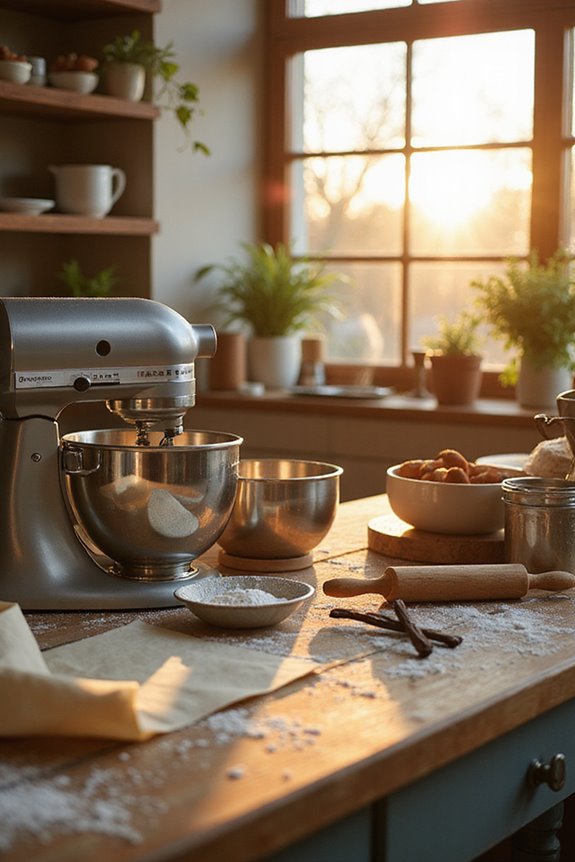
When we think about beginner baking tools, a good mix makes all the difference! We need precise measuring tools like digital kitchen scales and measuring cups. Don’t forget mixing essentials, from a sturdy whisk to silicone spatulas. There’s a variety of baking pans for all treats, plus dough tools like rolling pins and cutters. Timing and temperature tools, such as digital thermometers and timers, are vital too. Stick with us, and we’ll guide you through mastering each essential tool!
Key Takeaways
- Essential measuring tools include digital kitchen scales and clear measuring jugs for accurate ingredient proportions in baking recipes.
- Mixing and preparing tools like whisks, silicone spatulas, and sieves help ensure smooth batter and lump-free flour.
- Versatile baking pans, such as muffin pans and sheet pans, are necessary for various baked goods and enhance baking performance.
- Dough handling tools, including pastry cutters, rolling pins, and dough scrapers, assist in achieving perfect textures and shapes for pastries.
- Temperature and timing tools like digital thermometers and timers ensure accuracy in baking, helping to avoid overcooked or undercooked treats.
Essential Measuring Tools
You may be interested

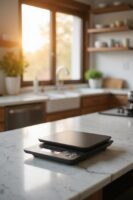
When it comes to baking, having the right measuring tools is like having a superpower in the kitchen. We can’t stress enough how vital measuring accuracy is for our baked goods. Let’s focus on digital kitchen scales: they provide precise ingredient weights that guarantee consistency every time. Trust me, weighing your flour and sugar in grams beats eyeballing those volume measures. For liquids, a clear measuring jug is our best friend, giving us that all-important ingredient precision. Additionally, stainless steel measuring cups and spoons create durability and reliability, making them fundamental for those dry ingredients. With these tools, we’ll transform our chosen recipes into delectable creations, proving that baking can be a joyful adventure! Moreover, investing in a digital kitchen scale ensures high precision measurements, which are crucial for achieving perfect results in baking. So, let’s gear up and get started!
Mixing and Preparing Tools
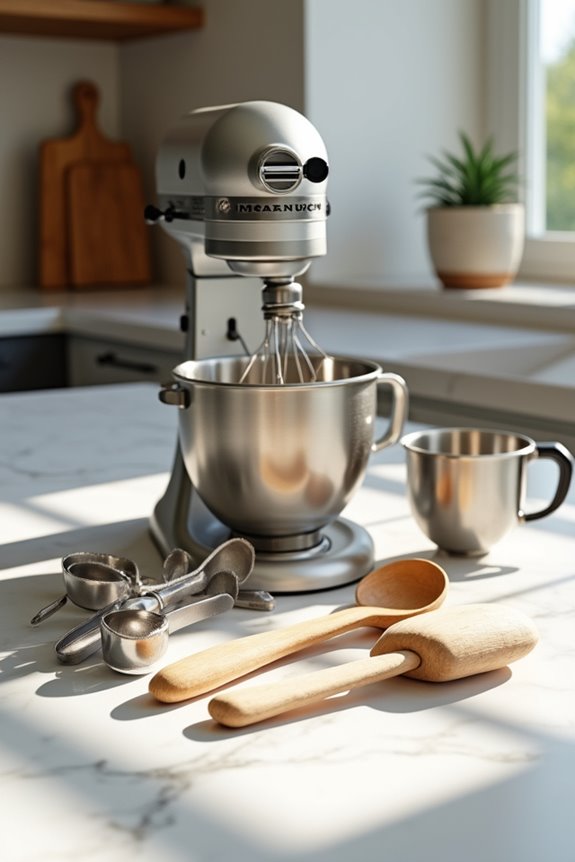
Mixing and preparing tools are the backbone of any successful baking venture. We can’t stress enough the importance of a good whisk. A large metal whisk makes mixing techniques like aerating cake batter a breeze, and it’s real fun to watch those eggs fluff up! Then, there’s our trusty silicone spatula, perfect for scraping every last bit of batter from bowls—because who likes wasting good dough? Don’t forget about sieves for ensuring our flour is lump-free! For mixing bowls, go for sturdy stainless steel or glass—these materials won’t react with ingredients. Each tool plays an essential role, so let’s gather our favorites and immerse ourselves in the delicious world of baking together! It’s time to whip things up! Additionally, having a quality cutting board can greatly enhance your prep work by providing a stable surface for chopping ingredients before baking.
Baking Pans and Sheets
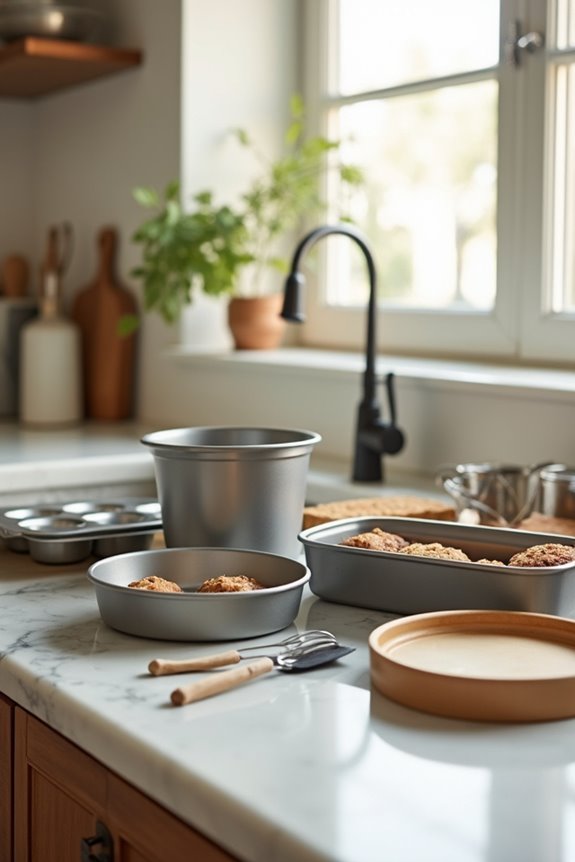
Baking pans and sheets are the unsung heroes of our kitchens, ready to transform our flour, sugar, and eggs into delightful treats. With various baking pan types—like half sheet pans, 9×13-inch rectangles, and round cake pans—we can whip up cookies, casseroles, or layer cakes with ease. Their versatile nature means half sheet pans can roast veggies or bake pastries, while muffin pans guarantee our little cupcakes rise perfectly. If we stock up on at least two of each type, we can tackle multiple recipes in one go! Remember, investing in a few good-quality pans will pay off. Additionally, choosing pans with premium non-stick coatings can significantly enhance our baking experience by ensuring easy food release. So, let’s embrace the joy of baking and make our kitchen adventures as delicious as they are fun!
Tools for Dough and Pastry Handling
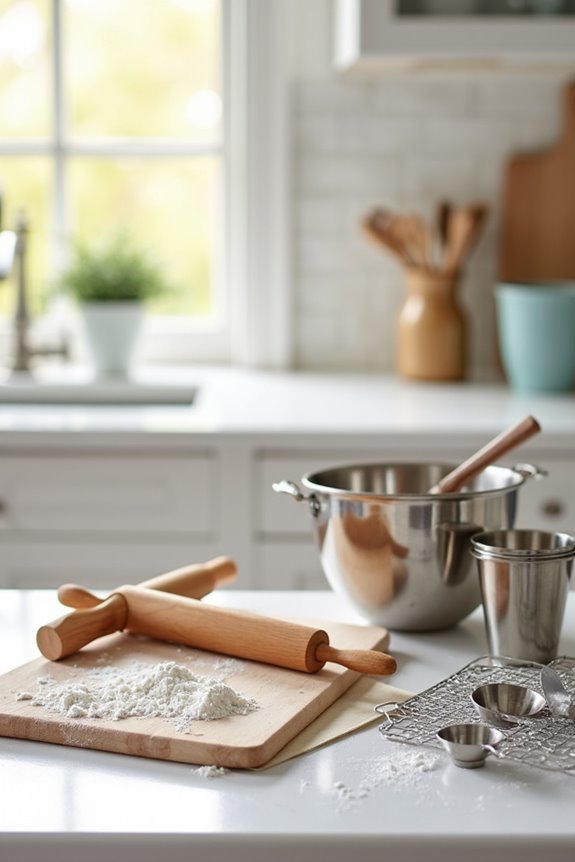
Whether we’re crafting the perfect pie or rolling out some cookie dough, having the right tools for handling pastry can make all the difference in our baking adventures. With dough handling tools like pastry cutters and dough blenders, we can break up cold butter for that flaky goodness we all love. And don’t forget about our trusty rolling pins—wood or marble helps roll out dough evenly. A pastry cloth prevents sticking while we’re rolling, and dough scrapers are lifesavers for managing clingy mixtures. Plus, integrating pastry preparation techniques like dough chilling and resting keeps our creations tasty and manageable. Investing in a quality dough roller not only elevates your baking experience but also ensures perfectly rolled pastry every time. So, let’s gather these essentials and get ready to whip up some delicious delights together!
Temperature and Timing Tools
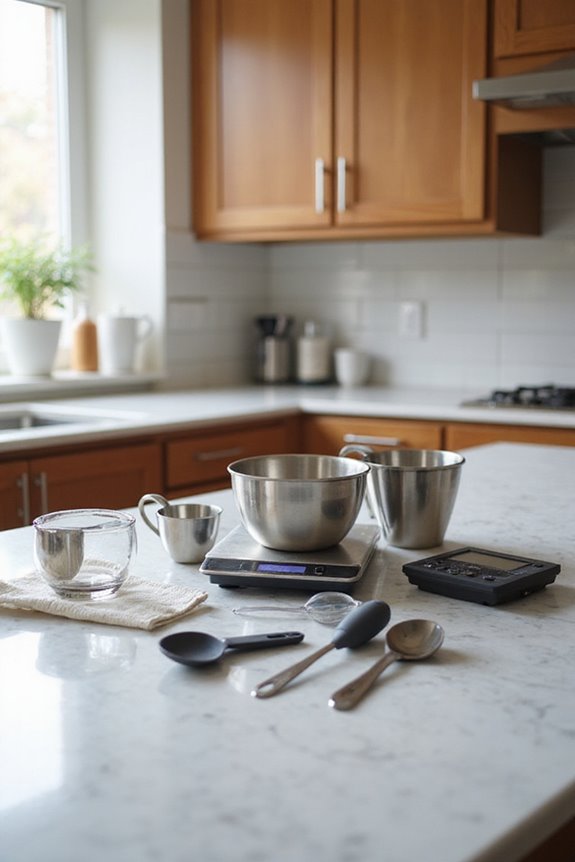
When we plunge into the world of baking, having the right temperature and timing tools can be just as essential as choosing the best ingredients. Digital thermometers, like the Thermapen ONE, grant us temperature accuracy from -58°F to 572°F, perfect for custards and caramel. Plus, oven thermometers help us verify our oven’s true temperature—trust us, they’re lifesavers for avoiding those “cake brick” moments. Then there are digital timers, which provide timing precision with alarms that shout at us when the moment is right. It’s all about fine-tuning our process, ensuring every bake is successful. Just remember: calibrated tools mean fewer baking disasters, so let’s keep them clean and functioning well. Additionally, investing in an oven thermometer with a wide temperature range ensures that we can tackle various recipes with confidence. Happy baking, friends!
Additional Useful Tools
Getting equipped with the right baking tools can make all the difference in our kitchen adventures. Let’s not overlook those additional useful tools that can elevate our baking game. Silicone spatulas are our best friends for scraping, folding, and transferring batter without creating a mess. For precision, digital kitchen scales and a good set of measuring spoons are key to achieving perfect ratios. When it comes to cooling essentials, sturdy cooling racks keep our treats crisp by allowing air circulation. And don’t forget about specialty utensils like pastry brushes for that glossy finish or springform pans for those delicate cheesecakes. With these gems in our arsenal, we’ll be whipping up deliciousness in no time!
Mixing Bowls and Their Importance
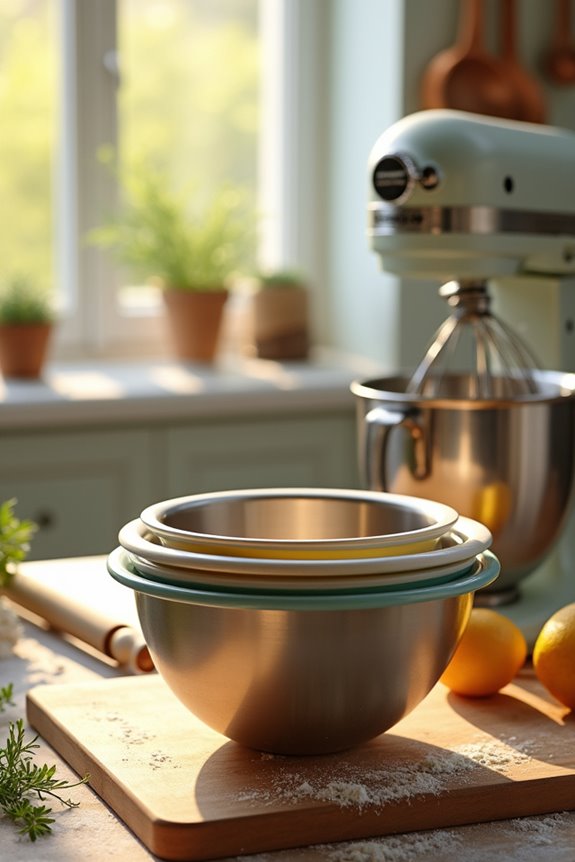
Mixing bowls are the unsung heroes of our baking escapades, quietly holding the key to culinary success. Choosing the right bowl materials makes a significant difference. Stainless steel bowls are lightweight and durable, while glass bowls let us see our creations evolve. We should have a variety of bowl sizes—small ones for whisking eggs, medium bowls for pancake batter, and large ones for dough—and each size makes our baking tasks easier and more enjoyable. Remember, the shape matters too; wide, shallow bowls help aerate our mixtures. There’s nothing worse than splatters, so high-sided bowls can be our best friends. Trust us, investing in a few sturdy mixing bowls will pay off in every baking adventure!
The Role of Whisks in Baking
Whisks are right up there with mixing bowls in the lineup of essential baking tools. Whether we’re whipping cream or folding in egg whites, the right whisk makes all the difference! Balloon whisks, with their thin wires, let us aerate batters quickly, giving our cakes that light, fluffy texture we crave. For those thicker mixtures, French whisks come to the rescue, helping us stir sauces smoothly. Dough whisks? They’re our go-to for those heavy batters, making mixing feel effortless. Remember to take into account whisk materials too—stainless steel for durability, or silicone-coated to protect our non-stick pans. And mastering those circular whisking techniques? They’ll have us mixing like pros in no time! Let’s get whisking!
Selecting the Right Baking Pans
Selecting the right baking pans is a key step for any baking adventure, and having a varied toolkit can make all the difference. We should start with common sizes like half-sheet and 9×13-inch pans for versatility. Let’s grab two half-sheet pans for those cookie and roasting marathons, and a 9×13-inch pan for everything from brownies to lasagna. Don’t forget square pans for thicker goodies and round cake pans to achieve those dreamy layers. Material considerations matter, too! Metal is great for even heating, while glass holds heat longer. For specialty pans, a loaf or muffin pan can elevate our baking game. With a few well-chosen pans, we’re set to create lasting memories, one delicious dish at a time!
Understanding Measuring Cups vs. Spoons
When it comes to baking, understanding the difference between measuring cups and spoons is crucial for achieving tasty results. Measuring cups are our go-to for larger volumes, especially for flour or sugar. We use dry measuring cups for those, leveling off the top for volume accuracy. For liquids, those handy liquid measuring cups with spouts are perfect. On the other hand, measuring spoons work wonders for tiny amounts—just imagine all the baking powder or vanilla extract we need! Remember, using proper measuring techniques can make all the difference in our recipes. So, let’s scoop gently, level off those spoons, and measure liquids at eye level. A little effort here guarantees our tasty creations turn out just right!
Using Digital Food Scales
Digital food scales have become a must-have tool in our baking arsenal. We can’t stress enough the digital measurement benefits they bring—measuring ingredients by weight gives us accuracy that’s essential for recipe success. Forget the hassle of guessing with scoops and cups; weighing ingredients allows us to replicate our favorite recipes with ease. Plus, those pesky differences in moisture content? They’re eliminated! With the tare feature, we can zero out containers and avoid any mix-ups. Whether we’re scaling a recipe up or down, these scales make it simple and precise. So, let’s embrace this little wonder and enjoy perfectly baked goods every time. After all, isn’t baking all about that satisfying outcome?
The Necessity of an Oven Thermometer
Have you ever wondered why your baked goods sometimes turn out less than perfect? We all have! One of the sneakiest culprits is oven accuracy. Most ovens can be off by 25ºF (4ºC) or more, which wreaks havoc on our baking consistency. That’s where an oven thermometer comes in! It’s an inexpensive little tool, often costing just $5 to $10, and it reveals the true temperature inside. By using it, we can dodge common errors like overcooked cookies or under-risen cakes. Plus, it helps us identify hot spots in the oven for even baking. Trust us, investing in an oven thermometer is like inviting bakery-quality results right into your kitchen! So let’s get baking with confidence!
Timing Your Bake: Why It’s Crucial
Timing your bake is essential to ensuring that your creations turn out just right, because who hasn’t pulled a cake out of the oven only to find it raw in the middle or, worse, a dry rock? We need to embrace some savvy timing techniques and bake monitoring to achieve that perfect outcome. Using a kitchen timer allows us to focus without getting distracted. Plus, we can check doneness a bit early to avoid overbaking—a true game-changer! Remember, baking times are guides, and adjusting based on our oven’s quirks can make a massive difference. So, let’s develop a keen eye and trust our instincts, because mastering timing is half the battle in baking success!
Frequently Asked Questions
Do I Need All These Tools to Start Baking?
No, we don’t need all those tools to start baking! Focusing on a few essential tools is key. Let’s gather some basic items first, then add more as we grow our baking skills. That’s our beginner tip!
Can I Substitute Any Tools With Household Items?
Did you know 70% of home bakers use kitchen hacks for tool alternatives? We can easily substitute many tools with everyday items, making baking accessible and fun, while ensuring we still create delicious treats together!
How Do I Care for My Baking Tools?
To care for our baking tools, we should adopt good cleaning techniques and consistent tool maintenance. Let’s wash them right after use, store them properly, and inspect regularly to keep our kitchen essentials in top shape.
Where Can I Find Affordable Baking Tools?
We can find affordable baking tools at places like thrift stores for great finds or explore budget-friendly options on Amazon and Walmart. Let’s keep an eye out for those deals together; they’re out there!
How Often Should I Replace My Baking Tools?
Baking tools, like our favorite companions, can wear out faster than a speeding comet! We should replace them based on tool durability—typically every 2 years—ensuring safe, delightful baking adventures with reliable, well-maintained equipment.