As an Amazon Associate, we earn from qualifying purchases. Some links on this site are affiliate links at no extra cost to you. Our recommendations are based on thorough research and editorial judgment.

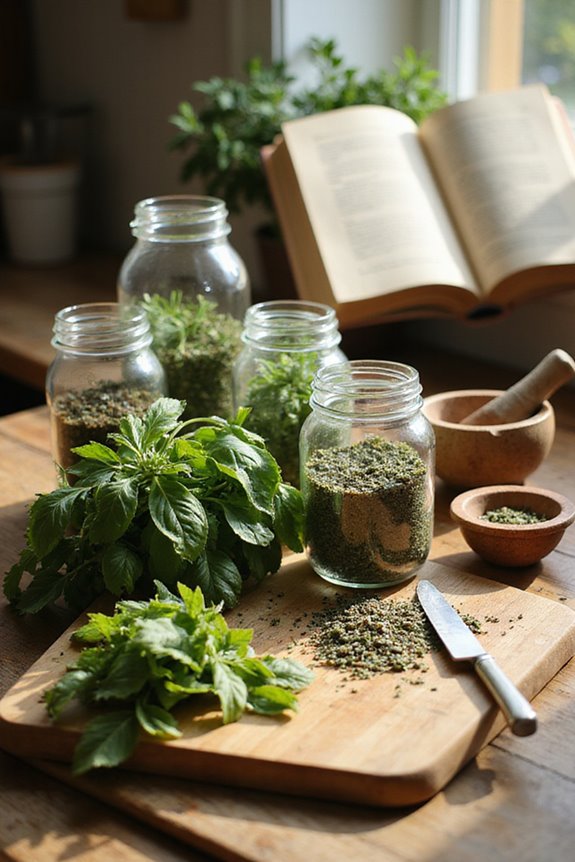
How To Substitute Fresh Herbs With Dried?

When we substitute fresh herbs with dried, keep it simple! For most herbs, use one part dried for every three parts fresh—like one teaspoon of dried basil for a tablespoon of fresh. Dried herbs pack a punch, so start with less and taste as we go. Remember, they’re more concentrated and can change flavors as they cook. Mix it up and explore with different herbs in your favorite dishes, and you’ll discover a world of flavor! Stick around; there’s more to uncover!
Key Takeaways
- Use a common conversion ratio of 3 tablespoons of fresh herbs for 1 tablespoon of dried herbs.
- For delicate herbs like basil or parsley, apply a 2-to-1 substitution ratio.
- Dried herbs release flavors gradually, so add them earlier in cooking for best results.
- Start with a smaller amount of dried herbs, as they are more concentrated in flavor intensity.
- Crush dried herbs lightly before adding to enhance aroma and potency in your dish.
Understanding Herb Conversion Ratios
You may be interested



When it comes to cooking, knowing how to adjust our use of fresh herbs for dried ones can really make a difference in the final dish. We often rely on the common conversion ratio of 3-to-1, meaning three tablespoons of fresh herbs equal one tablespoon of dried. But let’s remember, the moisture content influence can shift this equation. For delicate herbs like basil or parsley, we might lean towards a 2-to-1 ratio instead. Ground dried herbs are even more potent, requiring careful adjustments. So, when we swap fresh for dried, we want to keep those herb potency variations in mind to avoid overpowering our dishes. Healthier meal choices can also be enhanced by using the right amount of herbs to complement the flavors. Start small, taste, and don’t hesitate to experiment—our palates will thank us!
The Impact of Drying on Flavor
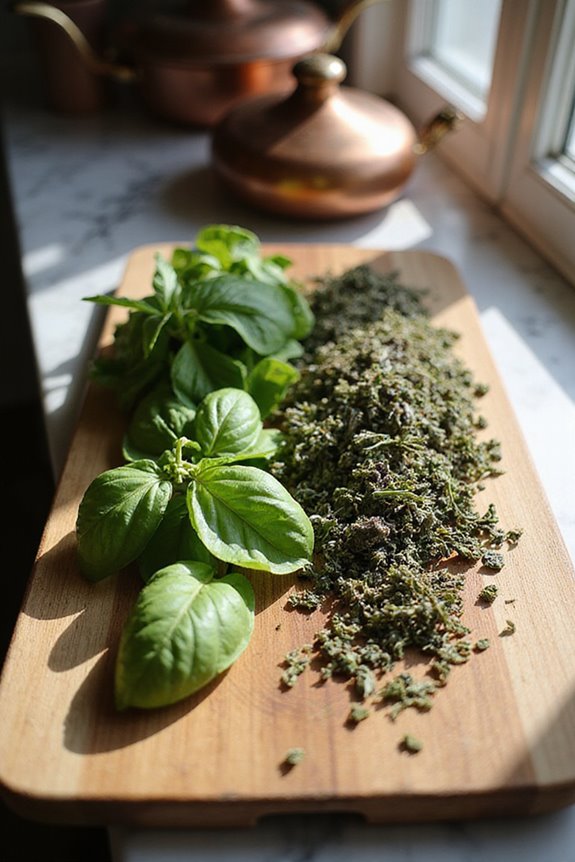
Although we might crave the bright, herbal notes of fresh greenery, understanding the impact of drying on flavor can really elevate our cooking game. When herbs dry, their water content vanishes, leading to concentrated flavors that can be deeper and spicier. However, we do face aroma loss and flavor simplification—those lively, fresh notes fade, and often the herb’s essential oils evaporate, causing a change in fragrance. Depending on the herb type, for instance, woody herbs hold on to more intensity while delicate ones lose nuance. In long-cooked dishes, dried herbs shine, gradually releasing their flavor. Let’s embrace these texture differences and remember: a little dried herb goes a long way, so we should sprinkle with care! Additionally, size and capacity considerations play a vital role in how herbs are incorporated into dishes, as the right amount can enhance the overall flavor profile without overpowering the meal.
General Substitution Guidelines
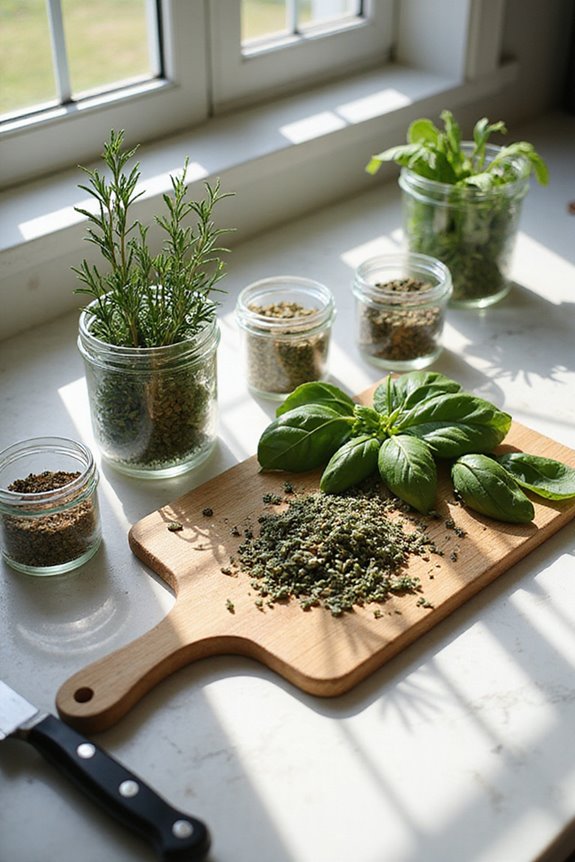
Understanding how to substitute fresh herbs with dried ones can save us from kitchen mishaps and elevate our dishes to new heights. We usually follow a handy 3:1 ratio: one part dried herbs for every three parts fresh. For example, one tablespoon of fresh basil equals about one teaspoon of dried basil. Remember, dried herb potency can vary. Ground herbs, for instance, are stronger, needing less than flaky versions. Fresh herbs have those lovely juicy characteristics, and when dried, they lose water but pack a flavor punch. Add dried herbs earlier in cooking for the best results, allowing their flavors to bloom. So, let’s embrace these guidelines and enjoy tasty dishes without any herb-related hiccups! Additionally, consider the cutting performance of fresh herbs, as effective chopping can enhance your dish’s overall flavor profile.
Adjusting for Stronger Flavors
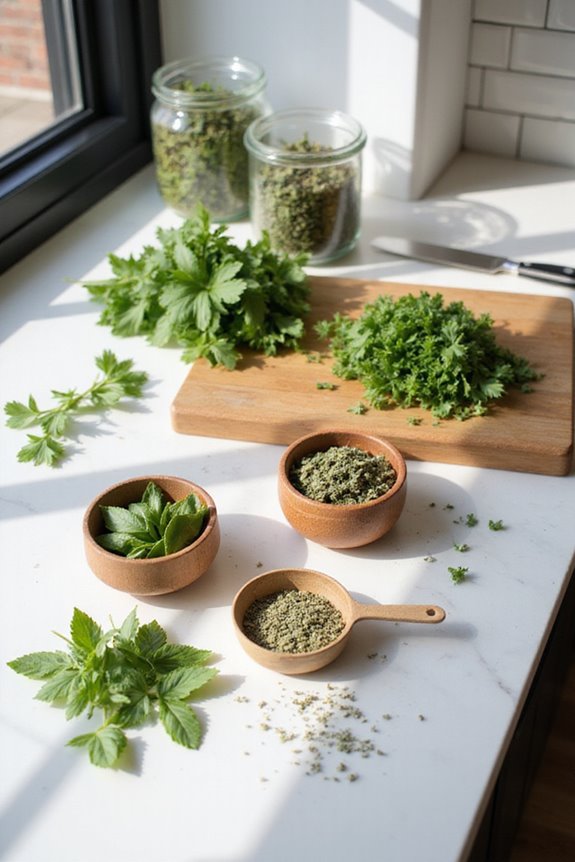
To get the most out of our dried herbs, it’s essential to adjust our expectations for their stronger flavors. Unlike fresh herbs, dried varieties pack a punch thanks to their concentrated flavor intensity. When substituting, let’s remember less is more; we typically need about one-third of the amount. It’s also wise to crush them lightly before adding, which releases a delightful aroma. As we cook, let’s keep taste-testing and make those important seasoning adjustments along the way. The flavors develop as they mingle, so don’t be shy about tweaking things! With a bit of patience and experimentation, we can transform our dishes into something truly special. Additionally, using proper maintenance of dried herbs can enhance their flavor longevity. Happy cooking, friends! Trust us, your taste buds will thank you!
Recommended Products

HEAVY DUTY! PROFESSIONAL GRADE - PILL CRUSHER: This high-efficiency and heavy duty pill crusher is made with food grade stainless steel and designed to give you maximum crushing efficiency to pulverize medicine, pills, kitchen herbs and spices to the tiniest bits. Not only can you easily crush up pills to a fine powder but this 304 stainless steel mortar and pestle functions more than just a medicine and spice herb grinder

LARGE CAPACITY COMMERCIAL GRINDER - Swing type is more convenient than upright type. You could swing the gring machine body to pour the flour out instead of pick up the whole grinder. And Swinging the grinder when it is working, which can make flour more uniform and fine.
LARGE CAPACITY COMMERCIAL GRINDER - Swing type is more convenient than upright type. You could swing the gring machine body to pour instead of pick up the whole grinder. And Swinging the grinder when it is working, which can make flour more uniform and fine.
Special Cases in Herb Substitution
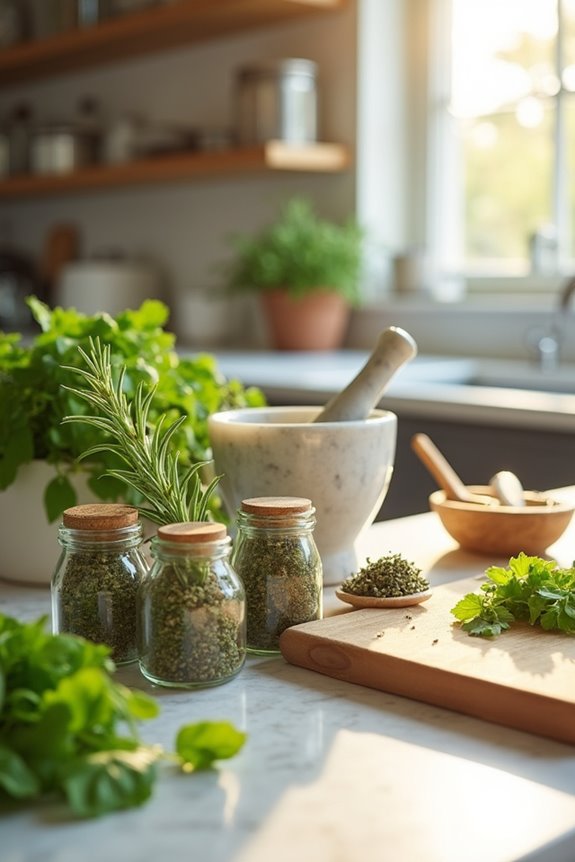
When we cook, knowing how to substitute herbs can truly make or break a dish. Each herb has its own personality and flavor profiles that can either enhance or clash with our meals. For instance, when we’re low on sage, think savory or marjoram—just remember to add marjoram towards the end so its delicate flavor shines! And when rosemary’s too strong, combining it with thyme and tarragon can work wonders. Mint’s flavorful buddies include basil or even a dash of peppermint extract. It’s important to take into account herb compatibility; some substitutes can shift a dish’s aroma or bitterness. So, start with smaller amounts, adjust to taste, and embrace the adventure—cooking’s all about creativity in every sprinkle! Additionally, enhancing your cooking performance can be achieved through using pots with heat distribution efficiency, ensuring that your dishes are cooked evenly and with precision.
Combining Fresh and Dried Herbs
Combining fresh and dried herbs can elevate our cooking to a whole new level, and that’s something we can all get behind! Using smart combination techniques, we can create delicious flavor infusions that dance on our taste buds. For example, when we’re simmering a rich stew, adding dried herbs like thyme early on allows their flavors to blossom. Then, just before serving, let’s sprinkle in some fresh parsley for that bright, aromatic finish. Remember, a little goes a long way—if using dried herbs, aim for 1/4 the amount of fresh. Experimenting is key! So, let’s enjoy the delicate textures of fresh herbs alongside the concentrated flavors of dried ones, making every dish a masterpiece!
Recommended Products

BULK GROUND SUMAC FROM JORDAN Tazah Sumac Spice is a tangy Middle Eastern seasoning made with ground sumac, vegetable oil, and salt. Product of Jordan.

EARTHY, WARM FLAVOR: McCormick Culinary Thyme Leaves feature a gentle, earthy and warm flavor with signature undertones of lemon and mint

FREEZE DRIED DIFFERENCE - All of our herbs are harvested at their peak freshness and loaded into our freeze drying tunnels that help preserve the bold color, taste, & aroma
Storage and Shelf Life of Herbs
Storing herbs properly is essential if we want to keep their flavors vibrant and our dishes delicious! For herb preservation techniques, we can start by choosing airtight glass jars with tight-sealing lids—this prevents air and moisture from sneaking in. Dark-colored jars protect our precious herbs from light, which can degrade flavor and color. Ideally, we should store them in a cool, dry place, away from heat sources, like stoves or windows. Most dried herbs last 8 to 12 months, but strong ones like rosemary may go up to three years. Always remember, clean utensils are our friends when handling dried herbs to avoid introducing moisture. Let’s make our herbs last longer and stay flavorful—it’s worth it!
Culinary Applications for Dried Herbs
Dried herbs can be game-changers in our cooking, especially when we learn how to use them effectively! Their culinary versatility shines when we add them to soups, stews, and sauces. Since they release flavor slowly, adding them at the beginning of our cooking allows the flavors to blossom beautifully. Let’s remember that using dried herbs can enhance our dishes’ depth; just be careful not to overpower the meal. A little goes a long way—typically, we use one part dried herb for every three parts fresh. So, why not experiment with those resinous herbs like thyme or rosemary? They add a delicious kick to dry rubs or roasted proteins, turning ordinary meals into comforting delights. Let’s savor the flavor!
Recommended Products
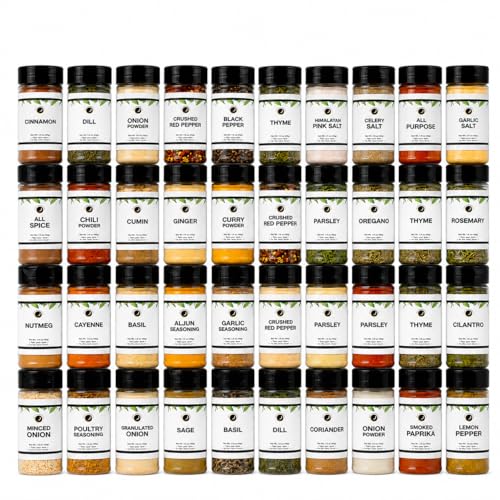
Complete 40-Piece Spice Collection - Ultimate pantry starter kit includes all essential herbs, spices, seasonings, and seasoned salts to transform everyday meals into restaurant-quality dishes

Complete 40-Piece Spice Collection - Ultimate pantry starter kit includes all essential herbs, spices, seasonings, and seasoned salts to transform everyday meals into restaurant-quality dishes
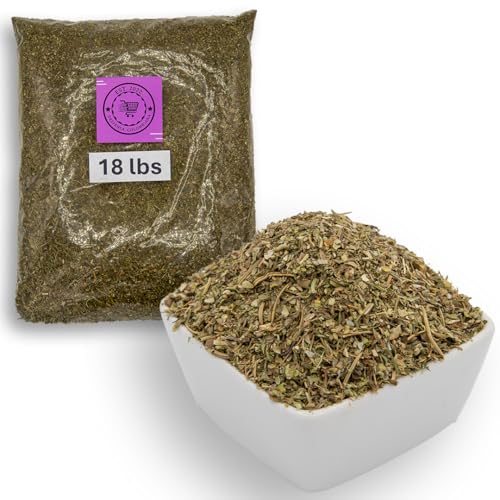
Italian seasoning comes in a convenient 18 lbs weight, making it easy to store, use and access. This condimento italiano is perfect for enhancing various dishes without worrying about storage.
Tips for Perfecting Flavor Balance
When we’re cooking, balancing the flavors in our dishes is key to creating that perfect bite. Remember, dried herbs pack a punch with their flavor intensity, so we need to tread lightly. A good rule of thumb is to use 1 part dried herb for every 3 parts fresh herb. This helps us compensate for dried herbs’ potency while avoiding overpowering our dish. Don’t forget to add dried herbs early to allow their flavors to bloom, and crush them a bit to release oils. To wrap it up nicely, sprinkle fresh herbs near the end for that bright finish. Trust us; it’s all about keeping flavors harmonious. Cooking should be fun, not overpowered, right?
Frequently Asked Questions
Can I Use Dried Herbs in Marinades?
Absolutely, we can use dried herbs in marinades! Just remember the dried herb ratio—one-third the amount of fresh. They’ll add unique marinade flavoring, enhancing our dishes beautifully when we let them sit properly.
How Do Temperature Changes Affect Dried Herb Potency?
Temperature changes can greatly impact dried herb potency. By ensuring temperature stability during drying and storage, we can achieve better potency preservation, allowing us to enjoy vibrant flavors and health benefits in our cooking.
Are There Health Benefits Associated With Dried Herbs?
Like hidden gems in our spice rack, dried herbs boast incredible benefits for our health. Their nutritional value shines through antioxidants, anti-inflammatory properties, and potential heart and blood sugar regulation—making them invaluable companions on our wellness journey.
Can Dried Herbs Cause Allergies Like Fresh Herbs?
Yes, dried herbs can cause allergy symptoms just like fresh herbs. We’ve noticed that dried herb reactions might arise from concentrated allergens or airborne dust. It’s wise to stay cautious if we have sensitivities.
What Is the Best Way to Grind Dried Herbs?
We love using a mortar and pestle for grinding dried herbs, as it preserves flavor and aroma. Storing them properly guarantees freshness, and experimenting with different grinding techniques lets us discover our favorite textures for dishes together.