As an Amazon Associate, we earn from qualifying purchases. Some links on this site are affiliate links at no extra cost to you. Our recommendations are based on thorough research and editorial judgment.

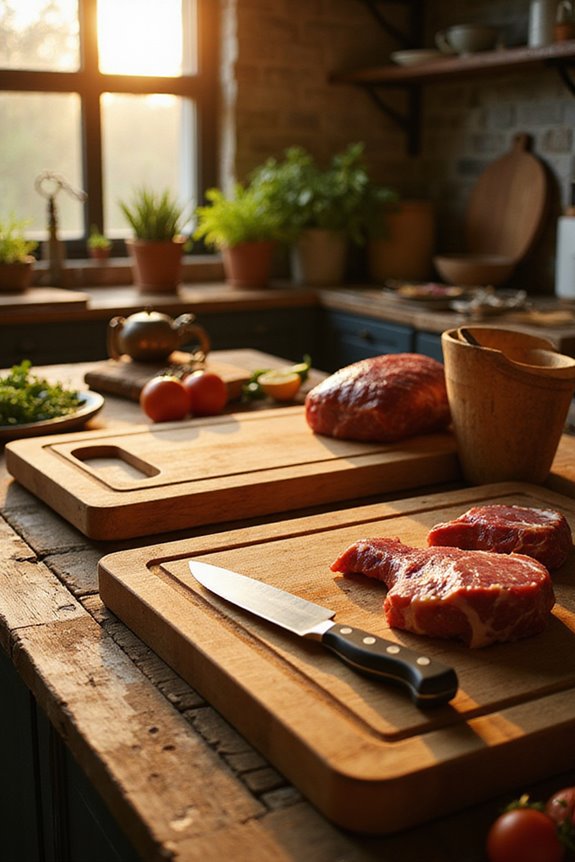
What Are Best Cutting Boards For Meat?

When it comes to picking the best cutting boards for meat, we should look for durability and antimicrobial features. Hardwoods like maple or walnut are fantastic—they’re tough on bacteria and gentle on knives. Bamboo is eco-friendly, but watch out; it can dull blades faster. A juice groove helps keep things tidy, while dedicated boards prevent cross-contamination. If you keep your boards clean and replace them when needed, you’ll be set! Stick around to find some great product recommendations!
Key Takeaways
- Choose hardwood boards like maple or walnut for their durability, gentle knife impact, and natural antimicrobial properties.
- Select non-porous surfaces, such as BPA-free plastic or organic bamboo, to prevent bacteria growth and liquid absorption.
- Look for cutting boards with juice grooves to contain meat juices and reduce mess during preparation.
- Use color-coded boards dedicated for raw meat, poultry, and seafood to enhance food safety and avoid cross-contamination.
- Regular maintenance, like oiling wooden boards and sanitizing plastic ones, ensures longevity and hygiene.
Important Features to Look for in Meat Cutting Boards
You may be interested



When it comes to choosing the best cutting board for meat, there are a few important features we should keep in mind to guarantee our kitchen prep is efficient and safe. First off, cutting board durability matters! We want a board that can withstand the rigors of slicing and dicing without cracking or warping. Look for non-porous surfaces; they inhibit bacteria growth and stop meat juices from soaking in, keeping things cleaner. Don’t forget about the antimicrobial properties of materials like teak or walnut; they naturally reduce bacterial survival. Juice grooves are a game-changer, too, capturing those pesky liquids and preventing a messy kitchen. Trust us, investing in these features makes our cooking experience not just safer, but a whole lot more enjoyable! Additionally, consider boards made from organic bamboo as they offer natural resilience and antimicrobial properties that are beneficial for meat prep.
Recommended Products

Double Sided Design,One Board for Multiple Purposes is More Convenient: This cutting board adopts a double-sided design,one side is suitable for kneading dough,and the other side is suitable for chopping vegetables,truly realizing the multi-purpose of one board. It not only saves space in the kitchen, but also improves cooking efficiency. Whether you're a baking enthusiast or a master at home, you'll be able to handle a variety of kitchen needs with ease.
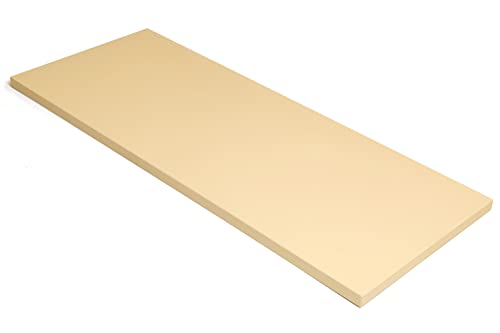
Size Dimension: XX-Large 39.4" x 15.7"x 0.9"(100cm x 40cm x 2.3cm)

Anti-slip grip corners prevent injury while cutting and chopping
Comparing Material Types for Meat Preparation
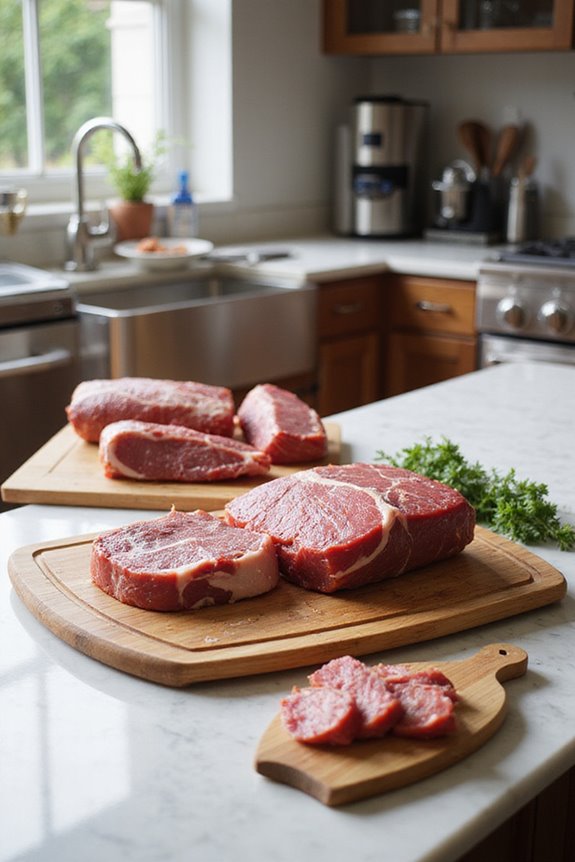
Choosing the right material for your cutting board can make a big difference in how we handle meat preparation. When it comes to cutting board materials, wood is often our favorite. Hardwoods like maple and walnut are gentle on knives and have natural antimicrobial properties, which add to their appeal for meat prep techniques. Bamboo, being eco-friendly, is another solid option, though its hardness can dull knives quicker. Now, plastic boards? They’re super easy to clean and can handle a bit of rough housing, but they might not last as long. Finally, while stone and glass are beautiful, they can be harsh on our beloved knives. So, let’s pick wisely and make our meat prep a breeze! Additionally, boards made from high-quality materials like BPA-free plastic or wood are essential for knife preservation and overall performance in the kitchen.
Recommended Products

USA Grown Hardwood: Only made from USA grown hard walnut solid wood.
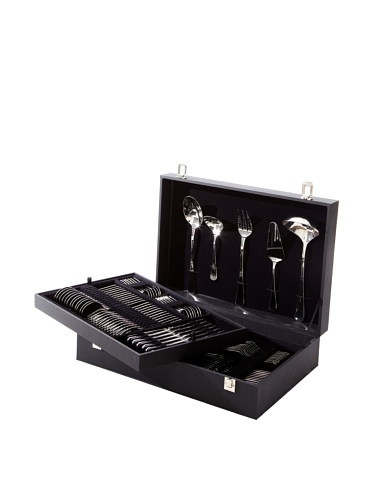
One piece in a box

Size Dimension: XXX-Large 47.2" x 17.8"x 0.9"(120cm x 45cm x 2.3cm)
Health and Safety Considerations for Cutting Boards
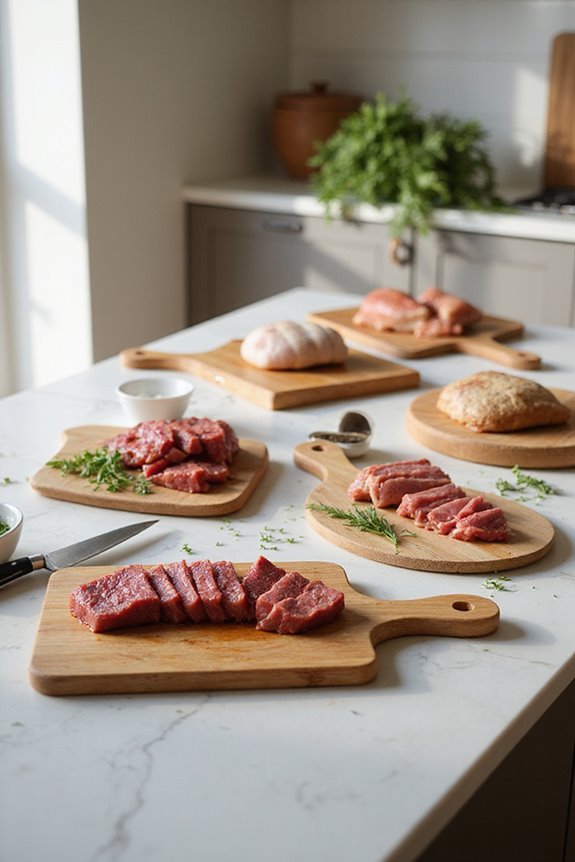
While we might think of cutting boards as just another kitchen tool, they play an essential role in keeping our food safe. To avoid health risks like cross-contamination, let’s dedicate specific boards for raw meat, poultry, and seafood. Color-coding helps, too—one board for veggies, another for bread, and so on. Always clean our boards right after use with hot soapy water, and don’t forget to sanitize them if they’ve touched raw meat. Remember, deep grooves can trap bacteria, so replacing worn boards is a must! By sticking to good hygiene practices, we create a safer kitchen environment. Let’s make food safety a priority—it’ll make our meals happier and healthier! Additionally, using nonstick surfaces on kitchen tools can further reduce the risk of bacteria buildup.
Maintenance and Durability of Meat Cutting Boards
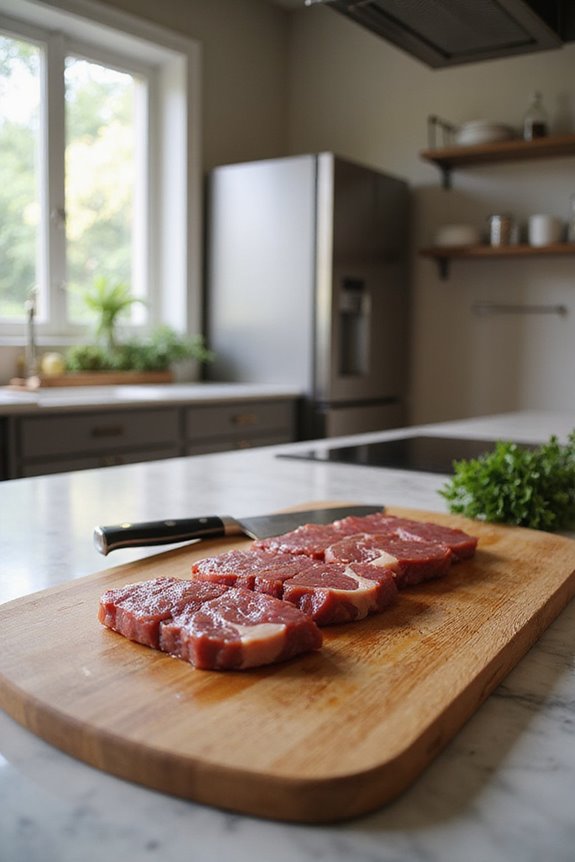
Caring for our meat cutting boards is just as important as using them, especially since they’re put through the wringer during meal prep! When it comes to maintenance frequency, wooden boards need regular oiling to keep their moisture and prevent cracking. Plastic boards make life a breeze—they’re dishwasher-safe for hot sanitizing! Composite boards blend durability and easy cleaning, resisting damage much better than pure wood. Stone boards last ages but can chip if we’re not careful. Bamboo, while sturdy, needs some oil love too. Investing time in maintenance boosts material longevity, so let’s treat our boards right. After all, a happy cutting board makes for happy cooking! Who knew keeping our boards clean could be so rewarding? Regular checks for wear and tear ensure optimal performance just like with can openers!
Recommended Products

CUTCO Forever Guarantee provides for free sharpening and replacement forever.

MODERN & COMPACT: The Home Line Plus 200 features a stylish design, available in Red and Black colors. This electric food slicer is sure to complement any kitchen décor, adding a touch of elegance to your countertop. Its small size makes it easy to store and perfect for households with limited space.

The HydroPro initiates a new generation of professional sous vide immersion circulators; Features the Sous Vide Toolbox, a built-in cooking guide that uses scientific algorithms to calculate time to temperature and pasteurization for a vast range of foods
Impact of Different Surfaces on Knife Performance
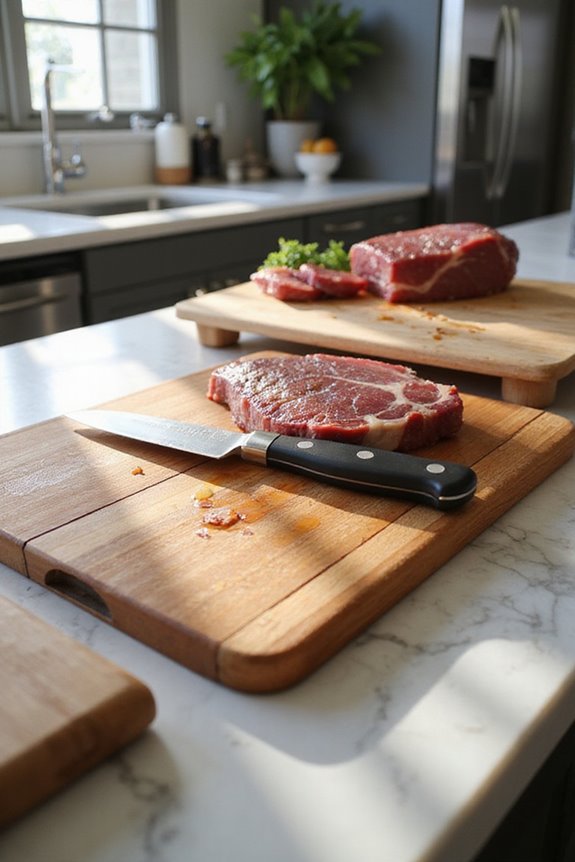
When we think about cutting boards, the surface we choose can greatly affect our knives’ performance. Hard surfaces like glass or stone might look sleek, but they can seriously harm knife edge durability by dulling the blade quickly. We really prefer softer materials like HDPE plastic or end grain wood, which absorb impact better and let our knives glide more smoothly. These surfaces protect our precious knife edges. Plus, let’s admit it—nobody wants to replace their favorite knife every few months! Balancing surface hardness with knife material is key. So, next time you’re cutting up that juicy roast, choose a board that keeps your blades sharp and ready for action. Trust us, your knives will thank you! Additionally, using surfaces that allow for better heat retention can enhance the overall cooking experience, especially when preparing meats that require precise temperature control.
Recommended Brands and Models for Meat Cutting Boards
Choosing the right cutting board for meat isn’t just about aesthetics; it’s about performance and durability too. One standout is the John Boos Block; with its beautiful maple hardwood, deep juice grooves, and finger grips, it’s perfect for those hefty carving tasks we all love. If we lean toward plastic, the OXO Good Grips board offers a stain-resistant surface that catches juices with its nifty drip-catcher. For something unique, let’s not forget Sonder’s handcrafted end-grain boards, which boast anti-microbial properties. In our user experience evaluation, these boards shine due to their thoughtful design considerations, know what I mean? Each pick here balances longevity and efficiency, so we can confidently tackle our meat prep without worry. Happy chopping!
Recommended Products

BAMBOO END GRAIN CUTTING BOARD with Juice Grooves - 16.9" x 11.75" x 1" - 100 Pieces - Reversible design - Grooved on one side and flat on the other. Perfect for catching those unwanted juices. Measurements may slightly vary due to the manufacturing process of the cutting board


Tips for Preventing Cross-Contamination During Meat Preparation
To keep our kitchen safe and our meals delicious, we’ve got to be smart about avoiding cross-contamination during meat preparation. First, let’s wash our hands for at least 20 seconds before and after handling raw meat—trust us, it’s crucial! We should also use separate cutting boards and utensils for raw meat and ready-to-eat foods, making color-coding our best friend. Plus, let’s avoid the temptation to wash raw meat; it just splashes bacteria everywhere! Remember to keep raw meats stored below other foods in the fridge to prevent drips. Finally, let’s not forget to clean surfaces right after we’re done. By following these simple safe food practices, we’ll greatly reduce those pesky cross-contamination risks and keep everyone happy at the table!
Frequently Asked Questions
How Do I Choose the Right Size for a Meat Cutting Board?
When choosing the right size for a meat cutting board, we should consider board dimensions that accommodate our largest cuts. Did you know most chefs prefer medium boards for daily tasks, blending size considerations and convenience seamlessly?
Can I Use the Same Board for Meat and Vegetables?
No, we can’t use the same board for meat and vegetables. Doing so raises cross-contamination risks. Different board materials matter too; plastic’s easier to sanitize, but separate boards are safest to protect our health.
What’s the Best Way to Disinfect My Cutting Board?
To guarantee our cutting boards stay pristine, we can embrace various board cleaning methods—like using a vinegar solution or hot soapy water—tailored to the materials we cherish, keeping our culinary adventures safe and delightful.
Are There Cutting Boards That Are Lightweight and Portable?
Yes, we can find lightweight materials like plastic and bamboo in portable designs. These options make it easy for us to enjoy cooking outdoors, whether at picnics, camping, or simply in our small kitchens.
How Can I Tell if My Cutting Board Is Worn Out?
To tell if our cutting board’s worn out, let’s assess any cracks and check its surface integrity. Deep grooves, unevenness, or lingering odors are signs it’s time for a replacement. Safety’s key, after all!