As an Amazon Associate, we earn from qualifying purchases. Some links on this site are affiliate links at no extra cost to you. Our recommendations are based on thorough research and editorial judgment.

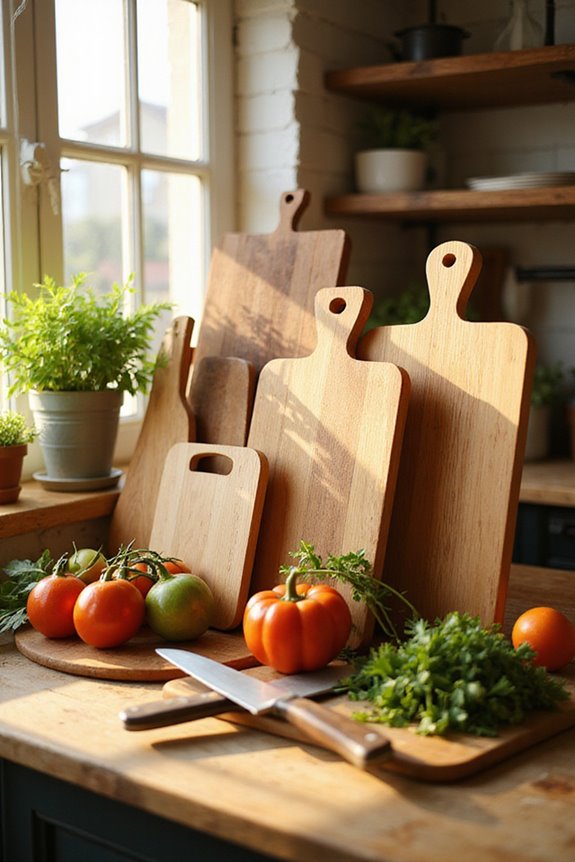
How To Choose Cutting Boards?

When we choose cutting boards, let’s explore materials first! Bamboo is eco-friendly but can dull knives, while hardwoods like maple are great for durability and knife preservation. Think about hygiene, too—different colors keep things safe and fresh! Maintenance varies; wooden boards need some love with oil, while plastic loves the dishwasher. Finally, don’t forget the size that fits our kitchen. Curious about how these choices affect our cooking? Stick around to uncover more insights!
Key Takeaways
- Consider materials: Bamboo is eco-friendly but may dull knives, while hardwoods like maple and beech offer durability and knife preservation.
- Assess hygiene: Use color-coded boards to avoid cross-contamination and replace boards with deep grooves that can harbor bacteria.
- Evaluate maintenance: Wooden boards need oil treatment, plastic boards are dishwasher safe, and bamboo requires careful washing to avoid damage.
- Factor in sustainability: Choose sustainably sourced wood or bamboo to reduce environmental impact and avoid plastics that release harmful particles.
- Match board size and weight to your cooking habits, ensuring it fits comfortably in your kitchen for ease of use.
Understanding Different Materials for Cutting Boards
You may be interested

When it comes to choosing the right cutting board, the material you pick can make all the difference in your cooking experience. We love bamboo cutting boards for their eco-friendly advantages – they’re sustainable and grow quickly without harmful chemicals. Plus, bamboo’s water-resistant and stain-resistant properties mean they can stand up to the rigors of daily use without warping. Its antimicrobial nature keeps our surfaces clean, and the less porous surface resists deep cuts more effectively than some woods. Speaking of wood properties, hardwood boards like walnut or teak are beautiful and durable, but they do require a bit more maintenance. Additionally, material durability is crucial to consider, as it impacts both the board’s lifespan and knife performance. So, whether we’re chopping vegetables or meat, choosing the right board helps keep our kitchen safe and our knives sharp.
Comparing Durability and Knife Friendliness
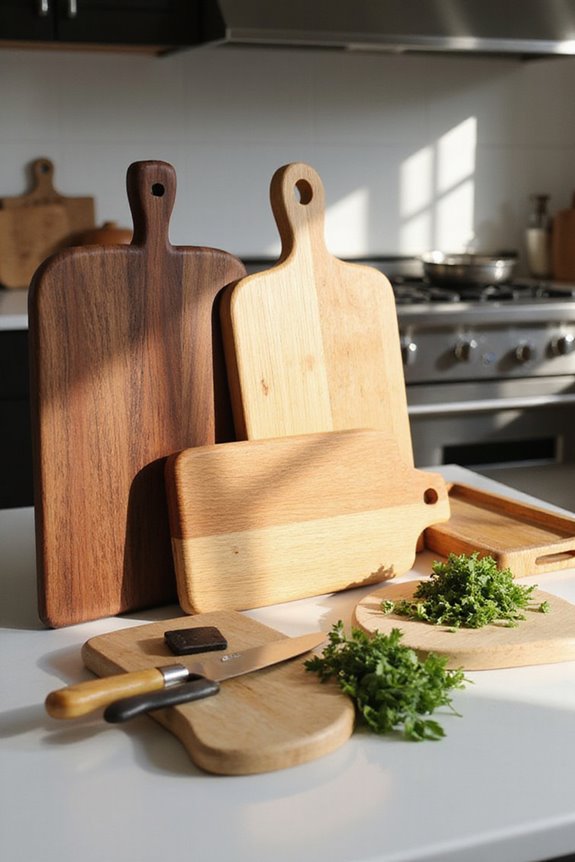
Selecting the right cutting board isn’t just about choosing a pretty surface; it’s really about balancing durability with knife friendliness. We’ve all been there—dulling blades and unsightly scratches can ruin our cooking adventures. Hardwoods like maple and beech strike this perfect balance, giving us both cutting board longevity and excellent knife edge preservation. They offer resistance to scratches while being gentle on our blades. Avoid bamboo if you love your knives; its hardness can leave them begging for a touch-up. Let’s also keep an eye on maintenance; regular oiling keeps our boards in prime condition. Ultimately, the right cutting board feels like a kitchen companion, standing the test of time while ensuring our knives stay sharp. Aesthetically pleasing designs not only enhance your kitchen décor but also add versatility for various food types. What’s not to love?
Importance of Hygiene and Safety Standards
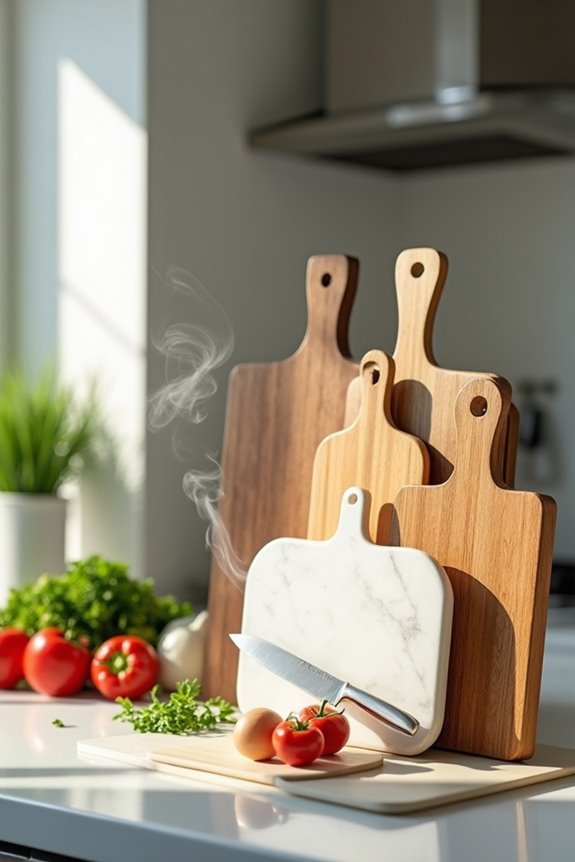
Though we might not always think about it, hygiene and safety standards play an essential role in our cooking experience. When we choose cutting boards, we need to mind cutting board hygiene to keep our meals safe. Following food safety regulations guarantees that our boards don’t leach harmful substances into food and that they’re easy to clean. Using color-coded boards can help us prevent cross-contamination between raw and ready-to-eat foods. Remember, those deep grooves harbor bacteria, so replacing boards when they show wear is vital. Let’s commit to washing our boards thoroughly and drying them completely. It may take a little effort, but it’ll assure we enjoy safe and delicious meals together! After all, a clean kitchen is a happy kitchen! Additionally, selecting boards made from food-grade materials ensures that they meet hygiene standards and are safe for food preparation.
Maintenance Requirements for Each Type
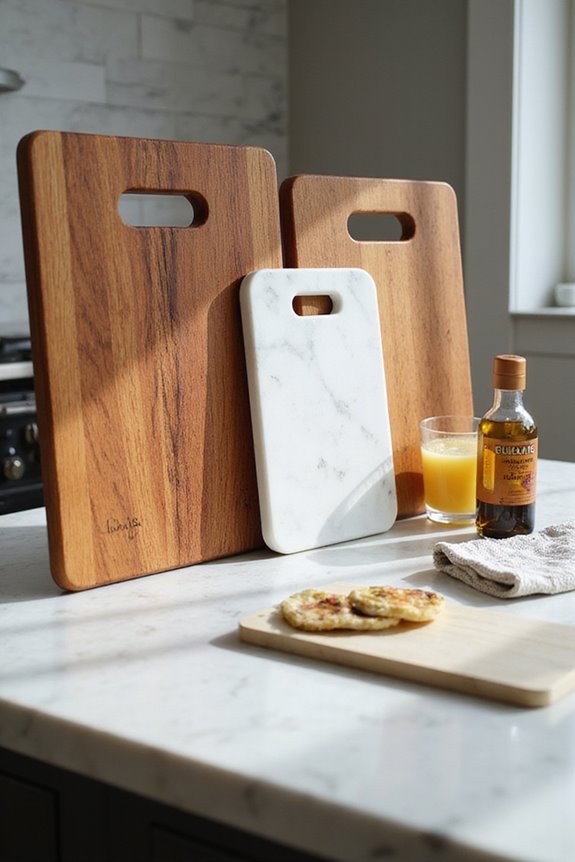
While it’s easy to overlook, maintaining our cutting boards is just as essential as choosing the right one. Each of the cutting board types we use comes with specific maintenance tips. For wooden boards, a little hot, soapy water and a monthly spa treatment with mineral oil can work wonders. Plastic boards are dishwasher safe, but let’s be gentle with those knives to avoid deep cuts. Bamboo boards need that warm wash, too, but remember, no dishwashers! For composite types, they love a good scrub, but watch out for heat. Finally, rubber boards can handle a robust cleaning session. Regular care not only extends their life but keeps our kitchen safe and clean, so let’s keep them happy together! Additionally, using nonreactive surfaces helps preserve food quality and taste, making maintenance even more important.
Evaluating Environmental Impact and Sustainability
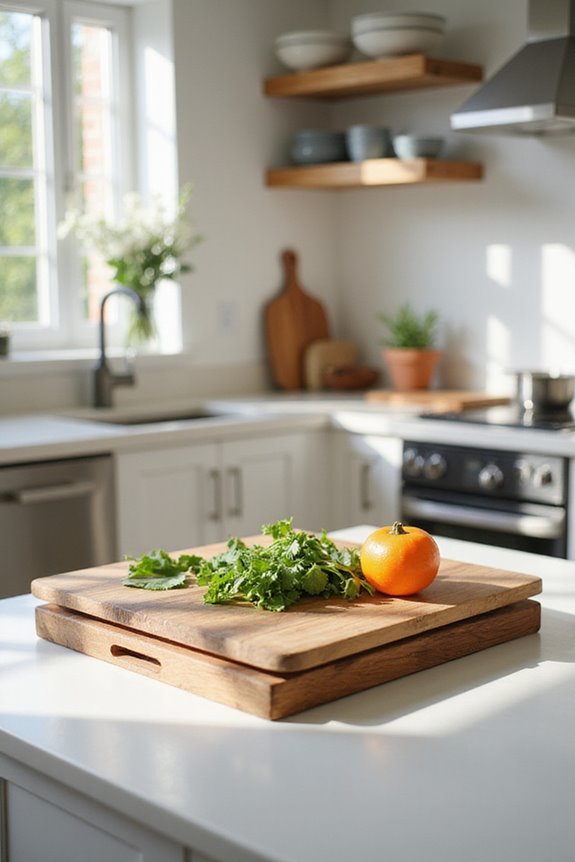
As we keep our cutting boards in tip-top shape, it’s also important to think about their impact on the environment. Choosing wood or bamboo boards offers sustainable sourcing, as these materials are renewable and biodegradable. Unlike plastic boards that release harmful microplastics, wood and bamboo shed natural particles, which are much less harmful. Plus, they don’t leach chemicals into our food! By opting for these greener choices, we can actively contribute to pollution reduction, lowering microplastics in our soil and waterways. Additionally, high-quality coatings on ceramic pots can enhance safety and durability in the kitchen, complementing our eco-friendly choices. Let’s remember: a well-made wooden board not only serves us beautifully in the kitchen but also signifies a commitment to our planet. So, let’s elevate our cooking experience while being good stewards of the Earth!
Analyzing Cost Factors and Aesthetics
When it comes to choosing the right cutting board, we need to factor in both cost and aesthetics—two factors that can really shape our kitchen experience. Let’s face it, our aesthetic preferences often steer us toward rich walnut or warm cherry, but that comes with a cost! Budget considerations play a huge role, as high-end wood boards can easily stretch our wallets. Choosing a cost-effective teak gives us beautiful durability without breaking the bank. Remember, a board’s visual appeal should harmonize with our kitchen décor while being practical. So, let’s weigh costs against our style preferences, ensuring our choice is not just pretty, but functional too. After all, you want something that stands the test of time and looks great!
Choosing the Right Size and Thickness
Choosing the right size and thickness for your cutting board is just as important as picking the perfect material. First, consider the size selection that fits your kitchen—those small boards (4 x 6 inches) are fantastic for quick jobs, while medium boards (around 18 x 12 inches) really shine for everyday tasks. Large boards (up to 18 x 24 inches) are ideal for prepping big meals. Now let’s talk thickness options. Thicker boards (1.25 to 2 inches) offer durability and stability for tough chopping, but they can be heavy. On the flip side, thinner ones are lighter but wear out faster. Balancing size and thickness will not only make your cooking easier but safer too. Happy chopping!
Recognizing Special Features for Specific Uses
Selecting the right cutting board goes beyond just size and material—considering special features can really enhance our cooking experience. When we think about cutting techniques or our favorite chef preferences, it helps to know what we need. For instance, end-grain boards are our best friends if we love preserving knife sharpness. We should also consider flexible TPU boards for tackling messy tasks, especially with raw poultry. But, if we’ve got a flair for serving, glass or stone boards could shine on our table. Remember, each option serves a unique role in our kitchen—so let’s choose wisely! Embracing these features can elevate our culinary adventures, making us feel like true chefs at home.
Tips for Proper Cleaning and Care
How can we keep our cutting boards looking and performing their best? First, let’s talk about cleaning techniques. After each use, we can wash our boards with warm, soapy water—something mild, please! Remember, no soaking wooden boards; they don’t like it. Dry them immediately, and let them air dry standing up. For stubborn stains or odors, a sprinkle of baking soda mixed with water works wonders. Regular oiling is essential, too. A little food-grade mineral oil goes a long way in keeping our boards hydrated and happy! Finally, let’s avoid cross-contamination by using separate boards for meats and veggies. Trust us, a few maintenance tips can extend the life of our trusty kitchen companions and keep our meals safe and delicious!
Making an Informed Decision for Your Kitchen
After keeping our cutting boards clean and well-maintained, it’s time to think about which one fits best in our kitchens. We should consider cutting board styles that align with our culinary preferences. If we love prepping fresh veggies, a sturdy wooden board—like walnut or maple—can be our trusty sidekick, keeping our knives sharper longer. For quick cleanup, plastic boards are lightweight but may scratch easily. Stone boards add elegance but can chip—yikes! Composite materials offer a nice balance, giving durability with easier cleaning. Let’s weigh aspects like durability, hygiene, and how we cook; a informed decision will yield the perfect board for our unique kitchen adventures. Remember, the right board can elevate our cooking game!
Frequently Asked Questions
Can I Use a Cutting Board for Both Meat and Vegetables?
No, we can’t safely use one cutting board for both meat and vegetables. With cross-contamination risks in mind, we should opt for the best board materials, ensuring our kitchens remain safe and our meals delightful.
What Type of Knife Is Best for Different Cutting Boards?
We find that for wood, high-quality knives excel, maintaining their sharpness longer. Plastic boards, while convenient, might dull edges faster. Prioritizing knife maintenance guarantees a smooth, enjoyable culinary experience, regardless of which board we choose.
How Long Should a Cutting Board Last With Proper Care?
With proper care, we can expect our cutting boards to last between five and ten years. By focusing on cutting board maintenance, we minimize wear and enhance their lifetime expectations, making meal prep safer and more enjoyable together.
Are There Any Signs That Indicate a Cutting Board Needs Replacement?
We should watch for cracks and signs of bacteria growth on our cutting boards. If there’s deep damage, persistent odors, or discoloration, it’s time to replace it for our health and safety in the kitchen.
Can I Store My Cutting Board in the Dishwasher?
We can’t store our cutting boards in the dishwasher safely, depending on board material. Wooden boards warp, while plastic can scratch. Let’s keep our kitchen essentials lasting longer by cleaning them properly instead!